Ron Carter’s New Goals for Military Sexual Trauma Survivors (Part 3) The Silenced Voices of MST with Rachelle Smith
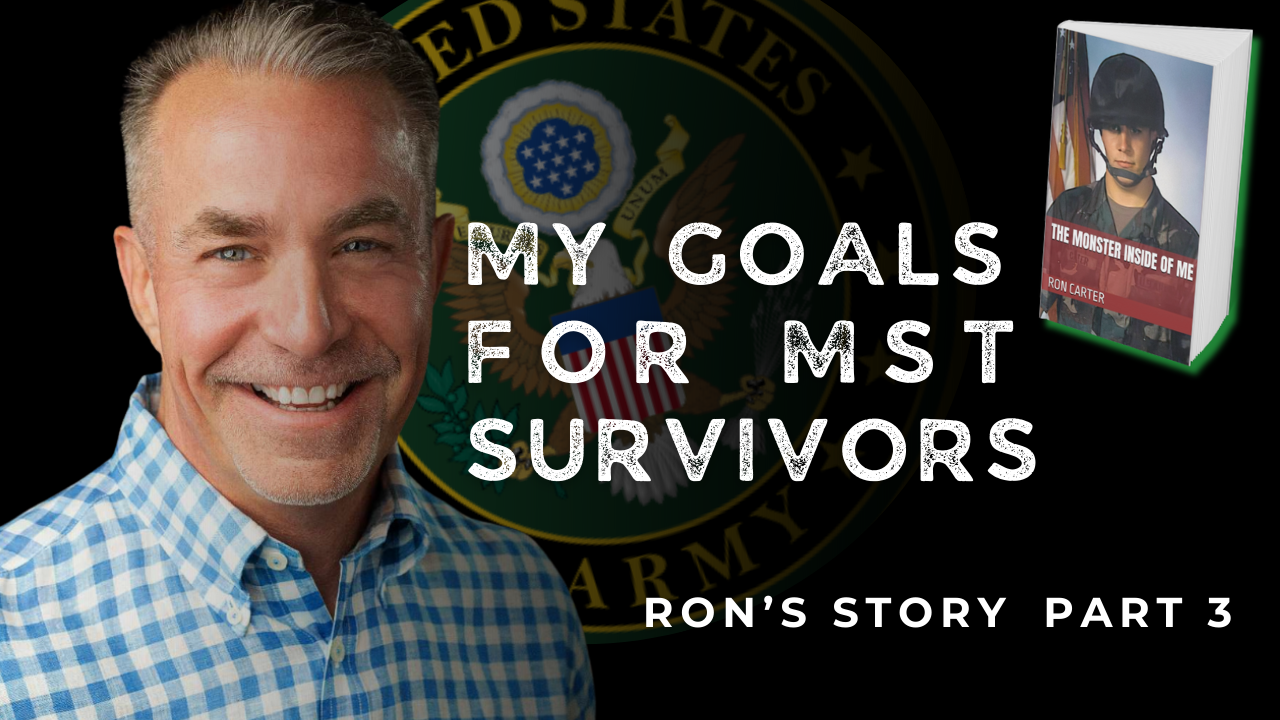
U.S. Army veteran Ron Carter discusses Military Sexual Trauma, finding benefit in doing intensive therapy and somatic release to come to terms with what he survived while serving on The Silenced Voices of MST.
U.S. Army veteran Ron Carter continues his story on The Silenced Voices of MST. In Part 1, Ron shared his experience of assault and decades of undiagnosed PTSD. In Part 2, he shares a possible reason for the outcome of filing his disability claim with uncharacteristic ease that validated his trauma and raised more questions, reaching his breaking point at an annual VA appointment, and his experiences through therapy and alternative treatments. Ron shares insights in going from crisis to acceptance, the role of persistence in navigating, and what is possible when survivors finally find therapies that work.
Finding The Monster Inside of Me
Ron discusses his book The Monster Inside of Me, available on Amazon, which tells his personal story of surviving military sexual trauma. When Ron thinks about Military Sexual Trauma, he draws a direct comparison to the Catholic Church priest abuse scandal. "Those priests were being shuffled around," Ron explains. To him, what happens with MST is just as horrible. The key difference is media attention. The Catholic Church scandal dominated headlines while military sexual trauma barely registers as newsworthy to senators, congresspeople, or major outlets. Ron believes men being less willing to talk about what happened contributes to this silence.
Ron makes clear he'll talk about military sexual trauma with anyone, anywhere, regardless of what people think. He emphasizes Americans need to know this happens every single day.
How the Book Came Together with Investigative Editor Martin Phillips
Ron shares the story of how he came to work with Martin Phillips, an investigative editor who recently retired from The Sun in London. The connection happened through a chain of events starting with a trip to Texas to meet Eddie Dean, someone with ideas about brain function. During the visit, Ron connected with a veteran who had worked with British author Damien Lewis, known for World War II books and whose work was recently adapted into the Guy Ritchie film The Ministry of Ungentlemanly Warfare. He confirmed the story should be told but explained he was under contract through 2027, which led to the introduction to Martin Phillips.
The two worked together for a year and a half, emailing, editing, and conducting calls. Ron shared his experiences, Martin would send questions, and Ron would provide detailed answers. Despite their efforts, they couldn't find a publisher willing to take on the book. The reluctance stems from concerns about hurting military recruitment numbers, which also explains why mainstream media ignores the issue. Ron plans to continue his advocacy work by reaching out to major podcast hosts like Lex Fridman and Shawn Ryan, challenging them to address an issue affecting their military community.
The Reaction When People Hear the Truth
Trigger Warning: sharing his MST story with others and the scale of MST
Ron explains that conversations about his experiences typically begin with someone asking how his VA benefits were secured. He mentions that people assume combat-related PTSD because of his appearance and demeanor.
When the clarification comes, it always surprises them. No combat? Ron discloses the truth of being drugged, beaten, and raped during military service.

U.S. Army veteran Ron Carter discusses Military Sexual Trauma, finding benefit in doing intensive therapy and somatic release to come to terms with what he survived while serving on The Silenced Voices of MST.
He explains that without exception, every single person drops their jaw in shock and disbelief. They can't believe this happens, especially to thousands of service members every single year. For survivors who've lived through this trauma, sweeping it under the rug becomes impossible once they find the strength to speak. These are young people who signed their lives away to serve their country, who may be asked to die for their country, and who are being raped by the people they're supposed to trust. The military is supposed to protect young troops through the NCO and officer corps, yet nearly every story involves enlisted personnel being taken advantage of by someone of higher rank, particularly NCOs.
Ron gets angry about this because the victims are poor kids, and they're still kids when this happens.
The normalization and secrecy doesn't make it acceptable, and the problem extends far beyond the United States military. Ron has connected with survivors in Australia, the UK, and other countries who share similar experiences. The pattern stays consistent across armed services around the world: military sexual trauma disproportionately affects young, economically disadvantaged service members.
The Power of Fighting and Refusing to Be Silent
Ron emphasizes how the military has historically driven cultural change in America. The armed forces were the first to integrate racially and pay women equally. Veterans carry these values back into their communities. Ron never spoke to a Black person before joining the military. His senior drill sergeant forced him to shed his biases quickly because survival required trusting every fellow service member. Those bonds between brothers make the betrayal of military sexual trauma horrific. When someone you trust with your life commits sexual violence against you, it shatters something.
Ron's Message to Survivors
Ron speaks directly to survivors who've held onto their stories for years. His first message: don't kill yourself. Ron has attempted suicide himself and feels grateful God saved his life. Life gets better, though the work is hard. The second hurdle is saying something about what happened. Ron understands this difficulty because it took a complete mental breakdown before he could speak about his own trauma.
Ron urges young survivors especially not to wait to seek help. Life becomes unbearably hard with hypervigilance. Veterans have extensive benefits and help available through the VA. Finding a battle buddy who's already navigated the system helps.
The VA Does Care and the Therapy Works
Ron’s message to survivors: stick with treatment because the VA staff care. People wouldn't work in those positions if they didn't care about helping veterans.
The therapy available through the VA is good, though survivors must do substantial work independently. This includes reading books and, for those who are religious, reconnecting with faith or finding a higher power. Over the last three to four years of healing and growth, Ron returned to Christ, which reinforced his therapy work. His spiritual practice reinforced his psilocybin treatment as well.
“I want this to stop. I want it to end for you men and young women, period, in our military. I want this to stop around the world.”
Healing requires getting out of a victim mentality and moving away from decision-making through the lizard brain's fight-or-flight response. Humans evolved to develop the frontal lobe, and using it to process thoughts and emotions in healthy ways is essential. This doesn't mean anger or sadness disappear. Instead, learning to process those emotions constructively instead of staying stuck in fight-or-flight mode prevents the creation of anxiety, depression, or both.
Anyone experiencing suicidal thoughts or ideation should reach out to someone at the VA immediately and get help.
Life Now: From Suicidal Ideation to Self-Love
Over the last three to four years, Ron’s life has transformed, and he exists in a much better emotional and psychological place exists now. This is a complete reversal from not long ago.
Ron’s core message must be emphasized: don't take your life.
Many people are told to reach out for help but don't follow through because they believe they're not worth it. The truth is different. Survivors are worth it. Finding a veteran friend who's already navigated the system helps. Survivors who reach out will find someone who responds, talks to them, helps them get started, hears their story, and listens. What most people want is telling their story to someone who cares.
Discouragement shouldn't win. If a therapist or doctor isn't a good fit, find a different one. Survivors will drive their own ship, and they must captain it. The subconscious should serve as the captain, with survivors controlling their internal dialogue.
The people you love... those relationships get better when moving away from suicidal ideation and hyper-vigilance. Ron wholeheartedly believes that humans are designed to love each other, and offers love freely to anyone who needs it.
This message extends to all survivors. Tell the young version of yourself you're loved and did nothing wrong. This applies to combat veterans as well. You were doing what you were asked to do, what you signed up to do. You were put through hell on earth. War is hell on earth, and sexual trauma is hell on earth, a different kind of war. All these traumatic experiences are spiritual wars happening in the mind. The message: you're loved.
Frequently Asked Questions About Military Sexual Trauma and Recovery
-
If you're a veteran who experienced military sexual trauma, start by contacting the VA. There are specialized MST coordinators at every VA facility who help you navigate benefits and treatment options. You don't need a service-connected disability rating to receive free MST-related care from the VA. You also call the Veterans Crisis Line at 988 (press 1) or text 838255 for immediate support. The Safe Helpline at 877-995-5247 provides confidential support specifically for military sexual trauma survivors. Finding a battle buddy or friend who's gone through the VA process also helps you navigate the system.
-
Men are less willing to talk about military sexual trauma for several reasons. There's significant stigma around male survivors of sexual assault. Many men fear being seen as weak or worry about how they'll be perceived. Ron Carter points out when he tells people he was drugged, beaten, and raped, their jaws drop because they can't believe it happens, especially to men. The shame and isolation are overwhelming. Men also may not be taken as seriously when they report, and they face the same retaliation risks as women. Ron emphasizes men need to speak up because MST happens to thousands of male service members every year.
-
Hypervigilance is a state of constant alertness and heightened awareness many trauma survivors experience. It happens when your brain stays in fight-or-flight mode instead of using your frontal lobe to process thoughts and emotions in a healthy way. Ron Carter describes it as living with constant anxiety, depression, or both. When you live with hypervigilance, life becomes extremely difficult. You can't be the person you were designed to be, and it damages your relationships with people you love. Ron promises life is way too hard with hypervigilance and urges survivors, especially young ones, not to wait to get help. Learning to process thoughts and emotions through therapy instead of staying in fight-or-flight response is critical to healing.
-
Ron Carter believes the media doesn't cover military sexual trauma adequately because it would kill military recruiting. While something horrific occasionally happens to women and makes headlines briefly, the issue doesn't stay newsworthy to senators, congresspeople, or major media outlets. Ron compares MST to the Catholic Church priest abuse scandal, noting both involve institutions shuffling predators around and silencing victims, yet MST receives far less attention. He suspects because men are less willing to talk about it, and because it would hurt military recruitment and readiness narratives, the issue stays largely hidden. Ron is determined to change this by speaking up anywhere he goes, including reaching out to platforms like Lex Fridman and the Shawn Ryan Show.
-
Yes, suicidal thoughts are unfortunately common among MST survivors, but Ron Carter's first and most important message is: Don't kill yourself. Ron himself has attempted suicide and is grateful God saved his life. He says this is what makes him cry, thinking about survivors who are struggling with depression and suicidal ideation. Life gets better, and it does. It's hard work, but it does get better. The next hard hurdle after deciding not to end your life is saying something and reaching out for help. If you have suicidal thoughts or ideation, reach out to someone at the VA immediately, call the Veterans Crisis Line at 988 (press 1), or text 838255. Ron promises you're worth it, even when you don't feel this way.
-
Resources specifically for male MST survivors are extremely limited. While the VA has MST coordinators at every facility who serve all genders, very few dedicated programs exist for men. Salt Lake Behavioral Health operates one of the few male-only military sexual trauma programs, a 30-day inpatient PTSD treatment program specializing in MST (Salt Lake Behavioral Health, 2025). Other organizations like the Military Rape Crisis Center, Warrior's Heart, and Road Home Program serve all genders but don't have male-specific programming. This gap in services reflects the broader invisibility of male MST survivors in the healthcare system. Every VA medical center has an MST Coordinator who assists male survivors in accessing care (VA Mental Health, 2025).
-
The numbers of male MST survivors are significantly underreported. Official VA data shows 1.1% of male veterans report military sexual trauma when screened (Kimerling et al., 2016), but this is only those who disclose. The Department of Defense reported 5.7% of male service members experienced military sexual harassment and 0.6% experienced military sexual assault, though these figures are considered low due to reporting and disclosure barriers (Frontiers in Psychiatry, 2024). Studies suggest approximately 90% of men in the military didn't report a sexual assault they experienced in 2021 (DAV, 2017). Despite lower percentages compared to women, the numbers of male and female MST survivors are comparable due to the higher ratio of men to women in the military. Nearly 40% of veterans who disclose MST to the VA are men (DAV, 2017). Over half of all veterans with military sexual trauma are men, making this a significant issue affecting male service members at alarming rates (VA Claims Insider, 2022).
-
Male MST survivors face distinct barriers preventing them from seeking help and disclosing their trauma. According to research, male survivors may be especially likely to tell no one and go it alone after MST due to fears of being judged (Make the Connection, VA.gov). Men often worry others will perceive the assault as weakness, femininity, or homosexual orientation, creating significant stigma (DAV, 2017). The VA National Center for PTSD notes perceived stigma impacts recovery, and male survivors face challenges in this area. Research published in Frontiers in Psychiatry (2024) found 94% of suicide deaths in Active Duty are males, yet male survivors receive far less attention and fewer dedicated resources. Additionally, studies of suicide risk among male MST survivors are notably limited, and given their overall risk for death by suicide, additional studies in males are needed to better understand this phenomenon (Frontiers in Psychiatry, 2024). The combination of stigma, lack of male-specific resources, and fear of not being believed creates a storm keeping male survivors silent and suffering.
Episode Trigger Warnings and Timestamps
00:00 The Monster Inside: A Journey of Healing
Triggering content 4:36-7:50 (sharing his MST story with others and the scale of MST)
05:29 The Hidden Epidemic in the Military
07:26 The Fight for Awareness and Change
07:45 Finding Your Voice and Seeking Help
11:07 A Message to Survivors: You Are Not Alone
19:25 Words of Love for the Younger Self
Resources from this Episode
Resources for Survivors
If you or someone you know is struggling with military sexual trauma, resources are available. For additional support navigating VA claims, download our free VA Disability Toolkit.
VA MST Support: Every VA facility has an MST coordinator. You don't need a service-connected disability rating or other VA benefits to receive MST-related care. Call your local VA or visit www.va.gov to connect with an MST coordinator.
Veterans Crisis Line: Call 988, then press 1. Available 24/7 for veterans in crisis. You can also text 838255 or chat online at VeteransCrisisLine.net.
Military OneSource: Offers confidential counseling and support for active-duty service members and their families. Call 800-342-9647 or visit MilitaryOneSource.mil
The Advocates of MST: By joining The Advocates, you add to a powerful collective voice that demands attention and action. Connect with others who understand your experiences and are committed to supporting each other. Find support at https://www.facebook.com/groups/theadvocatesofmst
Watch or Listen to Ron's Full Story
You can hear Part 3 Ron Carter’s story on The Silenced Voices of MST podcast available on all major podcast platforms including Apple Podcasts, Spotify, and YouTube. We dive deeper into his experience with the VA, his therapeutic journey, and his current advocacy work. If you haven't already, listen to Part 1 of Ron's story where he shares his assault experience and the years of undiagnosed PTSD that followed. In Part 2, he shares his experience of finding acceptance and peace.
About the Guest
Ron Carter is a former Army infantryman turned MST advocate. After surviving a premeditated and devastating assault while on active duty, he committed himself to supporting others who have been affected. Through speaking engagements and community work, Ron pushes for better resources and policy change and uses his platform to amplify survivor voices.
About the Host
Rachelle Smith is the host of The Silenced Voices of MST and a survivor of military sexual trauma. She served as a Public Affairs Officer in the Air Force after growing up in a military family. Her experience with MST and the years spent struggling with PTSD and depression gave her a unique understanding of what survivors face.
This podcast exists because she knew firsthand how isolating MST can be. Since launching The Silenced Voices of MST in 2023, she’s interviewed dozens of survivors, advocates, and experts. Her mission is to empower survivors by providing a space to amplify survivor stories and demand change.
Healing is the end goal of military sexual trauma.
You’re not alone, and you can explore more survivor stories and resources on our blog.
Help Keep This Podcast Going
I've been funding this podcast entirely on my own since 2023, and it hasn’t been easy. If this work has helped you or someone you care about, please consider supporting it with a monthly donation. Even $10 a month makes a real difference in covering hosting, editing, and production costs.