

Military Sexual Trauma: Why Accountability Is the Proven Solution
Military Sexual Trauma prevention requires accountability, not just awareness. Learn why consequences stop sexual assault and what 40 years of research proves works.

Military Sexual Trauma won't stop with awareness campaigns alone. In this episode of The Silenced Voices of MST, expert Chuck Derry, founder of The Gender Violence Institute, shares 40 years of research proving accountability is the only solution that works.
Chuck Derry, founder of The Gender Violence Institute, shares his extensive experience in addressing gender violence, offering insights into its cultural roots, the importance of accountability, and the personal reflections necessary for achieving true equality. This episode describes Derry's work and perspectives, providing a comprehensive overview of his approach to combating abuse and enacting cultural change.
Content Warning: This episode and article discuss gender violence, domestic violence, sexual assault, Military Sexual Trauma, abuse dynamics, and systemic failures in addressing violence. Please engage with this content when you feel safe and supported.
In episode 43 of The Silenced Voices of MST, Chuck Derry, founder of The Gender Violence Institute, shares his extensive experience in addressing gender violence, offering insights into its cultural roots, the importance of accountability, and the personal reflections necessary for fostering equality. He has worked to end men's violence against women since 1983 which resulted in co-founded the Gender Violence Institute in 1994. His decades of experience offer critical insights for those working to address Military Sexual Trauma, as the dynamics he documented in civilian domestic violence cases mirror what happens in military systems where sexual assault thrives.
Chuck Derry: 40 Years of Proven Gender Violence Prevention Research
Chuck Derry, with over 40 years of experience since 1983, discusses his transformative journey in gender violence intervention. Initially, he worked with feminist women to combat men's violence against women, an experience that profoundly shaped his understanding. Derry emphasizes that 95% of his knowledge comes from learning from women, while the remaining 5% is based on his experiences as a white male growing up in Minnesota, navigating sexist and racist societal norms. His approach centers on accountability, cultural change, and the willingness of individuals to examine their own complicity in systems that perpetuate violence.
How Gender Violence Begins: Cultural Roots of Violence Against Women
Initially, Derry reflects on his early experiences and realizations about gender dynamics. He recalls understanding at a young age that being a girl was considered the worst thing, influencing his behavior to align with perceived masculine ideals. He shares an anecdote from Catholic school where boys would expose girls' underwear. Adults saw it happen and did nothing. The message was clear that boys were more important than girls.
Derry points out that statistics show girls in the U.S. face a one in three chance of being beaten by a partner and a one in two chance of being sexually assaulted. These statistics are an unsettling reminder of the pervasive cultural issues that begin in childhood and continue throughout life. The normalization of disrespect and violence toward girls creates a foundation for the gender violence that persists in adulthood and globally across institutions, including the military.
Military Sexual Assault: How Military Culture Protects Perpetrators
The conversation shifts to the military, where values of honor and integrity coexist with significant problems of sexual assault. Rachelle shares a personal experience of sexual assault at a VFW, remembering how deeply ingrained cultural norms can override stated values. She notes that even when incidents are reported, varying definitions of consent among jurors in military courts can alter outcomes. Accountability must be consistently adhered to, rather than relying on subjective interpretations that often favor perpetrators.
The contradiction between military values and the reality of sexual assault rates is evidence of a structural problem. Systems that center male power often protect male violence. The burden falls on survivors to prove what happened, while perpetrators benefit from doubt, confusion, and institutional protection.
Proven Accountability Program: How the Duluth Model Changes Abusive Behavior
The 24-week program Chuck led was designed to address abusive behavior. Men ordered to participate must acknowledge their violence and understand the power and control dynamics involved. The program uses the Duluth Power and Control Wheel, requiring men to log instances of physical and emotional abuse, intimidation, and other controlling behaviors.
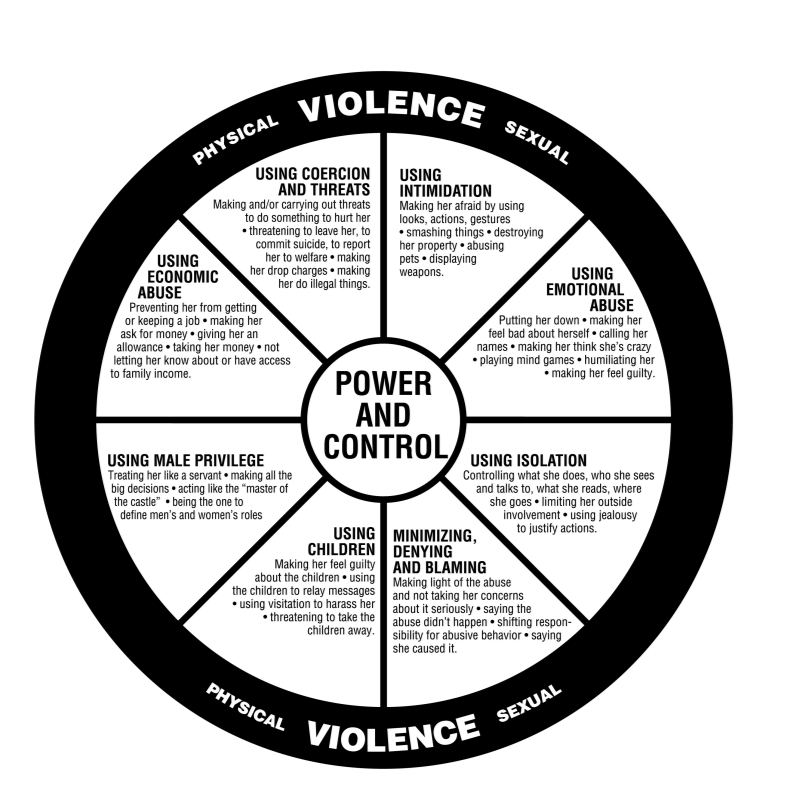
Battering is one form of domestic or intimate partner violence. It is characterized by the pattern of actions that an individual uses to intentionally control or dominate his intimate partner. That is why the words “power and control” are in the center of the wheel. A batterer systematically uses threats, intimidation, and coercion to instill fear in his partner. These behaviors are the spokes of the wheel. Physical and sexual violence holds it all together—this violence is the rim of the wheel. (Duluth Model)
The Duluth Model's Power and Control Wheel is a tool developed in the 1980s through focus groups with female survivors. Women compiled lists of the types of abuse most commonly used against them. The wheel helps survivors step back and see the full scope of violence they have experienced. It gives them language to name what happened. For many survivors, that validation changes everything.
Derry is careful to note that participants were initially resistant, often minimizing, denying, and blaming. However, the structured accountability led to significant changes. The consequences, enforced by the criminal justice system, probation officers, and community support, were essential to deterring abusive behavior.
Why Perpetrators Continue Violence: Understanding the Benefits of Abuse
One experience in particular stood out most in this program. Chuck Derry spent years sitting across from men who had been court-ordered into his program after harming their partners. He asked them to do something most had never done: list the benefits they got from their violence.
At first, they resisted. Then they filled a four-by-eight-foot blackboard.
The list included advantages such as maintaining control, gaining money, avoiding change, dictating reality, determining what values their kids would have, controlling where their partner went and who they talked to, and deciding when and how sex happened. The list went on for hours. This exercise, conducted in the 1980s and 90s as part of a structured accountability program in Minnesota, revealed something that survivors already knew but systems refused to acknowledge. Violence works for perpetrators until someone makes it stop.
These deep-seated reasons why men perpetuate abusive behavior, even if they themselves are not abusive. The difficulties in relinquishing these perceived benefits is what perpetuates “looking the other way” or not speaking up against it. Understanding these benefits is crucial for developing effective intervention strategies.
Military Sexual Trauma Prevention: Why Accountability Is the Missing Piece
Accountability is crucial in preventing MST. Consequences, enforced by the criminal justice system, probation officers, and community support, were essential to deterring abusive behavior in his program. He shares that men who were kicked out of the program for not taking responsibility often returned, admitting they could no longer get away with it.
The Pentagon nearly doubled its sexual assault prevention budget to more than $1 billion in 2023 and 2024. They established new offices to prosecute cases outside the traditional chain of command. They hired about 1,400 trained prevention specialists to serve at bases around the globe. However, while 8,195 sexual assaults were reported in 2024, independent research estimates the actual number may be 2-4 times higher. Dr. Jennifer Greenburg's research estimated approximately 73,695 cases of sexual assault in the military in 2023, nearly nine times the number of official reports.
The gap between what happens and what gets reported reveals everything about the lack of accountability. Derry's work identified the two factors most strongly associated with men who perpetrate violence: childhood experiences of abuse and witnessing violence, and attitudes related to gender equity. He also identified what keeps violence going: impunity. When perpetrators face no consequences, they have no reason to stop. The benefits outweigh the risks. The behavior continues because it works. Awareness campaigns and training modules alone cannot stop sexual assault. Accountability through consequences and other men speaking up and influencing other men stops it.
Gender Equality: What Men Must Sacrifice to End Violence Against Women
Derry reflects on the personal sacrifices required to achieve true equality. He questions whether men are willing to give up the benefits and privileges they receive in a sexist culture. This includes confronting male bonding over objectification, stopping the use of pornography, listening to women, and relinquishing leadership positions if necessary.
The list includes things men rarely talk about, such as male bonding over objectification, pornography use, dominating conversations, holding leadership positions they are not qualified for simply because they are men, controlling household decisions, and dictating when and how sex happens. The benefits of sexism are real, tangible, and daily.
Giving them up requires more than good intentions. It requires confronting how deeply those benefits are woven into identity, relationships, and career advancement. In military contexts, this means confronting how sexual violence functions as a tool of dominance and control, how it reinforces hierarchies, how it silences dissent, and how it maintains power structures that benefit some service members at the expense of others.
Derry challenges men to consider what kind of human being they want to be and whether they care about the lives of others. The ratio of learning from women versus his own experience matters, because it tells us who holds expertise, whose voices should lead prevention efforts, and why survivor-centered approaches work and top-down institutional responses fail.
How Military Sexual Trauma Survivors Can Demand Accountability
Chuck Derry's decades of work in gender violence intervention offers a clear roadmap for addressing Military Sexual Trauma. Violence works for perpetrators until someone makes it stop. Awareness campaigns, training modules, and billion-dollar budgets cannot replace genuine accountability. Systems must create and enforce real consequences for perpetrators while centering survivor voices and experiences.
For survivors of MST, your story holds expertise that no institutional training can replicate. Your insistence on accountability is not asking too much. You deserve justice, support, and systems that prioritize your safety over institutional reputation. The work of creating change requires all of us to examine our complicity in systems that protect perpetrators and to demand better from our military institutions.
Resources for Veterans Seeking Help
If you are a Military Sexual Trauma survivor, The Silenced Voices of MST offers several free resources and tools to support your journey:
VA Disability Toolkit: A free resource built to help you organize the VA claim process with tips and strategies from those who have successfully navigated the system. Document your trauma, track your claim, and organize every detail for a stronger case.
Contact Your Lawmaker Toolkit: Make your voice heard in Congress. This toolkit allows you to easily and safely contact members of Congress about MST-related legislation, military reform, or your personal experiences with templates and state-specific lookup.
The Advocates of MST Private Facebook Group: Join a safe, private community where survivors can connect, share experiences, and access peer support without fear of retaliation or judgment.
Crisis Support: If you are in crisis, please reach out:
Veterans Crisis Line: Call 988 and press 1, or text 838255
National Sexual Assault Hotline: 1-800-656-4673 (RAINN)
DoD Safe Helpline for Military Sexual Assault: 1-877-995-5247
Episode Chapters and Timestamps
00:00 Meet Chuck Derry, Founder of The Gender Violence Institute
03:48 Childhood Memories of Cultural Behavior Towards Girls and Women
05:49 Military Culture and Rachelle's SA at the VFW
10:15 The 24-Week Program That Successfully Changed Behavior
12:07 The Benefits of Abusive Behavior
16:01 The Missing Piece in Prevention of MST
17:54 Chuck's Reflections on Life if Equality Actually Happened
Frequently Asked Questions
-
The Duluth Model Power and Control Wheel is a tool developed in the 1980s through focus groups with female survivors of domestic violence. Women compiled lists of the types of abuse most commonly used against them. The wheel helps survivors understand the full scope of violence they have experienced by identifying patterns of physical violence, emotional abuse, intimidation, isolation, economic abuse, and other controlling behaviors. It gives survivors language to name what happened to them.
-
Perpetrators continue abusive behavior because it provides tangible benefits and they face no consequences. The benefits include maintaining control over others, gaining financial advantages, avoiding personal change, dictating reality in relationships, determining family values, controlling where partners go and who they talk to, and deciding when and how sex happens. When there is no accountability, the benefits outweigh any risks, so the behavior continues.
-
Cultural factors that contribute to gender violence include societal norms that devalue girls and women from childhood. Boys learn early that being a girl is considered inferior, which shapes attitudes and behaviors. Adult inaction when boys mistreat girls reinforces the message that boys matter more than girls. Statistics show that girls in the U.S. face a one in three chance of being beaten by a partner and a one in two chance of being sexually assaulted. These cultural patterns begin in childhood and persist throughout life.
-
Achieving gender equality would require men to give up significant benefits and privileges. This includes male bonding over objectification of women, pornography use, dominating conversations, holding leadership positions they are not qualified for simply because they are men, controlling household decisions, and dictating when and how sex happens. These benefits are woven into male identity, relationships, and career advancement. Giving them up requires more than good intentions. It requires confronting complicity in systems that perpetuate inequality.
-
Accountability is the crucial missing piece in preventing Military Sexual Trauma. Without real consequences for perpetrators, sexual assault continues because it serves the perpetrator's interests. Awareness campaigns and training programs alone cannot stop sexual assault. Systems must create meaningful consequences that are consistently enforced through the criminal justice system, command structures, and community support. When perpetrators face genuine accountability, they can no longer get away with their actions.
-
The gap between actual sexual assaults and reported cases in the military is significant. While 8,195 sexual assaults were reported in 2024, independent research estimates the actual number may be 2-4 times higher. Dr. Jennifer Greenburg's research estimated approximately 73,695 cases of sexual assault in the military in 2023, which is nearly nine times the number of official reports. This gap reveals the lack of accountability and trust in military reporting systems.
-
Survivors do not report for several reasons. Many want to forget about the assault and move on. They do not want more people to know what happened. They feel ashamed or embarrassed. Among servicewomen who did report, 38 percent experienced professional reprisal, 51 percent experienced ostracism, and 34 percent experienced maltreatment. The consequences of reporting fall on survivors rather than perpetrators, which discourages reporting.
-
Accountability programs can be effective when they require participants to acknowledge their violence, understand power and control dynamics, and face consistent consequences. The 24-week program that Chuck Derry helped develop required men to log instances of abuse and understand the Duluth Model. Initially, participants minimized, denied, and blamed. However, structured accountability enforced by the criminal justice system, probation officers, and community support led to significant behavioral changes. Men who were removed from the program for not taking responsibility often returned later, admitting they could no longer get away with their behavior.
-
The Gender Violence Institute was co-founded by Chuck Derry in 1994. The organization works to end gender violence through an approach that recognizes the connections between violence, power, and privilege. The Institute engages in community organizing, policy development, education, and training. Their work emphasizes that individual behavior change alone cannot end sexual assault. Systems and cultures must change, and consequences for perpetrators must be real and consistent.
-
Military culture contributes to sexual assault when stated values of honor and integrity coexist with systems that protect perpetrators. Deeply ingrained cultural norms can override stated values. Varying definitions of consent among jurors in military courts can alter outcomes. Systems that center male power often protect male violence. Sexual violence functions as a tool of dominance and control, reinforces hierarchies, silences dissent, and maintains power structures that benefit some service members at the expense of others.
About the Guest
Chuck Derry is the founder of The Gender Violence Institute. Since 1983, he has worked to end men's violence against women through accountability programs, community organizing, policy development, and education. His approach centers on understanding the cultural roots of gender violence and creating systems that hold perpetrators accountable while supporting survivors.
Help Support our Mission
This work saves lives. Every story shared, resource created, survivor connected to help. The Silenced Voices of MST exists because too many survivors have been silenced for too long. This work is necessary, but it cannot continue as a one person sacrifice. I am asking for your support to help transition this platform into a sustainable resource. If this mission matters to you, please consider making a donation or sharing this campaign with your network. Every episode produced, every toolkit distributed, every survivor story amplified requires resources. Production costs, hosting fees, website maintenance, and platform development all depend on the generosity of people who believe survivors deserve better.
Your donation directly funds:
Administrative Support: $12,000 to hire a part-time assistant. This is the only way to shift the twenty-person workload off of one individual and ensure the show’s longevity.
Operational Recovery: $8,500 to address the debt incurred by the show's operations since 2023. This is essential to stop the cycle of negative balances and financial instability from paying for the show with VA disability
Production & Security: $4,500 to cover the upcoming year of hosting, extra security features for guest safety, and necessary software subscriptions.
Thank you for standing with survivors.
About the Host
Rachelle Smith is an Air Force veteran, MST survivor, and the founder of The Silenced Voices of MST, an advocacy platform focused on Military Sexual Trauma. With a background in Communications and a distinguished career as a US Air Force Public Affairs Officer, Rachelle is committed to amplifying the voices of survivors and demanding accountability from institutions that have failed them.
After years of struggling in silence, Rachelle created The Silenced Voices of MST to help this long-ignored community document their truth, speak out, and fight for future service members. The platform offers the VA Disability Toolkit, the Contact Your Lawmaker Toolkit, guided trauma recovery journals, and leads The Advocates of MST, a private Facebook support group.
Through her podcast, Rachelle provides a safe space for MST survivors to share their stories, access resources, and find community. Her work centers on visibility, support, and accountability for Military Sexual Trauma survivors worldwide.
Connect with Rachelle: silencedvoicesmst.com | Email: info@silencedvoicesmst.com
-
Chuck Derry (00:00)
we first started working with batterers in 80s, we thought, oh, these guys just didn't have the life skills they need to address their emotions, or they lost control, And then we find out they'd use those life skills as a more sophisticated way to
And that's when we realized this is very conscious behavior. They know exactly what they're doing.
Chuck Derry with the Gender Violence Institute in Clearwater, Minnesota. I've been doing this work since 1983, 41 years. I was 27 when I started. And it was amazing. It transformed my I started working with feminist women to end men's violence against women and just blew me away.
And 95 % of what I share, I learn from women. as a guy, I'm always expected to be the % of what I share with you, learned from women. And the other 5 % is what I'll share about just being a white boy in Minnesota growing up and US and the sexist, racist stuff that.
was embedded into my bones.
Rachelle Smith (01:11)
Yeah, and unfortunately that's just a part of American culture and we got a long way to go in changing all of that. what were the things that came to pass in your life that led to starting this institute?
Chuck Derry (01:23)
Well, in my early 20s, I was doing roofing and carpentry. And my wife at the time got a job in St. Cloud at the women's shelter, battered women's shelter. And I knew carpentry wasn't quite what I wanted to do with my life. So I kind of put it up to the universe for what could happen next and show me a path and
we moved st cloud and a friend of some friends of mine started the St. Cloud Intervention Project which is based off intervention project and it was really getting criminal justice system to do something about men abusing women and part of that was guys would be arrested they have jail time over the head and then they have come twenty four week accountability groups and they were looking for somebody to facilitate these accountability groups
So I went in there and here's how high the bar was. This is 83. The guy before me, asked him, so what do you think about sexism? He said, sex, I like sex. Sex is good. So I knew what sexism was. That's how I got hired. Because I knew it's, that's how high the bar was. Because in the US, we're just starting to work with men who batter. and I thought, this would be interesting, but it totally transformed my
Rachelle Smith (02:22)
boy.
Chuck Derry (02:35)
started working in this feminist women's organization, I thought I was a pretty nice guy. didn't think I was very racist and stuff. And then I found out my big toe was sexist. It wasn't just this little attitude, it was bone deep. And so it's very amazing how much it challenged me about my male privilege. And then also challenged me about, I care about women's lives? What kind of human being do I wanna be? And then also working within the system, the male system.
To get them to actually arrest men who are beating and raping their wives and children. Because that wasn't happening. every lie I was told about girls and women, they're stupid, they're emotional, they're weak, was all revealed to me. doing this work. And it's just been amazing. I've worked with amazing women. And I've been a very, very lucky, man.
Rachelle Smith (03:19)
just, I can't imagine how sobering that must've been there's this entire, web or blanket or whatever you want to call it. That's thrown over men's eyes. to where they can't really see us as people, unfortunately.
Chuck Derry (03:37)
a, yeah, that's why it transformed my life. I was so lucky to be with women who would debate me.
about sexism, they'd argue with me, they'd even be willing to get angry with me rather than just blow me off.
I was just really lucky.
there's all kinds of stories I can tell about, okay, how this impacted how I with friends and towards girls and
what I grew up with.
Worst thing I'd be in first grade, was six years old. I realized I was going to a little Catholic school and then.
I realized the worst thing I could be is a girl.
throw a ball-like girl or a run-like Anything like a girl. That's how I knew I was the right kind of boy. I looked around my world in 60s. The men were in charge everywhere. so I'm six years old. Didn't take a rocket scientist to figure out if the worst thing I'd be as a girl, then boys are better than girls. ⁓ duh. And then how do we change our behavior with the girls when we thought we were better? And I'll give you one example. In second grade, I was in Catholic school.
and we had to wear uniforms. So the girls had to wear dresses down to their ankles and we had to wear ties. At recess, we'd run after the girls and we'd grab their dresses and we'd say, Tuesday, dress up day. And we'd throw their dresses up in the air so we could see their underwear. They had polka dots on their underwear or butterflies. Oh, we'd be rolling around on the ground laughing and they'd be going, get out of here, leave me alone. Which was part of the fun. the girls all started coming to school with culottes. What we called culottes in those days, they were shorts.
to school wearing shorts underneath their dresses because of what the boys are doing. And there were adults in that playground who had to have seen this and did nothing. As they just went, will be boys, boys are enjoying themselves, okay, they're more important than the girls, apparently. So, I mean,
The cultural stuff the stats I've seen is if you're born a girl child in US, you have a one in three chance of being beaten by the man you're in relationship with, the Center for Disease Control came out with a research last year that said if you're born a girl child in the United States, you have a one in two chance of being sexually assaulted.
the women we know, one of women in our family, one of women we work with. and it's men who are beating and raping these women. And that many men could not be beating and raping this many women without widespread cultural support.
How do we change these cultural norms to stop it before it starts?
Rachelle Smith (05:49)
it's just this reality that we have to face that is baked into our culture, like you said, and our military service, it's like 1 % of Americans serve. we're in this.
much smaller environment where these behaviors become readily apparent. But when you're in basic training and they're putting all the military values in you it's honor, it's integrity, it's look out for the person on your left and right, it's, protecting people. it just somehow does not translate once you
get to tech school or your duty station and some people they don't even get to the part where they get the values and basic like they're just trying to take their ASVAB and go to MEPS and the unthinkable happens to them. even just a few weekends ago. I was sexually assaulted again and
I didn't even realize it. I went to a VFW in, Tampa area, let's say. I walked in, wolf whistles immediately, that sorts of stuff. the commander of the place was like, well, you know how they are. I paid the sponsorship fee and he gave me a tour
the men that were catcalling when I walked in, were leaving. the VFW is a big bar, so everybody in there is drinking. he was showing me a mural outside and we were walking back around and these two men were like, are you coming back? yeah, sure, I'll be back. Like, didn't think anything of that. And one man just looks me up and down, undressing me with his eyeballs. he says, well, I'll be in the front
I didn't know what to say to that. So I just didn't say anything. I go inside, the commander's apologizing profusely. he's just saying, you set off a lot of people when you walked in here. I was like, I set off. Okay. so I sit with another young woman and
she's sharing stories about all the people in there. My boyfriend gets done with work most of them think he's my husband and I'm not gonna correct them at this point. maybe if someone shows ownership over me, they'll leave me alone, which is frustrating. another man comes over and he has this big blue Trump hat on.
He's like, what service are you in? And I like, Air Force. And he goes, sister, and gives me a big hug, which was expected. people are very familial when it comes to their particular service. that part wasn't sexual assault. It was the kiss on the neck that followed when he saw that my boyfriend was ordering. then it was the second kiss on the neck that happened again, maybe 15 minutes later when my boyfriend was turned.
speaking to someone else. in that moment, I'm like, okay, do I push this person to the ground and make a scene? Or do I just leave it alone because I'm in here to do outreach for my podcast. I went with the latter the commander saw the second one and he took my boyfriend and I on a
tour of the place again, just to get us away from that individual and he's apologizing the whole time. that happened on a Sunday and on Tuesday, cause it was Labor Day weekend, told my coworker about it and she's a Navy veteran. And she was like, Rachelle, you just got sexually assaulted again. And it was like,
holy shit, you're right. it did not even register to me that that had happened until someone else pointed it out to me because I think I've been so desensitized to adjust from being re-traumatized so many times.
I was able to process it But the funny thing was, was last week I ran into the young woman that I was sitting next to at the VFW She was actually sitting two seats behind me at a baseball game and she texted me and she introduced me to the group of folks she was with. she was saying let's say this guy's name was Dale.
She was like, yeah, we were doing our best to keep Dale away from her. that made me look at her funny because if you know someone behaves like this frequently enough, why are they still here? But that is our entire military culture. And then that is our entire, entire global culture. And that's infuriating.
Chuck Derry (10:09)
And when you're in a culture like, a sexist culture like this,
Rachelle Smith (10:09)
Mm-hmm.
Chuck Derry (10:13)
we can get away with a lot of things.
Rachelle Smith (10:15)
but I do want what this 24 week program was like for.
the men that had to participate.
Chuck Derry (10:22)
they were ordered to participate and they had to acknowledge and accept responsibility for their violence. And you're familiar with the power and control wheel from Duluth? the hub is power and control and then the rubber on the wheel is sexual and domestic violence. there's all kinds of
intimidation, emotional abuse, et cetera, et we would have the men have to log out all the different ways that they abuse Both physical, one week, and then next week would be how to use intimidation. The next week would be how to use emotional abuse, and they'd have to come back and we'd have discussions, and then we'd just go on that way. Now, the thing about it too is that the men were very resistant, right?
minimize, deny, and blame
we first started working with batterers in 80s, we thought, oh, these guys just didn't have the life skills they need to address their emotions, or they lost control, And then we find out we'd be teaching life skills, and they'd use those life skills as a more sophisticated way to control her. the women in Duluth, Minnesota came out with the power and control Victims talking about their reality.
And that's when we realized this is very conscious behavior. They know exactly what they're doing.
so it was interesting to facilitate that group.
the first time I asked the guys in group, I said, guys, so tell me, what are the benefits of your violence? And they all kind of looked at each other, which was really notable, right? Well, and one guy said, there are no benefits. I said, well, you must be something out of it. Otherwise, why would you do it? looked at each other again, and then one guy started talking about the benefits.
and then they all start talking. And then I filled a four foot by eight foot blackboard of all the benefits of their violence and we ran out of space. first time I did that, I looked at that board, I said, my God, Why would you give it up?
Rachelle Smith (12:07)
I do have the article that you had written about writing down
the benefits that were on the four foot walls. I wanted to read a few of she won't argue. She'll get out of your way so that you can go out. You can get money, keeps the relationship going because she's too scared to leave, power, don't have to change for her, total control and decision making.
She's scared and can't confront me. She's an object. Bragging rights. If she works, I get her money. Or I can get her to quit so she can take care of the house. She's a nursemaid. Supper on the table. Don't have to listen to her complaints for not letting her know stuff. She works for me. I don't have to help out. And it goes on and on and on.
with what you said, like, who would give that up? Who really would? it's incredible to see it all lined up like that. How did it feel writing one thing after on the board like that when these men were being open and honest for once?
Chuck Derry (12:59)
Yeah.
Oh it was amazing most amazing thing is we ran out of space on a four foot by eight foot blackboard that's the most amazing they were still going and we didn't have any more space to write down there were so many benefits it blew me away the first time I did it and still every time I'm looking at
I get to dictate reality. I answer to nobody, do what I want, when I want, with who I want. Anyway, the first time writing it down, was just like, my God. I was so happy that they were sharing it. I was so happy that they were being honest about it. So that was Because it really clarified. why men hang on to sexism, men who are not abusive.
they don't want to give up the sexism because they have to give up some the benefits could just be like telling a joke about a woman's body, like what I like to do to it, right? Or anti-woman stuff. And there's a lot of male bonding that goes on around sexual objectification
of women and anti-woman,
But if we had a man who was in week 16 of 24-week program, and he was still denying his violence and still blaming her and minimizing it, we would kick him out of the group. And we had agreements with the criminal justice system, with probation and the prosecutors, that if he was kicked out, he would do some jail time, because he'd have time hanging over his head.
then they send him back to the same group so he couldn't manipulate a new facilitator. Had to come back to the same group same facilitator so they'd leave they do ten days they come back and they'd be there for us week six week eight and they're taking full responsibility for their violence fully acknowledging and not blaming her and i'd ask 'em so tell me jim what what happened
What's going on? when you were here before, were just denying it blaming her all the time, and now you're just taking full responsibility. How come? He said, because I know I can't get away with it anymore.
after man after man. 10 years. I know I can't get away with it because he was being held accountable by the criminal justice system. And that's because the St. Cloud Intervention Project was holding them accountable as well. Because we would track and monitor every case. We wrote policies that they had to sign, right? So they're liable. So the prosecutors, sheriff, police chief, probation.
judges, everything. we were able to track and monitor. then I knew if kicked a guy out in week 16, he's coming back. Every time they said, because I know I can't get away with it anymore. And so that was a key point.
I thought, okay, I'm gonna ask them, okay guys, why would you give it up? And we filled a one foot by one foot space. I got arrested, orders for protection.
My adult children won't invite me to their weddings anymore and I have to come to groups like this. that was when I fully, fully understood the benefits of this violence and how important consequences are. has to be accountability and part of that accountability is consequences. again, like I said, the guys come back and say, I know I can't get away with it anymore.
Does that answer your question?
Rachelle Smith (16:19)
absolutely because my goal with this podcast is to end the problem sexual trauma. accountability is the solution. that just seems to keep getting sidestepped.
year after year. So to hear that coming from an expert, like, hello, military, if you're listening, because they're very big on performative things, we signed the white ribbon pledge and we had a stand down day and we're doing more briefings or first time airmen
joining the Air Force and getting to their first base. They're like, well, they had like a SARC briefing where they talked about emotions and boundaries and this and that. but where is the accountability piece? Where are the people going to prison? Where is the punishment? recently a two star general was charged with a number of things from, sexual harassment, flying while drunk.
⁓ all sorts of stuff. They got him guilty on everything, but actually sexually assaulting a lieutenant colonel. she was coerced because she was like, I can't, this, person's as far above me in the rank structure. So obviously that's not consent, but the military, even though it's in black and white in the, uniform code of military justice, the
people that are, I forget what they call the jurors in a court martial, but every single one of them has a different definition of what consent is. And that changes the outcome when someone has committed a crime.
Chuck Derry (17:46)
Yeah.
And so we have to hold them accountable and provide consequences. And we also have to do primary prevention.
a lot of times people think you gotta raise awareness on men to get them to change. I was 17 years Northwestern Minnesota in a town of 2500, Roseau, Minnesota, 10 miles south of Canada, and the women's libs was going on then This is 1973. And I thought to myself for the first time, I'm 17, I had long hair, what are the few...
dozen guys in town had long hair in those days. I thought to myself, Chuck, what would it mean to you personally if men and women were really equal? And within two minutes I had the answer. I'd have to give some stuff up. Then I thought, nah, I don't think so. And I was a nice guy. And now I had more aware to what a good deal it was in a sexist culture to be a man because we are so benefited.
Rachelle Smith (18:30)
Mm.
Chuck Derry (18:42)
And so that's part of it when working with abusers. Are you willing to give up the benefits? And working with men in general, that was a big challenge for me doing this work. Am I willing to give up all the benefits I have, all the privileges I have being a white guy, but being a man? Am I willing to give up those privileges? And the privileges I can't give up, am I willing to use those to undermine sexism?
Rachelle Smith (19:02)
moments of reflection and then truly understanding where your values lie are so important your development as a human being, whether you're going to be an all right kind of human being or someone that actually has empathy and understands there's a whole world outside of yourself.
Chuck Derry (19:19)
had to go,
am I willing to stop that bonding? Am I willing to confront my male friends and my brothers,
Chances are I'm gonna lose a friend or two if I confront them about telling sexist jokes. come on, we're just kidding around. Yeah, it's fun. We're taking our pleasure at women's pain. And am I willing to stop using porn? Am I willing to stop going to strip clubs? Am I willing to listen? Listen to women. Am I willing to take leadership from women? In a job place, if men and women are really equal, I'm not getting the next advancement. If I have to compete with all the women,
And then all the folks of color as well, I'm not getting into next advancement because now I just have to compete with the white guys. Am I willing even to give that up, right? Do I care about people's lives or not? Because that's what it comes down to.
hey Chuck, who do you want to be? What kind of human being do you want to be?
References
Derry, C. (1994). The Gender Violence Institute. https://www.genderviolenceinstitute.org
The Duluth Model. (n.d.). FAQs About the Wheels. Domestic Abuse Intervention Programs. https://www.theduluthmodel.org/wheels/faqs-about-the-wheels/
Greenburg, J. (2024). Sexual Assault in the U.S. Military. Watson Institute for International and Public Affairs, Brown University. https://watson.brown.edu/costsofwar/papers/2024/sexualassault
Pence, E., & Paymar, M. (1993). Education Groups for Men Who Batter: The Duluth Model. Springer Publishing Company.
U.S. Department of Defense. (2024). Annual Report on Sexual Assault in the Military: Fiscal Year 2024
Veteran Addiction Treatment for PTSD and Military Sexual Trauma: Miracles Asia’s Different Approach
Miracles Asia co-founder Mark Heather and veteran Michael O'Connor reveal the missing piece in veteran addiction treatment for PTSD and MST.
Founder Mark Heather shares his journey from living overseas isolated from VA resources to finding help through the Veterans of Foreign Wars, entering treatment at Miracles Asia, co-founded by Mark Heathe during COVID, and building a life in recovery he never imagined possible.
After success with their first American veteran patient, Michael O’Connor, Miracles Asia quickly ramped up the specialized treatment center which now offers a unique program designed specifically for veterans dealing with PTSD, military sexual trauma, and substance use disorders. Mark Heather, co-founder, shares how Miracles Asia came to be, the programs details, and what is missing in most rehabilitation programs.
If you’re a veteran currently struggling with addiction, remember you are not alone.
Mark Heather, co-founder of Miracles Asia in Phuket, Thailand, understands what veterans struggling with addiction truly need. After success with their first American veteran patient, Michael O’Connor, Miracles Asia quickly ramped up the specialized treatment center which now offers a unique program designed specifically for veterans dealing with PTSD, military sexual trauma, and substance use disorders. What sets their approach apart is a fundamental understanding that getting sober represents only the beginning of the healing journey for veterans. The real transformation happens through connection with others who understand their experience.
Miracles Asia's success stems from recognizing that the highest success rates do not come from the fanciest facilities or the most credentials on the wall. Rather, lasting recovery happens when programs understand how isolation kills recovery and create genuine community among veterans who share similar struggles.
The Numbers Tell a Story We Can't Ignore
The statistics paint a sobering picture of what veterans are facing. About 63% of veterans diagnosed with a substance use disorder also meet criteria for PTSD. When veterans experience trauma in the military, especially military sexual trauma, their brains look for ways to cope. That coping mechanism often becomes alcohol or drugs.
For MST survivors specifically, the statistics are even more stark. Female veterans who experienced MST were 9 times more likely to develop PTSD than their counterparts.
What makes this crisis worse is that only about one in three survivors chooses to report their assault. More than two-thirds of all military sexual trauma occurrences go unreported. When trauma goes unreported, it does not disappear. Instead, it festers and grows, often leading to substance use as a way to manage the unbearable weight of carrying that secret.
What Actually Works in Veteran Addiction Treatment
In our conversation with Heather and O'Connor, they revealed something powerful: the veterans who succeed are not necessarily the ones with the least severe addictions. They are the ones who are ready to be honest about their struggles and committed to change.
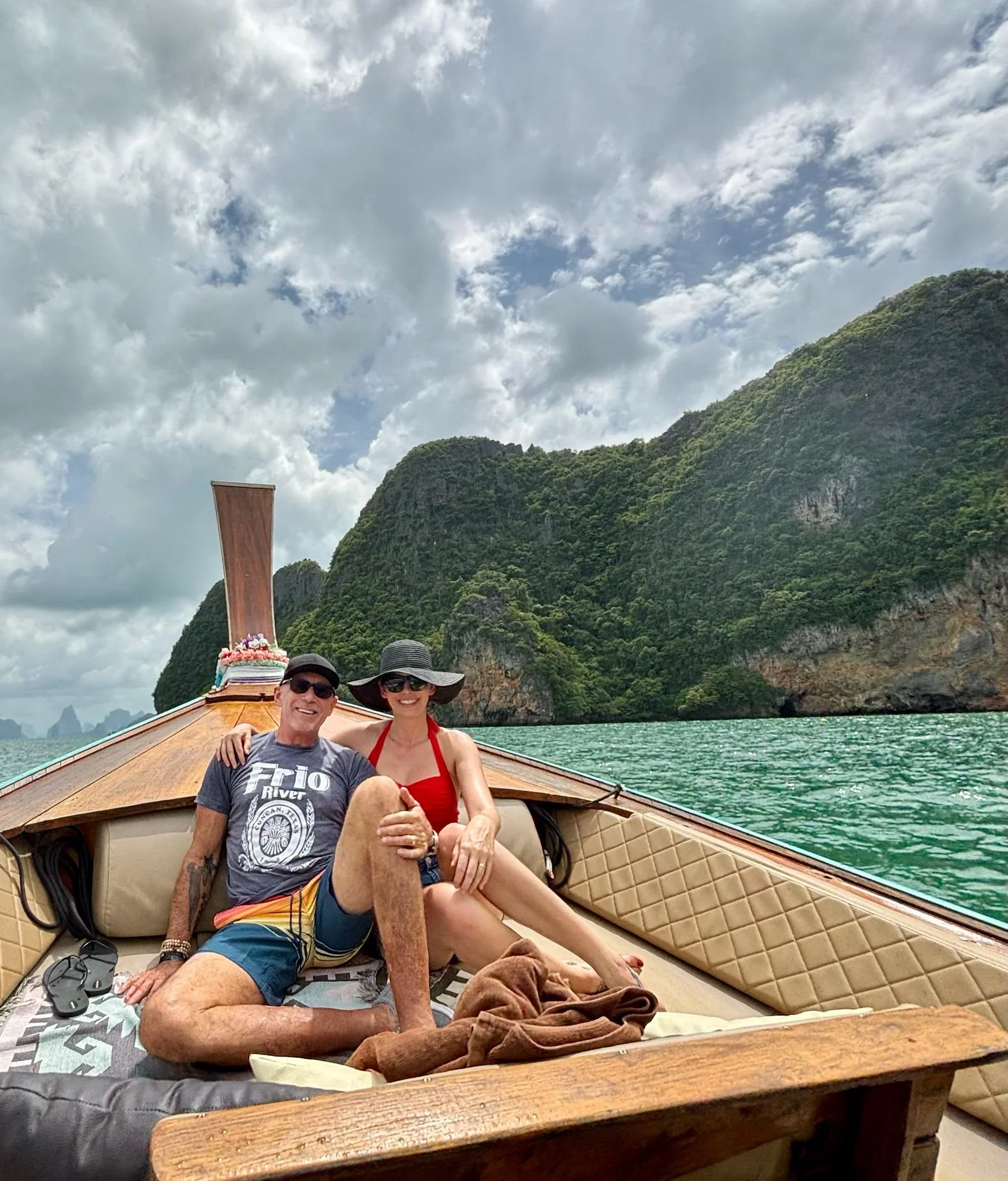
Miracles Asia operates as a small, family-owned center on a tropical island in Thailand. The environment itself contributes to healing.
At Miracles Asia, the core philosophy revolves around something simpler and more profound than fancy facilities or impressive credentials. It is about the veteran's own desire for change. As the founders explain in the full episode, external interventions fail without internal motivation.
The moment someone decides they are ready to speak their truth is when transformation becomes possible.Michael's Transformation due to Miracles Asia's Program.
Why Isolation Impedes Recovery
One of the most striking insights from our conversation was how isolation serves as both a symptom and a weapon that trauma uses against survivors. Heather and O'Connor explain how the military culture of silence reinforces the feeling that veterans are alone in their pain.
At Miracles Asia, the treatment approach focuses on breaking this isolation through genuine connection with others who understand. To hear more about how they create these healing spaces and why peer connection matters so much for MST survivors, listen to the full episode.
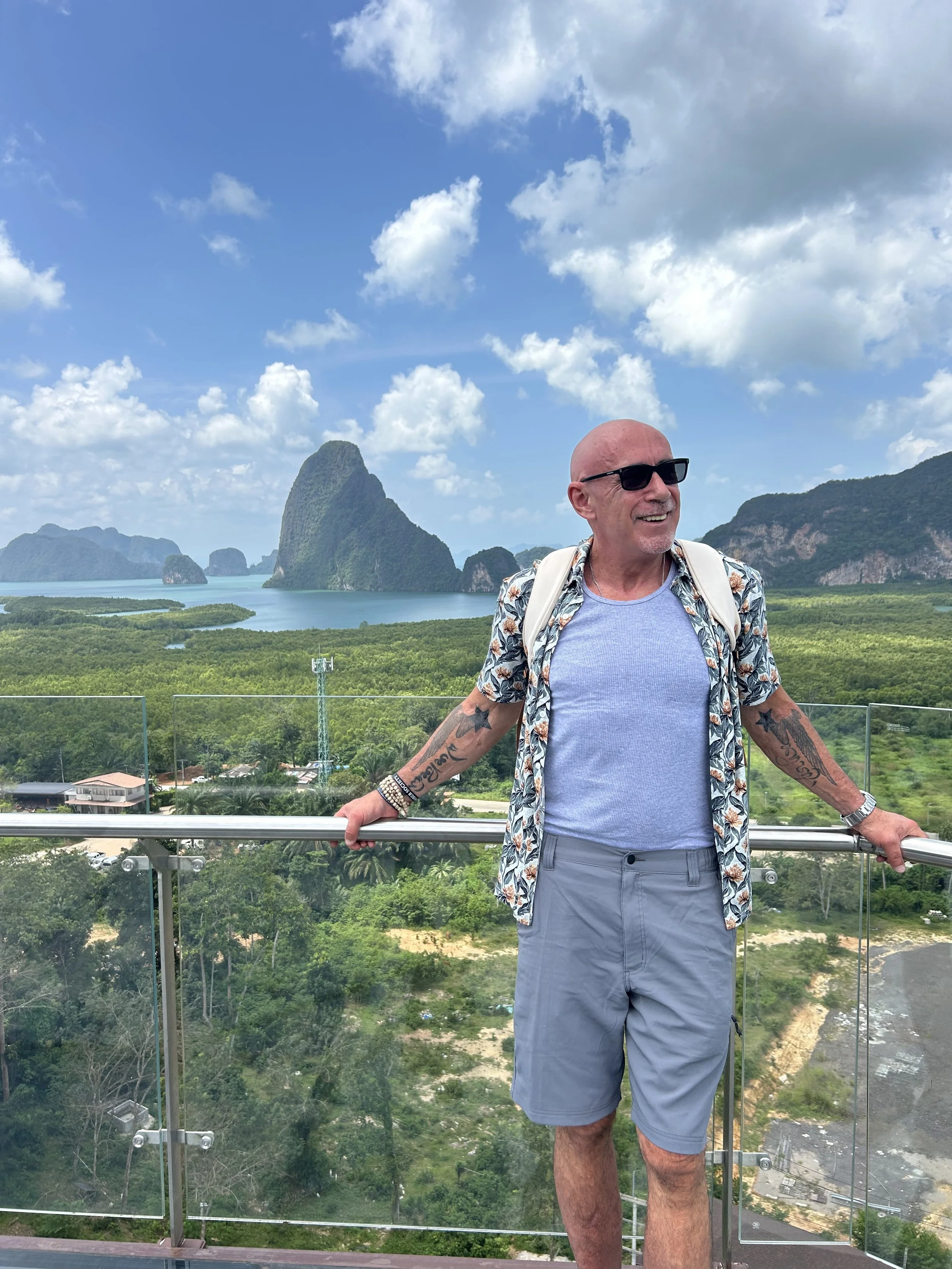
Learning to meditate, talking in group settings, and asking for help all felt uncomfortable at first. These practices required Michael to confront the military conditioning that taught him to suppress emotions and handle everything independently.
Why Location Matters More Than You Think
Miracles Asia's location on the island of Phuket in Thailand was chosen with intention. Situated in a rural area surrounded by mangroves and jungle, the facility offers a serene and secluded environment conducive to healing. While this might sound like a luxury, Heather and O'Connor explain there is clear strategy behind it.
When veterans are healing from trauma and addiction, they need physical distance from the triggers that keep pulling them back. For veterans, those triggers are everywhere in their home communities: the bar where they used to drink, the people who knew them before, and the constant reminders of military service that can activate trauma responses.
Creating physical space allows veterans to create mental space. At Miracles Asia, veterans can focus on healing without the daily assault of familiar triggers, surrounded by a peaceful retreat away from the distractions of city life.
The Holistic Approach That Actually Addresses Root Causes
Miracles Asia was built on the understanding that most addiction treatment fails veterans because it treats the substance use without addressing the trauma underneath. Programs can get someone sober, but if they do not help veterans process their PTSD, MST, or moral injury, relapse becomes likely.
Through their holistic approach that includes psycho-education, mental health support, physical fitness, spiritual exploration, and the mind-body connection in trauma recovery drastically reduces the internal conflict that drives veterans to numb or cope with drugs and alcohol. More than 80% of specialized VA programs used to treat PTSD now offer some form of mind-body therapy, and Heather explains why this matters so much for veterans healing from addiction and trauma.
To understand how all these components work together at Miracles Asia and why treating PTSD and substance use disorder at the same time is so critical, listen to the full episode where they break down their entire approach.
Why Group Healing Matters for MST Survivors
Research consistently shows that engaging in group healing, especially in addition to individual therapy, is one of the most effective ways to recover from the effects of sexual violence. Heather shared powerful insights about what happens when survivors connect with others who truly understand their experience.
When survivors share their stories with others who have similar experiences, something fundamental shifts. The shame loses its power.
This is especially critical for male MST survivors. Men with MST histories were no more likely to engage in mental health treatment despite having nearly 3-fold increased odds of reporting future suicidal intent. In the episode, Heather and O'Connor discuss how they create spaces where male patients can break through this isolation.
The Intersection of MST, PTSD, and Addiction
Veterans with lifetime PTSD were found to be 2 times more likely to meet criteria for an alcohol use disorder and 3 times more likely for a drug use disorder. When MST layers on top of that, the complexity increases substantially.
However, Heather and O'Connor shared something hopeful: research shows that alcohol misuse does not interfere with positive treatment outcomes. In other words, clinicians can successfully treat veterans for PTSD alongside addiction. The presence of substance use does not doom chances of recovery.
Listen to the full episode to hear their insights on treating the whole person, not just the addiction and how they approach this intersection at Miracles Asia and what makes their treatment model different.
ARecovery is possible. About 29% of veterans who served in Operations Iraqi Freedom or Enduring Freedom have had PTSD at some point in their lives, yet with the right treatment and support, healing is within reach.
Listen to the full episode to hear more about Miracles Asia's approach, why location matters in recovery, and how connection saves lives.
Resources for Veterans Seeking Help
Veterans struggling with addiction, PTSD, or trauma can take several steps to access help. The Veterans of Foreign Wars connected Michael with Miracles Asia, and they can connect other veterans with appropriate resources. Organizations like the VFW understand the specific challenges veterans face and can provide guidance on navigating treatment options for veteran rehab that treats MST.
Veterans can contact the VA about MST-related care without needing proof or documentation of the assault. The VA's policy on MST-related care is designed to reduce barriers to treatment. Veterans can also inquire about EMDR therapy through the VA, which offers it at no cost.
Treatment options like Miracles Asia in Phuket, Thailand provide alternatives to traditional rehabilitation facilities for PTSD and addiction treatment for combat veterans. The Foreign Medical Program may reimburse treatment costs for veterans seeking overseas addiction treatment for veterans. Some facilities, including Bangkok Hospital, bill the Foreign Medical Program directly, reducing the financial burden on veterans.
Connecting with other veterans through support groups, online forums, or veteran organizations provides community support that enhances recovery. Michael found this community essential to his ongoing sobriety and mental health.
Contact Miracles Asia
For more information about Miracles Asia's veteran addiction treatment program in Phuket, Thailand:
Website: www.miraclesasia.com
Phone: +66 (0) 76 367 788
Email: info@miraclesasia.com
Miracles Asia specializes in treating co-occurring PTSD and substance use disorders in veterans, with expertise in military sexual trauma recovery. The program accepts referrals from the VFW and works with the VA Foreign Medical Program for eligible veterans.
Episode Chapters and Timestamps
00:00 Previously on The Silenced Voices of MST
00:20 The Key to Miracles Asia's High Success Rate
02:37 The Role of Connection in Recovery and Mental Health
03:57 Michael's Journey to Miracles Asia Began The Veterans Program
06:50 The Miracles Asia Veterans Program Breakdown
13:24 Miracles Asia's Location and Origin Story
17:31 A Special Message for Veterans
21:52 Preview for next episode
Frequently Asked Questions
-
The most effective addiction treatment for veterans with PTSD integrates trauma treatment with addiction recovery rather than treating them separately. Research shows that treating PTSD and substance use disorder at the same time works to treat both conditions. Programs like Miracles Asia specifically address the intersection of military trauma and addiction, recognizing that veterans need both issues addressed simultaneously for lasting recovery.
-
Veterans should consider inpatient treatment if they have tried outpatient options without success, if their home environment contains triggers that make sobriety difficult, or if they need a safe place away from their regular surroundings to focus on healing. Inpatient programs provide 24/7 support, structured programming, and distance from the people and places associated with substance use.
-
The VA does provide addiction treatment services for eligible veterans. However, many veterans also seek treatment at private facilities like Miracles Asia that specialize in veteran-specific care. These programs often offer approaches and environments different from VA facilities, including international locations that provide physical distance from home triggers and peer communities of veterans in recovery.
-
Yes, and research shows this is actually the most effective approach. About 63% of veterans diagnosed with a substance use disorder also meet criteria for PTSD. Studies have demonstrated that alcohol misuse does not interfere with positive PTSD treatment outcomes, meaning veterans can successfully recover from both conditions simultaneously. Programs that address both issues together, like Miracles Asia, give veterans the best chance at lasting recovery.
-
Veterans should seek programs that prioritize safety, provide trauma-informed care, offer connection with peers who understand military experience, integrate addiction and trauma treatment, respect individual healing timelines, and focus on strengths rather than solely on deficits. Look for programs that include comprehensive aftercare as a core component and that understand the unique challenges veterans face, including military sexual trauma and the culture of silence in the military.
-
Treatment length varies based on individual needs, but effective programs recognize that healing from both addiction and trauma takes time. Many programs offer 30, 60, or 90-day options, with longer stays generally associated with better outcomes. Aftercare and ongoing support following the initial treatment period are critical, as the weeks and months after leaving a program are often more challenging than the time spent in treatment.
About the Guests
Mark Heather is the co-founder of Miracles Asia, a specialized addiction treatment center located in Phuket, Thailand. With personal experience in addiction and recovery, Mark understands what veterans need to heal from substance use disorders, PTSD, and military sexual trauma. His mission is to help veterans find a path to sobriety and healing by addressing the unique challenges faced by those who have served in the military.
Michael O'Connor was the first veteran patient at Miracles Asia. His experience with the program and his journey through recovery provide valuable insight into what works for veterans struggling with addiction and trauma.
The program at Miracles Asia is designed to provide veterans with the tools, support, and community they need to rebuild their lives through a holistic approach that emphasizes connection, safety, and integrated treatment for both addiction and underlying trauma.
Help Support our Mission
This work saves lives. Every story shared, resource created, survivor connected to help. The Silenced Voices of MST exists because too many survivors have been silenced for too long. This work is necessary, but it cannot continue as a one person sacrifice. I am asking for your support to help transition this platform into a sustainable resource. If this mission matters to you, please consider making a donation or sharing this campaign with your network. Every episode produced, every toolkit distributed, every survivor story amplified requires resources. Production costs, hosting fees, website maintenance, and platform development all depend on the generosity of people who believe survivors deserve better.
Your donation directly funds:
Administrative Support: $12,000 to hire a part-time assistant. This is the only way to shift the twenty-person workload off of one individual and ensure the show’s longevity.
Operational Recovery: $8,500 to address the debt incurred by the show's operations since 2023. This is essential to stop the cycle of negative balances and financial instability from paying for the show with VA disability
Production & Security: $4,500 to cover the upcoming year of hosting, extra security features for guest safety, and necessary software subscriptions.
Thank you for standing with survivors.
About the Host
Rachelle Smith is an Air Force veteran, MST survivor, and the founder of The Silenced Voices of MST, an advocacy platform focused on Military Sexual Trauma. With a background in Communications and a distinguished career as a US Air Force Public Affairs Officer, Rachelle is committed to amplifying the voices of survivors and demanding accountability from institutions that have failed them.
After years of struggling in silence, Rachelle created The Silenced Voices of MST to help this long-ignored community document their truth, speak out, and fight for future service members. The platform offers the VA Disability Toolkit, the Contact Your Lawmaker Toolkit, guided trauma recovery journals, and leads The Advocates of MST, a private Facebook support group.
Through her podcast, Rachelle provides a safe space for MST survivors to share their stories, access resources, and find community. Her work centers on visibility, support, and accountability for Military Sexual Trauma survivors worldwide.
Connect with Rachelle: silencedvoicesmst.com | Email: info@silencedvoicesmst.com
-
Michael O (00:00)
had to, be willing to humble myself and put my hand up, which is something.
of veterans might struggle with just because of our conditioning, to raise my hand and ask for help to be vulnerable.
Mark Heather (00:20)
we have a huge success rate. Our is about 60%. It's normally about five or 10. Now, to be brutally frank, that's not because we're any good. It's because of the type of clients we get. You can get a client will go to some really shit rehab. I know it's no good, it's rubbish and yet they get sober.
Rachelle Smith (00:38)
Mm-hmm.
Mark Heather (00:48)
And you can get another guy that goes to this fantastic rehab that I know everybody's committed. got school program. He doesn't get sober. What's the difference? It's do they want it? Do they want it? If they want it, we've got it. If they don't want it.
There's nothing you can do. I can't get sober for them. don't just accept anybody. in our assessment process, we've got to be careful about who we can and can't take. We can't take severe mental illness, for example. We can't. But you know, number one is are they safe? they not violent?
We've got to make sure that they're safe in our little community. But second of all, for me is do they want it? That's what I'm trying to find out when I'm when we're asking people, they good? Do they want to if they want it? Come on down because we've got it for you.
Rachelle Smith (01:37)
In my personal experience with going to different treatment programs, I would say that I did want it, but I didn't believe that I would actually get to a place of healing. And there's actually a big difference, right?
I think it's more of like, I wanted to get better, but I didn't have any hope of it. With me, I found a medication that had finally worked. Prior to that, I had been on like 30 or 40 and it seemed like they either like worked a little bit and then my brain adjusted to it and nothing happened. And that would be the thing that would cause another slump of...
Like you feel like a little better and then all of sudden nothing, you're gonna get back to where you started. having people that have reached that kind of equilibrium of, okay, things are starting to feel a little better. I actually believe now I can do this work and make progress.
Mark Heather (02:37)
Right. And with time, we become our own proof, you know, after some time, but it's just crucial that we stay connected to like-minded people. problem with certainly addiction and mental health and trauma, you're not going to think your way out of it. You're not going to sit in a room and go, well, I'll think my way out of this. It's impossible. It has to be done with others.
Rachelle Smith (02:40)
Right.
Mark Heather (03:02)
that we can be part of that others, which is very powerful in itself, I think. There is something tremendously positive and a gift to be taken from in a positive way. we go out and we have this experience and we found our way out, to be able to share that with other people is very powerful. I believe it's a spiritual thing. It's this awful experience that happened to me
Well, I can take something good from that because I found a way out and I can show other people, hey mate, this is what I did to get out. You if you want to get out of somebody, ask somebody who's got out. That's powerful. You know, it's a powerful thing to have. It's a gift in many ways. It's not a gift we want, but it is a gift. It's a gift that we've got because we have the ability to help people.
Rachelle Smith (03:50)
That's true.
Mark Heather (03:57)
It's a passion. It's the reason that we get up in the morning. My primary purpose, Michael's primary purpose is to help the next alcoholic or addict that we can. That's primary purpose. So the whole place has got that sort of vibe. We've expanded now to 25 rooms. We started at six and it grew and our name grew because, you know, we're quite passionate about what we do. How I got involved with the armed forces, with the FMP.
And the VA was that during COVID, we were so small that we were about the only rehab open in Thailand at all. Nobody else. The VFW, which is the Veterans of Foreign Wars in Chiang Mai, it's in the north of Thailand, contacted us along with the American Embassy. And they said, we've got a serviceman who happened to be Michael, who's with us today, because there's been a load of others since. But he was the first one. They said, he's stuck, he's in COVID.
He can tell you what he was suffering, but also PTSD. Do you have a trauma informed staff there? Can you help? And we went, yeah, sure. You know, bring him down. They connected us up with the FMP, which is the payment part of the three A's who pay us very slowly, but they do pay us. And we got on their list and we've managed to help. We normally have three or four servicemen a year, something like that coming to us from various branches. Mostly those.
Rachelle Smith (05:10)
Sounds about right.
Mark Heather (05:22)
who are living overseas. could be anywhere in Southeast Asia, we cover them. So Michael came down and he was our first client, the forces. And yeah, it went from there really. Regarding our program, yeah, we're bringing in, ⁓ I want to bring in about five veterans a month. And if they stay, we have a 30, 60, 90 day program and not everybody can take 90 days because they're working, right? So it's a lot of time to take off.
They should be saying at least 60 days. Difficult to change people's sort of concept in 30 days. we need about 60. But if they're coming five a month, which we've given, you know, we've made five places available, that means I should have between 10 and 10 and 15 military people. What we plan to do is I don't want this to be a hurrah sort of, you know, military place. You know, I think there should be, I think there's a lot to be said.
with, you know, my other clients are normally 30s, 40s, 50s, middle-class professionals working in Southeast Asia and the States. So I have that type of community. If I bring the military people in, I don't think they should just be service people, because they live in that world already. I think they should be part of Civvy Street. I think they should be part of a normal community. But I do think they have their own special needs.
So I think they should have special counseling, special process groups where they come into groups and they work with their clinical side. There are certain aspects of the program that I think they need to be special just for them. But that's a 20 % of the whole. The rest of it should be our normal program. And our normal program, it's a holistic program, which means it's made up of different bits. The first part is psychoeducation. This is education.
about, you people think they you know all this, you naturally know all this, but people with problems don't. And I'm talking about anger management. I'm talking about relationships. I'm talking about boundaries. I'm talking about values. I'm talking about CBT. I'm talking, you know, mindfulness, these things that we think, I know about that. But actually, maybe they don't know very much. And they're wondering why they're raging all the time or angry all the time or kicking off all the time, you know, these types of things.
So that first part is a educational part, which is in a classroom delivered with homework and going over exactly what that is. The second part is relapse prevention. Anybody can stay sober in a rehab. It's not difficult. What it's all about is what you do when you go home. So the minute they come to us, they're working on what it's like when they leave those gates, when they go back out to their community.
What's the plan Stan? So they should have a complete and utter plan day by day about are they going to continue the therapy with their therapist? Are they going to be going to support groups? Are they going to be joining AA, physical health, eating properly, sleep, all of these things. What's the plan? So the second part is relapse prevention. The third part is the bit we touched on before, mental health. People drink or use because they don't like how they feel, including PTSD. ⁓
When you feel like shit and you feel awful and you can't do anything, what are you going to do? You're going to change how you feel. How do you change how you feel, especially in the services? Totally acceptable. Drink, drink like a fish. I grew up in the military. My dad, was a drink and now more powerful modern drugs have come on the scene. So they need to change how they feel because they feel so awful. That's why they use. So the mental health part is
where you're sitting with a clinical psychologist and you're going through, what's making the want want? What's driving it? Addiction in itself is a compulsive obsessive disorder. But then there's something else, either depression, anxiety, trauma, PTSD, which is driving us to drink and use. So that needs...
Number one, they need to be like detoxed and identify what that is because it's not, know, it can be such a blanket term PTSD, it covers so much, but it really needs pairing down into exactly what it is, exactly how it's presenting and exactly how it should be managed, right? So that's the third part is the mental health part. They do at least two hours a week with a clinical site. You can't do more than that. If you're doing more than that, you're doing too much.
And if it's not too much, you're not doing it properly. Right. After that, it's group work. do quite a lot of group work because I have this amazing community. I only take people that want it. If they don't want to get sober, I don't want them. I can't be bothered. I haven't got enough time. I just want people that want it. So when I get a community of mostly men, I mean, I have about 20, 30 % women, but mostly
Rachelle Smith (10:12)
Right.
Mark Heather (10:36)
well-educated, well-motivated, team-orientated men, all of them, are very, that's a powerful group of people to work with. And it's okay when a clinician or a support worker or a doctor or me say ABC, but when your peer says something to you, you listen, you really listen. So there's the power in the group. It's not only the medical sort of thing, the mental health thing, it's a group thing as well. So,
Rachelle Smith (10:55)
Mm.
Mark Heather (11:04)
The last one is group. also have 12 steps as part of our program. 12 steps is Alcoholics Anonymous, Cocaine Anonymous. We are not a 12 step program, but it's certainly part of what we do because when you go back to your community and especially in the States, everywhere, this is everywhere. It's free, it's loving, it's supportive, it's absolutely everywhere. So we try to guide people into that.
They don't want it. They don't have to have it. It's also a bit of a spiritual program. So there's a spiritual aspect to it as well. And by spiritual, mean, asking yourself a lot of questions and ask answering them and no matter where they go, rather than religious, it's maybe a set of rules that you have to follow. Spirituality is not about that. It's really is this inward, deep dive. And, remember that I think addiction and depression and
PTSD is the loss of connection to self. So it is a bit of a spiritual ⁓ emptiness, a void that we've got to look at. So anyway, that's part of the group. We do lots of different group works and as I said, it's quite powerful. The next one is physical fitness. We've got a gym, we go to this amazing gym three times a week. I it's just huge Olympic pools, weights, ⁓ cardio.
hot and cold, it's as the whole nine yards, has everything. And we do yoga in the morning or we do beach walks in the morning. So we're not keep fit for now, but we do believe in healthy body, healthy mind, healthy spirit. These are all like healing things. And the last one is that we do a lot of is aftercare. So when the client goes home, we're there with them for a couple of months, they continue with the therapist, they continue with the sport worker. They should be coming to our Zoom meetings.
We have the connection. We have the connection when they go home. So they're not alone. We do expect them to find their own communities when they get back, which there's loads in the States, but they've got to actually make that connection. So with us, we're with them all the time, including the two months after they go back. So that's roughly our program.
Rachelle Smith (13:24)
Where exactly are you located to? We should probably cover that.
Mark Heather (13:28)
We're located on the island of Phuket. Phuket is in the Andaman Sea. It's halfway down Thailand on the left hand side.
Rachelle Smith (13:38)
Beautiful. Yep. I've been to Bangkok. I was supposed to go to Phuket, but didn't make it, but I've seen pictures, isn't it? ⁓ man. Paradise, like you said.
Mark Heather (13:49)
We are
actually, we're on the rural part because the island is made up of the few and I didn't know this is this is most islands. I didn't know. It depends on the wind and the tide, but one half of the island is normally mangroves and the other is beaches. We're actually on the mangrove side, which is good for us. We're only about 10 minutes from a beach, but the general area is mangroves because then there's no beaches, then there's no hotels, restaurants, people.
We're very quiet and we're just underneath a jungle, which is a national park, which is behind us. So we're nice and quiet where we are, but we're still only 10 minutes from the beach. But we're in the rural part of the island. I was working in hotel not far from here when the tsunami hit. I lost 13 staff, 54 guests. Bill also lost a lot of guests and staff. He's a ship's captain, but was
working with a hotel and they lost a load of guests and staff as well. So after the tsunami, we worked together. I knew him through Alcoholics Anonymous and we started doing charity work together for kids, orphans, families that have lost loved ones, our staff mainly. We did that for a couple of years. I got to know Bill quite well through Alcoholics Anonymous and through working on the charity work. In about 2015, 16, I wanted to do something about recovery, but
It was my world, but something in hotels as well. you know, rehab seemed to be really way to go. And he said, okay, let's start it with my villa. He had a very flash private luxury villa that was only six bedrooms. And we decided that we thought we were going to help people like us because when I got sober, there were no rehabs. I got sober in 2004. He got sober like 10 years later. There were no rehabs at all in Thailand at that time. So we just did it through AA. And, know, with.
With recovery, AA is wonderful and you know, I'm Mr. AA and NA and CA and all of the anonymous things, but there are other components that AA doesn't cover. The medical part, is detox, the mental health part, which we're going to come to in a minute. The rehab encompasses those things. Yes, it's a place to stop and then work on yourself, but there is mental health component and a medical component that AA doesn't do. So we wanted to.
cover those parts of it. What we thought we aimed at people like ourselves, which is expatriates working in Southeast Asia. Most of our clients are expatriates working in Southeast Asia. So they're normally educated, normally just about to lose everything. The wife is normally leaving with the kids or HR is on their ass. You know, they're that type of client. We aimed it at that sort of people. And that comes out in that
We don't do bag searches, we don't do drug tests all the time, we don't do room searches. We treat people like adults because they are adults. They're allowed phones, they're allowed communication devices. Things that aren't quite allowed in other rehabs, we could because we were going for that sort of population. We were quite successful because we're very small, very personalized, very passionate. All the staff, I employ professional people, nearly all of them.
except for the Thai people who run the kitchen, who run the drivers, who run, you know, the rest of it, like a hotel, the people who are with the clients, with clinical psychologists, psychiatrists, support workers, all of these people, most of them are drunks or alcoholics themselves. ⁓ They are in recovery.
Rachelle Smith (17:31)
So if a veteran listening was interested in reaching out to you to learn more about miracles, how could they find you?
Mark Heather (17:40)
Just go to miraclesasia.com and there's ⁓ a page, especially for veterans.
No, MiraclesAsia.com. You'll get right there. There's a little dog tag and it says veterans press here. So there you go.
Rachelle Smith (17:59)
And do you all have any social media accounts as well?
Mark Heather (18:02)
Yes, we do. Yes. ⁓ We're on Facebook and Instagram.
Rachelle Smith (18:07)
Okay, perfect. I'll get that into the show notes. And is there any last tidbit either of y'all wanna share with our listeners or viewers?
Michael O'Connor (18:18)
Yeah, that there's help.
Mark Heather (18:20)
I think
you don't have to be alone. Just don't. you know, there's a saying in Asia, know, when the student's ready, the teacher will appear. And it is so true. If you put your hand up, all you've got to do is put your hand up and help comes. It really does. Well, and thank you for the wonderful work you do. It's really quite impressive what you're doing.
Rachelle Smith (18:22)
Yeah.
⁓ yeah.
Mark Heather (18:49)
Thank you.
Rachelle Smith (18:51)
It's been humbling. I can tell you that. When I did get to that point of recovering enough to actually use the things that I had learned, ⁓ I was just thinking, man, I want other people to be able to get to this space, because my depression was so bad that it really felt like ⁓ I couldn't see colors at times.
It was like being a robot zombie, I guess, if I could call it something. But to be able to share the stories of more folks that have gotten out of that mode and let survivors know that they're not alone. then there's probably millions of people out there willing to help them and then pull them out of that. That isolation piece, that ⁓ hopelessness. ⁓
We lose people every day because of it. I mean, I was almost one of them multiple times. So this, this is my way of, of sharing that hope and the love that I have now. didn't feel like I had any love in my life before that. I see that in both of you and it's, it's just so important to spread that and get as many people. The help they need as possible and, and, you know, change the world just a little bit every day.
And you can do that through healing, you know.
Mark Heather (20:20)
Best.
Michael O'Connor (20:23)
You're going through a big shift right now too, Rachelle aren't you? Like you're shifting out of that VA space you're in and you're like taking a big step doing this podcast. And I believe in you. I'm really grateful that you have the courage to follow your passion and your journey. Yeah.
Mark Heather (20:40)
Thank you,
Rachelle Smith (20:42)
yeah, every day is an adventure, but it's every day is a learning experience. And the one thing I did learn in therapy that I have to repeat to myself daily is like, I can't control, you know, other things, but I can control how I react to it. And, ⁓ who has gotten me through quite a few things. There's always something, but it's just.
taking that second to breathe and recalibrate and maybe even reach out to somebody else and say, Hey, I just need a different perspective. But being able to do that, even it sounds simple, but it's not.
Mark Heather (21:24)
Yes, that's the difference.
Rachelle Smith (21:26)
That's not, but thank you for providing this to veterans. Thank you, Michael, for sharing your experience as well. And again, so proud of you, so happy for you. And I think so many people are going to benefit from this episode and eternally grateful to you both.
Mark Heather (21:46)
Thank you very much.
Michael O'Connor (21:47)
gonna get a of you.
Rachelle Smith (21:49)
Hey!
Veteran Addiction Treatment for PTSD and Military Sexual Trauma: What Helped One Combat Veteran Recover
Veteran Addiction Recovery: Michael O'Connor, an 82nd Airborne veteran, shares his personal journey through military transition, trauma, and moral injury that led to substance use disorder. Michael shares how important community's importance is in veteran sobriety, and how peer support reawakened a sense of purpose and duty. This post is a guide to finding a new brotherhood in recovery.

Combat veteran Michael O’Connor shares his journey from living overseas isolated from VA resources to finding help through the Veterans of Foreign Wars, entering treatment at Miracles Asia, co-founded by Mark Heathe during COVID, and building a life in recovery he never imagined possible.
Michael O’Connor, an 82nd Airborne Infantry veteran, shares his personal transformation after transitioning to civilian life. Having struggled with trauma, moral injury, and a deep sense of loss following his military service, he turned to addiction as a coping mechanism. Michael, who is also a Military Sexual Trauma survivor and a veteran outreach advocate for Miracles Asia in Thailand, now stresses the critical role of community in a veteran’s sobriety and recovery. Peer support reawakened his sense of purpose and duty, resulting in a drive to help more veterans find the same.
If you’re a veteran currently struggling with addiction, remember you are not alone. Join Michael in finding brotherhood and hope in recovery.
Mark and Michael appeared on The Silenced Voices of MST to discuss how Miracles Asia provides holistic recovery for veterans struggling with addiction, PTSD, and trauma, including military sexual trauma. Michael shares his journey from living overseas isolated from VA resources to finding help through the Veterans of Foreign Wars, entering treatment at Miracles Asia during COVID, and building a life in recovery he never imagined possible. He now works with Miracles Asia to help other veterans access the same care that saved his life.
Potential Trigger Warning: This episode contains discussion of addiction, suicidal ideation, sexual trauma, substance use disorders, and PTSD.
Introduction to Miracles Asia and Personal Journeys
Michael lived in Southeast Asia for many years, disconnected from the VA and any recovery communities. He was off grid, overseas for a long time without the support systems that might have helped him recognize he needed treatment. The pain finally became too great. He reached a tipping point where he had to raise his hand and ask for help.
Asking for help required surrender, which Michael acknowledges is particularly difficult for veterans. He references the Ranger Creed, which states that surrender is not a Ranger word. Yet through surrender, he achieved victory. He realized that his greatest weakness became his greatest strength. That tipping point required not only asking for help but also becoming willing to let go and trust people he did not know.
Michael points out that resources for veterans now feel like an ocean. Veterans new to seeking help face the challenge of navigating where to go when there are so many places and options. He did not understand at the time that he had services available to him.
Why Seeking Help is Difficult for Veterans
Michael explains how veterans living overseas can access treatment through the VA Foreign Medical Program (FMP). When he needs care, he can go to an accredited facility and generally pays out of pocket first, then the FMP reimburses him. Because there is a massive community of veterans overseas, many institutions now cater to the veteran community.
Bangkok Hospital, for example, treats veterans and then bills the FMP directly. This removes the burden of paying out of pocket, which helps veterans who are living on disability benefits or social security. The VFW in Chiang Mai reached out to Mark when Michael needed help. At that time, Michael was willing to do whatever it took. Mark took him in during COVID, even though he was not sure about how it would work. Mark knew Michael needed help and was willing to provide it.
Michael's Transformation due to Miracles Asia's Program
Miracles Asia operates as a small, family-owned center on a tropical island in Thailand. The environment itself contributes to healing.
Michael addresses how substance use and alcoholism are prevalent in the sexual trauma space. Substance use disorders co-occur with PTSD. The VA and the government acknowledge this connection, which allows veterans to get care through the FMP.
When Michael entered treatment at Miracles Asia and removed alcohol and drugs from his life, he was able to work through meditation, EMDR, CBT, eating right, sleeping right, and being in a community of loving and kind people. This holistic wellness allowed him to openly discuss other things as well, including his sexual trauma.
What Sets Miracles Asia Apart From Other Rehabs
Michael credits Miracles Asia with giving him a life beyond his imagination. He contrasts the program with traditional rehabilitation facilities he experienced before, which felt sterile, isolating, and transactional. Those programs followed a set timeline where patients completed treatment and then returned home to manage recovery alone.
Miracles Asia operates as a small, family-owned center on a tropical island in Thailand. The environment itself contributes to healing. The program incorporates yoga, walks on the beach, fresh food, excursions, and community building as essential elements of recovery. Mark and Michael say the setting matters because trauma and addiction affect the whole person, and healing requires more than addressing symptoms in clinical settings.
The holistic approach includes meditation, EMDR (Eye Movement Desensitization and Reprocessing), Cognitive Behavioral Therapy, healthy eating, physical activity, and genuine connection with others in recovery. Michael appreciates the passion Mark and his team bring to working with veterans and civilians. The small scale allows for individualized attention and flexibility in treatment approaches.
Learning to meditate, talking in group settings, and asking for help all felt uncomfortable at first. These practices required Michael to confront the military conditioning that taught him to suppress emotions and handle everything independently.
Expanding Their Program to More Veterans
Michael now works with Miracles Asia to market their services to the veteran community and participates in ongoing Zoom meetings that foster continued support after treatment. This ongoing connection prevents the isolation that often leads to relapse. Mark and Michael are expanding the program to accommodate more veterans through a specific veteran cohort, with their first group arriving soon.
Michael shares that Miracles Asia's doctor identified one of his medications was causing suicidal ideation and discontinued it. He is now abstinent from pharmaceuticals and reports feeling better than he has in years. This medical oversight represents another way Miracles Asia differs from programs that might not thoroughly evaluate how medications interact with trauma recovery.
Michael Shares His Experience with EMDR Treatment
Mark and Michael explain EMDR (Eye Movement Desensitization and Reprocessing) as a therapeutic method that helps individuals process trauma without requiring detailed verbal descriptions of traumatic events. EMDR uses bilateral stimulation, typically through guided eye movements, to help the brain reprocess traumatic memories and reduce their emotional impact.
Research supports EMDR as an effective treatment for PTSD. A 2019 study found EMDR was clinically effective and the most cost-effective of 11 trauma therapies evaluated for adults with PTSD (Simpson et al., 2025). A 1998 study by Carlson et al found that military veterans who received EMDR experienced a 77% remission in their PTSD diagnosis within 12 sessions (Carlson et al., 1998).
EMDR does not require detailed descriptions of traumatic events, prolonged exposure to memories, or homework between sessions. Both weekly treatment and intensive daily treatment groups produced statistically significant results that were maintained at 1-year follow-up. The 10-day EMDR intensive daily treatment produced similar outcomes to weekly treatment.
Michael describes his EMDR sessions at Miracles Asia with honesty about the initial difficulty. He experienced anger and emotional intensity during the process. Despite the discomfort, he found EMDR valuable for processing trauma that had affected him for years. He points out that EMDR is non-invasive and drug-free.
The VA offers EMDR for free to MST survivors. Veterans do not need to have reported the incident when it happened, and they do not need documentation to access care. Eligibility for VA MST-related care is expansive. The VA offers evidence-based therapies like Cognitive Processing Therapy and EMDR to address trauma symptoms effectively, regardless of service-connected disability status.
The New Coping Tools for a Healthy Life
Michael discusses the importance of daily routines and rituals in maintaining recovery. He acknowledges the initial awkwardness and vulnerability involved in learning new coping mechanisms. Learning to meditate, talking in group settings, and asking for help all felt uncomfortable at first. These practices required Michael to confront the military conditioning that taught him to suppress emotions and handle everything independently.
The tools Michael learned at Miracles Asia help him navigate daily struggles without resorting to substance use. He says recovery does not mean achieving a perfect life without challenges. Recovery means having the tools to cope with life's difficulties in healthy ways. When stress, triggers, or painful emotions arise, Michael now has alternatives to alcohol and drugs.
The stakes for developing these tools are high. About 30% of Army suicides and over 45% of suicide attempts since 2003 involved alcohol or drug use (NIDA, 2025). An average of 20 veterans die by suicide every day (U.S. Department of Veterans Affairs, 2016). If you or someone you know is in crisis, call the Veterans Crisis Line at 988 and press 1. Recovery tools and daily practices can save lives by providing veterans with ways to manage PTSD symptoms, process trauma, and maintain sobriety during difficult periods.
The Prevalence of Sexual Trauma in Veteran Recovery Stories

Michael O’Connor and Mark Heather appear on The Silenced Voices of MST to discuss how Miracles Asia provides holistic recovery for veterans struggling with addiction, PTSD, and trauma, including military sexual trauma.
Michael notes the prevalence of sexual trauma among people in recovery spaces. He commits to openly discussing and advocating for this issue within the veteran community. He wants to break the stigma surrounding sexual trauma in ways similar to how stigma around addiction has decreased over recent decades. By speaking openly about his own experience with sexual trauma, Michael hopes to make it easier for other veterans to seek help.
An estimated 1 in 3 female veterans and 1 in 50 male veterans in the Department of Veterans Affairs health care system report experiencing sexual assault or harassment in the military (VA National Center for PTSD, 2024). While women face higher rates of sexual trauma by percentage, nearly 40% of veterans who disclose Military Sexual Trauma to the VA are men (DAV, 2024). Sexual trauma affects veterans across all demographics.
Female veterans are more likely to experience mental illness and sexual trauma, and face increased risk of developing substance use disorders when they have PTSD or specific medical conditions. They are also at greater risk for suicide compared to female civilians and male veterans.
Approximately 14% of men and 24% of women veterans are diagnosed with PTSD (VA, 2024). About 29% of living U.S. veterans who served in Iraq or Afghanistan have had PTSD at some point in their lives (NIDA, 2025). These statistics represent individuals living with real pain who need access to comprehensive treatment that addresses both trauma and any co-occurring substance use disorders.
A Special Message for Veterans Who Might Be Struggling
Mark says veterans do not have to face recovery alone. Veterans frequently isolate themselves due to shame, stigma, or the belief that others cannot understand their experiences. This isolation increases the risk of relapse and suicide.
Michael encourages veterans to ask for help, share openly about their struggles, and connect with others in recovery. He talks about the importance of faith and connection in his own recovery journey. The community at Miracles Asia and the ongoing support through Zoom meetings provide Michael with people who understand addiction and trauma recovery.
Research confirms the importance of community-centered treatment. Veterans with PTSD and alcohol use disorder had significantly elevated rates of major depression (36.8% versus 2.3%), generalized anxiety disorder (43.5% versus 4.1%), suicidal ideation (39.1% versus 7.0%), and suicide attempts (46.0% versus 4.1%) compared to veterans with alcohol use disorder only (Norman et al., 2019). The combination of PTSD and substance use disorder creates compounding mental health risks that require integrated treatment.
Holistic treatment for veterans addresses diverse and complex needs by integrating alternative therapies and lifestyle changes that heal the whole person. Miracles Asia incorporates this community-centered approach in their programming.
Resources for Veterans Seeking Help
Veterans struggling with addiction, PTSD, or trauma can take several steps to access help. The Veterans of Foreign Wars connected Michael with Miracles Asia, and they can connect other veterans with appropriate resources. Organizations like the VFW understand the specific challenges veterans face and can provide guidance on navigating treatment options for veteran rehab that treats MST.
Veterans can contact the VA about MST-related care without needing proof or documentation of the assault. The VA's policy on MST-related care is designed to reduce barriers to treatment. Veterans can also inquire about EMDR therapy through the VA, which offers it at no cost.
Treatment options like Miracles Asia in Phuket, Thailand provide alternatives to traditional rehabilitation facilities for PTSD and addiction treatment for combat veterans. The Foreign Medical Program may reimburse treatment costs for veterans seeking overseas addiction treatment for veterans. Some facilities, including Bangkok Hospital, bill the Foreign Medical Program directly, reducing the financial burden on veterans.
Connecting with other veterans through support groups, online forums, or veteran organizations provides community support that enhances recovery. Michael found this community essential to his ongoing sobriety and mental health.
Contact Miracles Asia
For more information about Miracles Asia's veteran addiction treatment program in Phuket, Thailand:
Website: www.miraclesasia.com
Phone: +66 (0) 76 367 788
Email: info@miraclesasia.com
Miracles Asia specializes in treating co-occurring PTSD and substance use disorders in veterans, with expertise in military sexual trauma recovery. The program accepts referrals from the VFW and works with the VA Foreign Medical Program for eligible veterans.
Episode Chapters and Timestamps
00:00 Introduction to Miracles Asia and Personal Journeys
Triggering content 00:09 - 00:45 that includes discussion of PTSD, alcohol and drug addiction, and sexual trauma
01:58 Why Seeking Help is Difficult for Veterans
Triggering content 02:35 - 03:15 that includes discussion of suicidal ideation and surrender
04:50 Michael's Transformation due to Miracles Asia's Program
07:08 What Sets Miracles Asia Apart From Other Rehabs
09:29 Expanding Their Program to More Veterans
Triggering content 11:00 - 11:46 that includes discussion of suicidal ideation as a side effect of medication
12:17 Michael Shares His Experience with EMDR Treatment
14:33 The New Coping Tools for a Healthy Life
16:35 The Prevalence of Sexual Trauma in Veteran Recovery Stories
Triggering content 16:35 - 18:17 that includes discussion of sexual trauma prevalence in recovery spaces
19:26 A Special Message for Veterans Who Might Be Struggling
References
Carlson, J. G., Chemtob, C. M., Rusnak, K., Hedlund, N. L., & Muraoka, M. Y. (1998). Eye movement desensitization and reprocessing (EDMR) treatment for combat-related posttraumatic stress disorder. Journal of Traumatic Stress, 11(1), 3-24.
Disabled American Veterans (DAV). (2024). What is MST? Military Sexual Trauma. Retrieved from https://www.dav.org/get-help-now/veteran-topics-resources/military-sexual-trauma-mst/
National Institute on Drug Abuse (NIDA). (2025, January 30). Substance Use and Military Life DrugFacts. Retrieved from https://nida.nih.gov/publications/drugfacts/substance-use-military-life
Norman, S. B., Hamblen, J. L., Schnurr, P. P., Eftekhari, A., Stein, M. B., Rosen, C., ... & Karlin, B. E. (2019). Co-Occurring Post-Traumatic Stress Disorder and Alcohol Use Disorder in U.S. Military and Veteran Populations. Alcohol Research: Current Reviews, 40(2).
Norman, S. B., Haller, M., Hamblen, J. L., Southwick, S. M., & Pietrzak, R. H. (2017). Substance use disorders in military veterans: prevalence and treatment challenges. Substance Abuse and Rehabilitation, 8, 69-77.
Simpson, A., Dutton, M., Dimambro, M., Gebhardt, H., Fraade, A., Winer, M., Enciso, M., & Shiner, B. (2025). Clinical and cost-effectiveness of eye movement desensitization and reprocessing for treatment and prevention of post-traumatic stress disorder in adults: A systematic review and meta-analysis. British Journal of Psychology.
U.S. Department of Veterans Affairs. (2016). Veteran suicide data report. Retrieved from https://www.mentalhealth.va.gov/suicide_prevention/data.asp
U.S. Department of Veterans Affairs, National Center for PTSD. (2024). Military Sexual Trauma. Retrieved from https://www.ptsd.va.gov/understand/types/sexual_trauma_military.asp
Veterans Addiction. (2025, June 17). Statistics on Veterans and Substance Abuse. Retrieved from https://veteranaddiction.org/resources/veteran-statistics/
Greater Than Myself | Veteran Mental Health: Addressing Trauma, Moral Injury, and Community in Recovery
Veteran Addiction Recovery: Michael O'Connor, an 82nd Airborne veteran, shares his personal journey through military transition, trauma, and moral injury that led to substance use disorder. Michael shares how important community's importance is in veteran sobriety, and how peer support reawakened a sense of purpose and duty. This post is a guide to finding a new brotherhood in recovery.
Michael O’Connor, an 82nd Airborne Infantry veteran, shares his personal transformation after transitioning to civilian life. Having struggled with trauma, moral injury, and a deep sense of loss following his military service, he turned to addiction as a coping mechanism. Michael, who is also a Military Sexual Trauma survivor and a veteran outreach advocate for Miracles Asia in Thailand, now stresses the critical role of community in a veteran’s sobriety and recovery. Peer support reawakened his sense of purpose and duty, resulting in a drive to help more veterans find the same.
If you’re a veteran currently struggling with addiction, remember you are not alone. Join Michael in finding brotherhood and hope in recovery.
I joined the Army to be a part of the noblest cause— a sense of duty, honor, country. I sought purpose, structure, and the challenge of being a warrior. Serving in the 82nd Airborne Division fulfilled that calling. As an Airborne Infantryman, I discovered the kind of brotherhood forged only through sweat, sacrifice, and shared hardship. The trust we placed in each other during airborne operations and deployments to foreign countries wasn’t just about tactics. We forged unbreakable bonds.
“No man is an island unto himself; we are waves of the same sea, leaves of the same tree, breath of the same spirit.”
In the airborne community, it was more than wearing the same uniform; we shared the same spirit of adventure in service to our country. We trained and fought under the most challenging conditions. We endured, not just for ourselves, but for each other. That spirit made even the hardest days feel meaningful.
In the 82nd, our actions were geared toward the mission, the unit, and the man to our left and right.
Military Transition: Moral Injury and Veteran Addiction
82nd Airborne veteran Michael O'Connor shares his powerful story of Military Transition, Moral Injury, and Veteran Addiction.
But the mission doesn’t last forever. Transitioning to civilian life was disorienting. The structure vanished. The sense of purpose blurred. The brotherhood faded into the rearview. I was left with echoes—memories of camaraderie and adrenaline, but no roadmap for peace. I struggled to find where I belonged. The war may have ended, but the battle within had just begun. Trauma and moral injury haunted me.
Promising relief, addiction took root in that void. Instead, it delivered destruction in a way no battlefield ever could. Yet even in my darkest moments, something inside me remembered who I was: a warrior. Not one without wounds, but one who could still stand.
Veteran Community: Sobriety and Accountability
Surrender is not a Ranger word, but I found that in my new mission of sobriety, I achieve victory through surrender, a day at a time. In the rooms and online communities of recovery, I saw something familiar: shared stories, mutual accountability, and deep bonds formed in the trenches of struggle. Helping others rise from the depths of addiction reawakened my sense of duty. Serving those with trauma and substance use disorders, especially veterans, became a sacred calling.
Seneca wrote, “Wherever there is a human being, there is an opportunity for kindness.” And I’ve learned that through kindness, service, and empathy, we rebuild the very brotherhood we thought we had lost. The esprit de corps that once lived in barracks and battlefields now lives in communities I serve, one veteran helping another.
You’re not alone, and you can explore more survivor stories and resources on our blog.
Veteran Outreach: Trauma and Substance Use Disorder Support
“I recover out loud so that others don’t have to suffer in silence. ”
Today, I serve my community and country in a different uniform - not one stitched from camouflage, but from courage and compassion. My weapon is no longer a rifle but a message of hope. The mission hasn’t ended; it’s evolved. And I stand shoulder-to-shoulder with a new platoon of men and women walking the path of recovery, fighting for their lives, and rediscovering their worth.
As Marcus Aurelius said, “Let your one delight and refreshment be to pass from one act of service to the community to another, with God ever in mind.”
I have found purpose again. And for that purpose, I have found peace.
Frequently Asked Questions
-
The transition to civilian life removes protective influences of military structure, which can make substance use and other mental health issues a greater concern [1]. The period of readjustment and reintegration presents unique mental health challenges [1]. Environmental stressors specific to military personnel, including deployment, combat exposure, and post-deployment reintegration challenges, are directly linked to an increased risk of Substance Use Disorders (SUDs) [1]. Veterans with SUDs are also 3 to 4 times more likely to receive a PTSD or depression diagnosis, indicating a strong co-occurring mental health component [1].
-
The Department of Veterans Affairs (VA) provides comprehensive services for substance use problems, including [2]:
Crisis Support: The Veterans Crisis Line (Call 988 and select 1, Text 838255, or confidential chat) is available 24/7.
Medical Treatment: Medically managed detoxification, drug substitution therapies (like methadone and buprenorphine for opiate addiction), and nicotine replacement options.
Counseling and Therapy: Short-term outpatient counseling, intensive outpatient treatment, residential (live-in) care, and continuing care/relapse prevention.
Specialized Programs: Support is available for co-occurring conditions like PTSD and depression. Combat Veterans can also receive free, private counseling at over 300 community Vet Centers [2].
International Outreach: The post mentions that Michael O'Connor serves as a veteran outreach advocate for Miracles Asia in Thailand, a facility that offers trauma-informed recovery programs and services, including [5]:
Individualized Care: Programs are limited to a maximum of 15 guests for focused attention.
Therapy Structure: Guests receive two 1-hour individual therapy sessions with a therapist each week.
Experienced Team: Most of the team members are in long-term, active recovery.
Aftercare: Guests receive 60 days of one-on-one support from the Clinical Team via an Aftercare program.
-
Regaining a sense of camaraderie and support is one of the biggest hurdles during transition. Finding a community helps veterans by [3]:
Providing Support: Sharing experiences with others eases negative emotions and can aid in recovery from trauma.
Creating Connection: Getting involved in local community activities, like sports, volunteering, or mentorships, helps combat social withdrawal and isolation.
Serving Others: Veterans are encouraged to find a way to serve others and share their important stories and skills, which benefits peers and co-workers and can foster a new sense of mission [3].
-
Finding a new purpose is key to overcoming the disorienting feeling of a lost mission and routine [3]. You can find a new sense of structure by [3]:
Recognizing the Issue: Awareness is the first step toward overcoming barriers.
Rekindling Your Passion: Build new habits based on enjoyable activities or commit to mastering a new skill, which can be a huge source of fulfillment and instill a sense of purpose into your daily routine.
Finding a New Mission: Veterans who successfully transition often find a new mission in saving lives, such as by becoming psychiatric nurses, or otherwise serving the community [3].
-
Moral injury is the psychological aftermath of events that contradict deeply held moral beliefs, often resulting in feelings of intense guilt, shame, disgust, or anger [4]. Specific treatments are available to address these core concerns [4]:
Trauma-Focused Therapies: Treatments for PTSD, such as Prolonged Exposure (PE) and Cognitive Processing Therapy (CPT), have been shown to be effective for patients with moral injury by helping process guilt, shame, and beliefs about betrayal [4].
Specialized Treatments: Other treatments specifically targeting moral injury include Adaptive Disclosure, Trauma Informed Guilt Reduction Therapy (TrIGR), and Building Spiritual Strength [4].
Ron Carter’s New Goals for Military Sexual Trauma Survivors (Part 3) The Silenced Voices of MST with Rachelle Smith
Military Sexual Trauma survivor Ron Carter appears on The Silenced Voices of MST to share the experiences that shaped his early service, the assault he endured, and the long-term effects that developed when the trauma went unrecognized. This interview begins a three-part series that follows his path from enlistment through MST, behavioral collapse, and his eventual understanding of PTSD outside of combat contexts. His story offers clear insight into how MST develops within military structures and how untreated trauma influences thinking, memory, relationships, and emotional regulation over decades.
U.S. Army veteran Ron Carter discusses Military Sexual Trauma, finding benefit in doing intensive therapy and somatic release to come to terms with what he survived while serving on The Silenced Voices of MST.
U.S. Army veteran Ron Carter continues his story on The Silenced Voices of MST. In Part 1, Ron shared his experience of assault and decades of undiagnosed PTSD. In Part 2, he shares a possible reason for the outcome of filing his disability claim with uncharacteristic ease that validated his trauma and raised more questions, reaching his breaking point at an annual VA appointment, and his experiences through therapy and alternative treatments. Ron shares insights in going from crisis to acceptance, the role of persistence in navigating, and what is possible when survivors finally find therapies that work.
Finding The Monster Inside of Me
Ron discusses his book The Monster Inside of Me, available on Amazon, which tells his personal story of surviving military sexual trauma. When Ron thinks about Military Sexual Trauma, he draws a direct comparison to the Catholic Church priest abuse scandal. "Those priests were being shuffled around," Ron explains. To him, what happens with MST is just as horrible. The key difference is media attention. The Catholic Church scandal dominated headlines while military sexual trauma barely registers as newsworthy to senators, congresspeople, or major outlets. Ron believes men being less willing to talk about what happened contributes to this silence.
Ron makes clear he'll talk about military sexual trauma with anyone, anywhere, regardless of what people think. He emphasizes Americans need to know this happens every single day.
How the Book Came Together with Investigative Editor Martin Phillips
Ron shares the story of how he came to work with Martin Phillips, an investigative editor who recently retired from The Sun in London. The connection happened through a chain of events starting with a trip to Texas to meet Eddie Dean, someone with ideas about brain function. During the visit, Ron connected with a veteran who had worked with British author Damien Lewis, known for World War II books and whose work was recently adapted into the Guy Ritchie film The Ministry of Ungentlemanly Warfare. He confirmed the story should be told but explained he was under contract through 2027, which led to the introduction to Martin Phillips.
The two worked together for a year and a half, emailing, editing, and conducting calls. Ron shared his experiences, Martin would send questions, and Ron would provide detailed answers. Despite their efforts, they couldn't find a publisher willing to take on the book. The reluctance stems from concerns about hurting military recruitment numbers, which also explains why mainstream media ignores the issue. Ron plans to continue his advocacy work by reaching out to major podcast hosts like Lex Fridman and Shawn Ryan, challenging them to address an issue affecting their military community.
The Reaction When People Hear the Truth
Trigger Warning: sharing his MST story with others and the scale of MST
Ron explains that conversations about his experiences typically begin with someone asking how his VA benefits were secured. He mentions that people assume combat-related PTSD because of his appearance and demeanor.
When the clarification comes, it always surprises them. No combat? Ron discloses the truth of being drugged, beaten, and raped during military service.
U.S. Army veteran Ron Carter discusses Military Sexual Trauma, finding benefit in doing intensive therapy and somatic release to come to terms with what he survived while serving on The Silenced Voices of MST.
He explains that without exception, every single person drops their jaw in shock and disbelief. They can't believe this happens, especially to thousands of service members every single year. For survivors who've lived through this trauma, sweeping it under the rug becomes impossible once they find the strength to speak. These are young people who signed their lives away to serve their country, who may be asked to die for their country, and who are being raped by the people they're supposed to trust. The military is supposed to protect young troops through the NCO and officer corps, yet nearly every story involves enlisted personnel being taken advantage of by someone of higher rank, particularly NCOs.
Ron gets angry about this because the victims are poor kids, and they're still kids when this happens.
The normalization and secrecy doesn't make it acceptable, and the problem extends far beyond the United States military. Ron has connected with survivors in Australia, the UK, and other countries who share similar experiences. The pattern stays consistent across armed services around the world: military sexual trauma disproportionately affects young, economically disadvantaged service members.
The Power of Fighting and Refusing to Be Silent
Ron emphasizes how the military has historically driven cultural change in America. The armed forces were the first to integrate racially and pay women equally. Veterans carry these values back into their communities. Ron never spoke to a Black person before joining the military. His senior drill sergeant forced him to shed his biases quickly because survival required trusting every fellow service member. Those bonds between brothers make the betrayal of military sexual trauma horrific. When someone you trust with your life commits sexual violence against you, it shatters something.
Ron's Message to Survivors
Ron speaks directly to survivors who've held onto their stories for years. His first message: don't kill yourself. Ron has attempted suicide himself and feels grateful God saved his life. Life gets better, though the work is hard. The second hurdle is saying something about what happened. Ron understands this difficulty because it took a complete mental breakdown before he could speak about his own trauma.
Ron urges young survivors especially not to wait to seek help. Life becomes unbearably hard with hypervigilance. Veterans have extensive benefits and help available through the VA. Finding a battle buddy who's already navigated the system helps.
The VA Does Care and the Therapy Works
Ron’s message to survivors: stick with treatment because the VA staff care. People wouldn't work in those positions if they didn't care about helping veterans.
The therapy available through the VA is good, though survivors must do substantial work independently. This includes reading books and, for those who are religious, reconnecting with faith or finding a higher power. Over the last three to four years of healing and growth, Ron returned to Christ, which reinforced his therapy work. His spiritual practice reinforced his psilocybin treatment as well.
“I want this to stop. I want it to end for you men and young women, period, in our military. I want this to stop around the world.”
Healing requires getting out of a victim mentality and moving away from decision-making through the lizard brain's fight-or-flight response. Humans evolved to develop the frontal lobe, and using it to process thoughts and emotions in healthy ways is essential. This doesn't mean anger or sadness disappear. Instead, learning to process those emotions constructively instead of staying stuck in fight-or-flight mode prevents the creation of anxiety, depression, or both.
Anyone experiencing suicidal thoughts or ideation should reach out to someone at the VA immediately and get help.
Life Now: From Suicidal Ideation to Self-Love
Over the last three to four years, Ron’s life has transformed, and he exists in a much better emotional and psychological place exists now. This is a complete reversal from not long ago.
Ron’s core message must be emphasized: don't take your life.
Many people are told to reach out for help but don't follow through because they believe they're not worth it. The truth is different. Survivors are worth it. Finding a veteran friend who's already navigated the system helps. Survivors who reach out will find someone who responds, talks to them, helps them get started, hears their story, and listens. What most people want is telling their story to someone who cares.
Discouragement shouldn't win. If a therapist or doctor isn't a good fit, find a different one. Survivors will drive their own ship, and they must captain it. The subconscious should serve as the captain, with survivors controlling their internal dialogue.
The people you love... those relationships get better when moving away from suicidal ideation and hyper-vigilance. Ron wholeheartedly believes that humans are designed to love each other, and offers love freely to anyone who needs it.
This message extends to all survivors. Tell the young version of yourself you're loved and did nothing wrong. This applies to combat veterans as well. You were doing what you were asked to do, what you signed up to do. You were put through hell on earth. War is hell on earth, and sexual trauma is hell on earth, a different kind of war. All these traumatic experiences are spiritual wars happening in the mind. The message: you're loved.
Frequently Asked Questions About Military Sexual Trauma and Recovery
-
If you're a veteran who experienced military sexual trauma, start by contacting the VA. There are specialized MST coordinators at every VA facility who help you navigate benefits and treatment options. You don't need a service-connected disability rating to receive free MST-related care from the VA. You also call the Veterans Crisis Line at 988 (press 1) or text 838255 for immediate support. The Safe Helpline at 877-995-5247 provides confidential support specifically for military sexual trauma survivors. Finding a battle buddy or friend who's gone through the VA process also helps you navigate the system.
-
Men are less willing to talk about military sexual trauma for several reasons. There's significant stigma around male survivors of sexual assault. Many men fear being seen as weak or worry about how they'll be perceived. Ron Carter points out when he tells people he was drugged, beaten, and raped, their jaws drop because they can't believe it happens, especially to men. The shame and isolation are overwhelming. Men also may not be taken as seriously when they report, and they face the same retaliation risks as women. Ron emphasizes men need to speak up because MST happens to thousands of male service members every year.
-
Hypervigilance is a state of constant alertness and heightened awareness many trauma survivors experience. It happens when your brain stays in fight-or-flight mode instead of using your frontal lobe to process thoughts and emotions in a healthy way. Ron Carter describes it as living with constant anxiety, depression, or both. When you live with hypervigilance, life becomes extremely difficult. You can't be the person you were designed to be, and it damages your relationships with people you love. Ron promises life is way too hard with hypervigilance and urges survivors, especially young ones, not to wait to get help. Learning to process thoughts and emotions through therapy instead of staying in fight-or-flight response is critical to healing.
-
Ron Carter believes the media doesn't cover military sexual trauma adequately because it would kill military recruiting. While something horrific occasionally happens to women and makes headlines briefly, the issue doesn't stay newsworthy to senators, congresspeople, or major media outlets. Ron compares MST to the Catholic Church priest abuse scandal, noting both involve institutions shuffling predators around and silencing victims, yet MST receives far less attention. He suspects because men are less willing to talk about it, and because it would hurt military recruitment and readiness narratives, the issue stays largely hidden. Ron is determined to change this by speaking up anywhere he goes, including reaching out to platforms like Lex Fridman and the Shawn Ryan Show.
-
Yes, suicidal thoughts are unfortunately common among MST survivors, but Ron Carter's first and most important message is: Don't kill yourself. Ron himself has attempted suicide and is grateful God saved his life. He says this is what makes him cry, thinking about survivors who are struggling with depression and suicidal ideation. Life gets better, and it does. It's hard work, but it does get better. The next hard hurdle after deciding not to end your life is saying something and reaching out for help. If you have suicidal thoughts or ideation, reach out to someone at the VA immediately, call the Veterans Crisis Line at 988 (press 1), or text 838255. Ron promises you're worth it, even when you don't feel this way.
-
Resources specifically for male MST survivors are extremely limited. While the VA has MST coordinators at every facility who serve all genders, very few dedicated programs exist for men. Salt Lake Behavioral Health operates one of the few male-only military sexual trauma programs, a 30-day inpatient PTSD treatment program specializing in MST (Salt Lake Behavioral Health, 2025). Other organizations like the Military Rape Crisis Center, Warrior's Heart, and Road Home Program serve all genders but don't have male-specific programming. This gap in services reflects the broader invisibility of male MST survivors in the healthcare system. Every VA medical center has an MST Coordinator who assists male survivors in accessing care (VA Mental Health, 2025).
-
The numbers of male MST survivors are significantly underreported. Official VA data shows 1.1% of male veterans report military sexual trauma when screened (Kimerling et al., 2016), but this is only those who disclose. The Department of Defense reported 5.7% of male service members experienced military sexual harassment and 0.6% experienced military sexual assault, though these figures are considered low due to reporting and disclosure barriers (Frontiers in Psychiatry, 2024). Studies suggest approximately 90% of men in the military didn't report a sexual assault they experienced in 2021 (DAV, 2017). Despite lower percentages compared to women, the numbers of male and female MST survivors are comparable due to the higher ratio of men to women in the military. Nearly 40% of veterans who disclose MST to the VA are men (DAV, 2017). Over half of all veterans with military sexual trauma are men, making this a significant issue affecting male service members at alarming rates (VA Claims Insider, 2022).
-
Male MST survivors face distinct barriers preventing them from seeking help and disclosing their trauma. According to research, male survivors may be especially likely to tell no one and go it alone after MST due to fears of being judged (Make the Connection, VA.gov). Men often worry others will perceive the assault as weakness, femininity, or homosexual orientation, creating significant stigma (DAV, 2017). The VA National Center for PTSD notes perceived stigma impacts recovery, and male survivors face challenges in this area. Research published in Frontiers in Psychiatry (2024) found 94% of suicide deaths in Active Duty are males, yet male survivors receive far less attention and fewer dedicated resources. Additionally, studies of suicide risk among male MST survivors are notably limited, and given their overall risk for death by suicide, additional studies in males are needed to better understand this phenomenon (Frontiers in Psychiatry, 2024). The combination of stigma, lack of male-specific resources, and fear of not being believed creates a storm keeping male survivors silent and suffering.
Episode Trigger Warnings and Timestamps
00:00 The Monster Inside: A Journey of Healing
Triggering content 4:36-7:50 (sharing his MST story with others and the scale of MST)
05:29 The Hidden Epidemic in the Military
07:26 The Fight for Awareness and Change
07:45 Finding Your Voice and Seeking Help
11:07 A Message to Survivors: You Are Not Alone
19:25 Words of Love for the Younger Self
Resources from this Episode
Resources for Survivors
If you or someone you know is struggling with military sexual trauma, resources are available. For additional support navigating VA claims, download our free VA Disability Toolkit.
VA MST Support: Every VA facility has an MST coordinator. You don't need a service-connected disability rating or other VA benefits to receive MST-related care. Call your local VA or visit www.va.gov to connect with an MST coordinator.
Veterans Crisis Line: Call 988, then press 1. Available 24/7 for veterans in crisis. You can also text 838255 or chat online at VeteransCrisisLine.net.
Military OneSource: Offers confidential counseling and support for active-duty service members and their families. Call 800-342-9647 or visit MilitaryOneSource.mil
The Advocates of MST: By joining The Advocates, you add to a powerful collective voice that demands attention and action. Connect with others who understand your experiences and are committed to supporting each other. Find support at https://www.facebook.com/groups/theadvocatesofmst
Watch or Listen to Ron's Full Story
You can hear Part 3 Ron Carter’s story on The Silenced Voices of MST podcast available on all major podcast platforms including Apple Podcasts, Spotify, and YouTube. We dive deeper into his experience with the VA, his therapeutic journey, and his current advocacy work. If you haven't already, listen to Part 1 of Ron's story where he shares his assault experience and the years of undiagnosed PTSD that followed. In Part 2, he shares his experience of finding acceptance and peace.
About the Guest
Ron Carter is a former Army infantryman turned MST advocate. After surviving a premeditated and devastating assault while on active duty, he committed himself to supporting others who have been affected. Through speaking engagements and community work, Ron pushes for better resources and policy change and uses his platform to amplify survivor voices.
About the Host
Rachelle Smith is the host of The Silenced Voices of MST and a survivor of military sexual trauma. She served as a Public Affairs Officer in the Air Force after growing up in a military family. Her experience with MST and the years spent struggling with PTSD and depression gave her a unique understanding of what survivors face.
This podcast exists because she knew firsthand how isolating MST can be. Since launching The Silenced Voices of MST in 2023, she’s interviewed dozens of survivors, advocates, and experts. Her mission is to empower survivors by providing a space to amplify survivor stories and demand change.
Healing is the end goal of military sexual trauma.
You’re not alone, and you can explore more survivor stories and resources on our blog.
Help Keep This Podcast Going
I've been funding this podcast entirely on my own since 2023, and it hasn’t been easy. If this work has helped you or someone you care about, please consider supporting it with a monthly donation. Even $10 a month makes a real difference in covering hosting, editing, and production costs.
Military Sexual Trauma and Letting Go of Repressed Pain: Ron Carter (Part 2) | The Silenced Voices of MST with Rachelle Smith
Military Sexual Trauma survivor Ron Carter appears on The Silenced Voices of MST to share the experiences that shaped his early service, the assault he endured, and the long-term effects that developed when the trauma went unrecognized. This interview begins a three-part series that follows his path from enlistment through MST, behavioral collapse, and his eventual understanding of PTSD outside of combat contexts. His story offers clear insight into how MST develops within military structures and how untreated trauma influences thinking, memory, relationships, and emotional regulation over decades.
U.S. Army veteran Ron Carter discusses Military Sexual Trauma, finding benefit in doing intensive therapy and somatic release to come to terms with what he survived while serving on The Silenced Voices of MST.
U.S. Army veteran Ron Carter continues his story on The Silenced Voices of MST. In Part 1, Ron shared his experience of assault and decades of undiagnosed PTSD. In Part 2, he shares a possible reason for the outcome of filing his disability claim with uncharacteristic ease that validated his trauma and raised more questions, reaching his breaking point at an annual VA appointment, and his experiences through therapy and alternative treatments. Ron shares many profound insights going from crisis to acceptance, the role of persistence in navigating, and what is possible when survivors finally find therapies that work.
Military Sexual Trauma survivor Ron Carter appears on The Silenced Voices of MST in Part 2 of his 3-part series to recount what it was like finally seeking help after trying to live his life without acknowledging or understanding the severity of his assault while serving in the Army. An unexplained breakdown and an understanding VA staff led to him remembering the trauma he’d repressed for 35 years, and as soon as he could, he began treatment for PTSD and other mental illnesses that had resulted. He shares the methods of therapy he used to begin healing, including a detailed account of how Psilocybin therapy offered him somatic release from the trauma that remained trapped in his body. He and Rachelle discuss how predators and perpetrators can be held accountable, as well as their hopes for future generations having safety without people who commit crimes and harm having many places to hide. This episode provides invaluable insights into the importance of having support, numerous methods of therapy to choose from, and acknowledges that the military needs to do something in order to protect the men and women called to serve the country.
Dealing with the VA Disability Claims Process
Ron initially avoided anything connected to his military service. Years of suppressing his trauma led to a disconnect from the experiences that shaped his post-military life. He describes burying the assault so deeply that he convinced himself it never happened, or at least that it didn't matter anymore. This avoidance extended to the VA system itself. Ron resisted engaging with the VA because the military had already failed him once, and he questioned why the VA would be any different.
Despite his resistance, Ron eventually filed for PTSD disability. The approval came quickly. The VA granted him a 70% rating, but Ron was surprised about how easy it was to get to 100% with the help of a lawyer. The unexpected ease of the approval process raised questions about his perpetrator. Had the platoon sergeant harmed more people the same way? Without answers, Ron recalls that at times, he still feels rage resurface about that day. But he is also unsure that he would want that information, because he wasn’t sure if he’d be able to keep himself from doing anything about it.
Expressing deep concern for the future service members in the Armed Forces, he points out that he is oddly glad that if an assault were to happen to him at any point in his life, he was grateful that it was while serving in the military. Now, there are multitudes of resources and help available when someone understands what happened to them. The veterans’ benefits helped him and his family, while he realizes that civilians don’t usually have the same access to care. He calls this a silver lining.
But he does want the next generations to not be a part of the current epidemic of military sexual trauma. He shares the numbers of people affected and suicides each year, and the infuriation of this continuing to happen consistently to the young people who are choosing to serve.
The Exhaustion that Led to Confronting the Past (Trigger Warning)
Trigger Warning: This section contains discussion of mental health crisis.
Even with the disability rating, he spent years holding everything in, feeling as though he was the only person this had ever happened to. Then came the breaking point at an annual appointment at the VA.
"I went to talk and I couldn't talk. I started crying uncontrollably." Ron explains. The trigger for the breakdown?
The Physicians Assistant asked, “Hey Ron, how are you?”
“I can’t live like this anymore. I’m tired of
fighting.”
All those years of suppressing his trauma, and suddenly he couldn't do it anymore. He describes sitting in that VA office, confronting suicidal thoughts he'd been pushing away for decades. He was exhausted from hypervigilance and not understanding what was happening inside his body and mind. When the PA called a Psychiatrist down, he wasn’t able to speak to her either. It took quite a while for him to calm down enough to say, “I can’t live like this anymore. I’m tired of fighting.”
Ron's sudden outburst was the culmination of years of isolation that nearly cost him his life during ongoing battles with suicidal ideation. The breakdown forced him to acknowledge that he could no longer survive by burying his pain. He needed help, and he needed it immediately. This crisis became the turning point that led him toward therapy, treatment, and eventually healing.
Remembering His Assault: Rediscovering Buried Memories
U.S. Army veteran Ron Carter discusses Military Sexual Trauma, finding benefit in doing intensive therapy and somatic release to come to terms with what he survived while serving on The Silenced Voices of MST.
The psychiatrist that Ron spoke to listened to what Ron had been struggling with for decades, and identified severe depression and PTSD . He responded that he couldn’t have PTSD, because he hadn’t been in combat. The therapist told him to think about it to see if he could remember and assured him that it could be caused by more than combat.
In the interview, he says that he had forgotten what had happened, but memories of the assault began to surface after a few days of ruminating. Shocked, he had to gather his courage and return to the psychiatrist, saying flatly what happened through another crying jag. The doctor didn’t judge, and immediately got Ron into treatment and resources to begin the work of healing.
He didn't have the language or framework to understand what he was experiencing. Not realizing he had PTSD for decades meant also understanding it was real and damaging.
This process is common among trauma survivors. The brain protects us by suppressing memories too painful to process, but they don’t disappear completely. They continue to live in our bodies, affecting our relationships, our mental health, and our ability to function. Therapy gave Ron permission to remember. More importantly, it gave him tools to process without being destroyed.
Embracing Therapy and Psilocybin Treatment
Ron tried multiple therapeutic approaches, including Cognitive Based Therapy and Written Talk Therapy and Written therapy helped, but it was a psilocybin treatment that created a breakthrough. He made serious progress identifying the experiences that harmed him, but still felt as though the trauma was trapped in his body for decades.
"I had a conversation with God," Ron explains. “It’s weird to talk about because I’ve not met a person yet who’s done it that can do it any justice with words."
Ron acknowledges that healing is a uniquely personal journey for everyone. What works for one person may not work for another, but the key is remaining open to different approaches and being willing to try new methods when traditional therapy plateaus.
Written therapy allowed Ron to express thoughts he couldn't speak aloud, and psilocybin allowed him to access emotions he couldn't reach otherwise. He describes the experience as finally being able to release pain he didn't even know he was carrying, by seeing that all humans are connected and loved. The biggest lesson he took away from the hero dose session: I’m always loved, and I will always be loved.
Ron's Advocacy Mission
"Why would we go through these things if we can’t turn it into something that’s positive?" he asks, then emphasizes, "I want to help people, young men and women."
Ron now focuses on raising awareness about MST and supporting other survivors. His mission is clear: prevent the next generation of service members from experiencing the same trauma. Being silent for decades was survival in a system that punishes vulnerability. Talking openly on social media about his experience so others don't have to suffer in isolation, which results in receiving messages from people encouraged by his vulnerability to seek help.
Frequently Asked Questions about Military Sexual Trauma and Male Survivors
-
About 1 in 50 male veterans report military sexual trauma (VA National Center for PTSD), but studies using anonymous survey methodology found rates as high as 12.4% (Trauma, Violence & Abuse, 2011). The gap between reported and actual incidents reveals massive underreporting. Because of the higher ratio of men to women in the military, the raw numbers of men and women who experience MST are comparable, challenging the misconception that MST primarily affects women.
-
About 90% of men in the military did not report a sexual assault they experienced in 2021 (DAV). Overall, it's estimated that 77% of service member sexual assaults go unreported. Male survivors often worry that others will perceive the assault as weakness, femininity, or homosexual orientation. These cultural barriers, combined with fear of retaliation and career damage, make it especially difficult for male survivors to come forward.
-
MST survivors are 7.25 times more likely to be diagnosed with PTSD than those who did not experience sexual trauma (Columbia Social Work Review). The severity of PTSD from MST is extreme. This is because MST involves betrayal by trusted colleagues within a system meant to provide safety, creating compounded trauma that requires specialized treatment.
-
From 2011 to 2021, the total number of MST claims filed by men increased by more than 119%. The number of claims granted by the VA grew from 27.8% in 2011 to 68.5% in 2021 (VA Claims Insider). This shows significant progress, though it also reveals how many survivors had to fight for recognition and validation of their trauma.
-
Roughly 17 veterans die by suicide each day (VA Mental Health), and military sexual trauma puts veterans at significantly higher risk. MST survivors face compounded trauma that requires specialized support. If you or someone you know is in crisis, call the Veterans Crisis Line at 988, then press 1.
-
Recent studies show that 60% of veterans with severe treatment-resistant depression who received psilocybin treatment met response criteria at three weeks. The VA announced funding for MDMA and psilocybin-assisted therapy studies in 2024, marking the first time since the 1960s that the VA has funded research on psychedelic compounds. Nine VA facilities are now participating in these studies.
-
No. You don't need a service-connected disability rating or other VA benefits to receive MST-related care. Every VA facility has an MST coordinator available to help survivors access treatment and support. Call your local VA or visit www.va.gov to connect with an MST coordinator.
Episode Trigger Warnings and Timestamps
00:00 VA Disability Claim and Possible Patterns of Abuse
Triggering content 2:57 - 4:38 (suicide + MST statistics)
06:28 Breaking Down at the VA and Confronting Buried Trauma
Triggering content 6:51 - 10:59 (Suicidal ideations, breakdown, remembering his repressed trauma)
11:08 Ron’s Beginning Different Modalities of Therapy
14:20 Ron’s Conversation with God
19:48 The Relationship Between Technology, Connection, and Accountability
23:30 Preview of Part 3 of Ron’s Story
Resources from this Episode
Resources for Survivors
If you or someone you know is struggling with military sexual trauma, resources are available. For additional support navigating VA claims, download our free VA Disability Toolkit.
VA MST Support: Every VA facility has an MST coordinator. You don't need a service-connected disability rating or other VA benefits to receive MST-related care. Call your local VA or visit www.va.gov to connect with an MST coordinator.
Veterans Crisis Line: Call 988, then press 1. Available 24/7 for veterans in crisis. You can also text 838255 or chat online at VeteransCrisisLine.net.
Military OneSource: Offers confidential counseling and support for active-duty service members and their families. Call 800-342-9647 or visit MilitaryOneSource.mil
The Advocates of MST: By joining The Advocates, you add to a powerful collective voice that demands attention and action. Connect with others who understand your experiences and are committed to supporting each other. Find support at https://www.facebook.com/groups/theadvocatesofmst
Watch or Listen to Ron's Full Story
You can hear Part 2 of my interview with Ron Carter on The Silenced Voices of MST podcast available on all major podcast platforms including Apple Podcasts, Spotify, and YouTube. We dive deeper into his experience with the VA, his therapeutic journey, and his current advocacy work. If you haven't already, listen to Part 1 of Ron's story where he shares his assault experience and the years of undiagnosed PTSD that followed.
Healing is the end goal of military sexual trauma. You’re not alone, and you can explore more survivor stories and resources on our blog.
About the Guest
Ron Carter is a former Army infantryman turned MST advocate. After surviving a premeditated and devastating assault while on active duty, he committed himself to supporting others who have been affected. Through speaking engagements and community work, Ron pushes for better resources and policy change and uses his platform to amplify survivor voices.
About the Host
Rachelle Smith is the host of The Silenced Voices of MST and a survivor of military sexual trauma. She served as a Public Affairs Officer in the Air Force after growing up in a military family. Her experience with MST and the years spent struggling with PTSD and depression gave her a unique understanding of what survivors face.
This podcast exists because she knew firsthand how isolating MST can be. Since launching The Silenced Voices of MST in 2023, she’s interviewed dozens of survivors, advocates, and experts. Her mission is to empower survivors by providing a space to amplify survivor stories and demand change.
Help Keep This Podcast Going
I've been funding this podcast entirely on my own since 2023, and it hasn’t been easy. If this work has helped you or someone you care about, please consider supporting it with a monthly donation. Even $10 a month makes a real difference in covering hosting, editing, and production costs.
Military Sexual Trauma and The Monster Inside of Me: Ron Carter (Part 1) | The Silenced Voices of MST with Rachelle Smith
Military Sexual Trauma survivor Ron Carter appears on The Silenced Voices of MST to share the experiences that shaped his early service, the assault he endured, and the long-term effects that developed when the trauma went unrecognized. This interview begins a three-part series that follows his path from enlistment through MST, behavioral collapse, and his eventual understanding of PTSD outside of combat contexts. His story offers clear insight into how MST develops within military structures and how untreated trauma influences thinking, memory, relationships, and emotional regulation over decades.
U.S. Army veteran Ron Carter discusses Military Sexual Trauma, suffering from repressed pain, and survival on The Silenced Voices of MST.
U.S. Army veteran Ron Carter brings his story of Military Sexual Trauma to The Silenced Voices of MST. As the author of The Monster Inside of Me, Ron details his experience of assault, the devastating toll of silence, and the heavy price of betrayal within the system.
Ron Carter appears on The Silenced Voices of MST to share the experiences that shaped his early service, the assault he endured, and the long-term effects that developed when the trauma went unrecognized. This interview begins a three-part series that follows his path from enlistment through MST, behavioral collapse, and his eventual understanding of PTSD outside of combat contexts. His account offers clear insight into how MST develops within military structures and how untreated trauma influences thinking, memory, relationships, and emotional regulation over decades.
His Path to The Army
Ron grew up in a small town in Oregon where financial constraints made college unrealistic. He chose the Army at seventeen and entered the delayed entry program with his best friend, believing service would provide structure, stability, and a clear direction for becoming a mature adult.
Basic training introduced him to disciplined routines, intense physical demands, cultural diversity, and a level of pressure he had not experienced before. Although he passed out on his first day due to the heat, he recovered and progressed with strong performance. By excelling in physical training, Ron gained respect with some drill sergeants, and completed airborne school after graduating. These accomplishments were steps toward a promising military career.
When Ron and his friend received their orders they expected to serve together but were separated on arrival in Germany. This unexpected change intensified Ron’s sense of isolation. The unfamiliar environment, distance from home, and sudden loss of his support system made the adjustment difficult.
What Led to His Assault (Trigger Warning)
“As parents, we’re trusting our children to the United States of America. That should really mean something.”
Being stationed in Germany introduced Ron to culture shock and his first real experience of distance from home at 19 years old. He enjoyed the physical demands of fieldwork but disliked the constant emphasis on garrison expectations. During this period, he noticed hostile behavior from a higher ranking soldier in a different platoon, although he did not understand the cause.
The situation escalated when the platoon sergeant invited Ron and another private to what was presented as a simple gathering at his home. Ron wanted to behave respectfully and show he was a good guy, so he agreed to be there. Almost immediately after consuming a beer, he experienced sudden physical impairment and lost consciousness. He regained awareness during an assault, lost consciousness again, and later found himself back in the barracks. An aspect of his assault that sticks with him today is that he had no memory of how he had returned and never saw the other men involved again.
Ron had no way to describe what was done to him that day which contributed significantly to his confusion, aggressive behavior, and distress.
Help us continue amplifying voices of Military Sexual Trauma survivors.
Immediate Impact After the Assault
The trauma produced abrupt behavioral and emotional changes. Ron began drinking heavily, smoking hash, and getting into fights resulting in receiving multiple Article 15s. Finding himself unable to regulate his reactions, experiencing intrusive thoughts, night terrors, and unpredictable anger, Ron relied on his survival instinct to make it through daily life. Hyper-vigilance became constant, yet he did not understand why he felt disconnected from his own behavior.

U.S. Army veteran Ron Carter speaks out about Military Sexual Trauma, living in silence, and the lifelong journey to healing.
He interpreted his reactions as personal failure because no one ever explained trauma, dissociation, or survival responses in the mid-80’s. Without any knowledge of mental health, his behavior and internal chaos reinforced the shame he carried and made it increasingly difficult to function in a high-pressure environment.
The Long-Term Effects on Thought, Behavior, and Identity
Ron shares that he lived with these symptoms for many years without understanding their source. The missing modern-day understanding of post-traumatic stress led to the assumption that the volatility, emotional distance, and reactivity he experienced reflected deep flaws in his character. Trying to suppress memories intensified their impact on his relationships, jobs, and at times his will to live.
Only later did he learn the language of trauma, emotional processing, and PTSD. He discovered that trauma can alter memory, disrupt emotional regulation, and create long-standing patterns of hypervigilance and mistrust. This allowed him to reinterpret his symptoms with clarity and accuracy.
PTSD is not only caused by combat experiences, which is something Ron learned and wants people to know. Understanding this reshaped his perception of himself, his past, and helped him identify the years of untreated trauma.
Ron’s Work Now
By sharing his story publicly, Ron’s goal is to increase awareness of MST so that parents and young people considering joining the military understand the reality of what serving can look like. His work includes advocacy, community engagement, and contributing to public education about trauma and its effects. An important aspect of his mission to help is getting survivors access to information that was unavailable during his service.
If this podcast has helped you understand what survivors are up against, leave a review. Reviews are one of the only ways these stories reach people who would otherwise never hear them.
Episode Trigger Warnings and Timestamps
00:00 Introduction to Ron Carter's Journey
02:08 Deciding to Join the Military
04:53 Basic Training Experience
07:09 Transitioning to Military Life in Germany
09:18 The Reality of Military Culture
11:06 Experiencing MST and Its Impact
Triggering content from 12:55 - 25:48 that includes discussion of being drugged, sexual assault, loss of conciousness and memory, physical assault, coerced sexual acts, and blackmail
13:31 The Aftermath of Trauma
15:45 Coping Mechanisms and Struggles
18:36 The Long Road to Healing
23:55 Understanding PTSD Beyond Combat
25:56 Part 2 of Ron’s Story Preview
Resources from this Episode
Support and Community:
Veterans Crisis line: Dial 988, the press 1
DoD Safe Helpline: https://www.sapr.mil/dod-safe-helpline
Join our Facebook community: https://www.facebook.com/groups/theadvocatesofmst
About the Guest
Ron Carter is a former Army infantryman turned MST advocate. After surviving a premeditated and devastating assault while on active duty, he committed himself to supporting others who have been affected. Through speaking engagements and community work, Ron pushes for better resources and policy change and uses his platform to amplify survivor voices.

ART Might Be the Trauma Treatment Veterans Need to Turn their Lives Around
When I discovered Accelerated Resolution Therapy could process trauma in one to five sessions, it caught my attention immediately. Not because it was a miracle cure, but because of what that timeline means for someone who's been stuck. I know what it's like to sit in therapy talking in circles, unable to break through because your own trauma blocks the path forward. Knowing quickly whether something is working instead of investing months or year can be the difference between giving up and finding your way forward.

Research shows up to 83% of patients drop out of traditional PTSD therapies before their fifth session. Meanwhile, ART has a 94% completion rate among veterans.
I came across Accelerated Resolution Therapy the same way I find most resources I share with our community: scrolling through news stories on our BlueSky account, looking for anything that might help.
I'd never heard of it before, but what caught my attention was the timeline: one to five sessions to process traumatic memories and reduce PTSD symptoms. Traditional therapy can take months or years.
The Merry-Go-Round Problem
If you've been in therapy for trauma, you know the frustration I'm talking about. Sitting there talking in circles, trying to get to some conclusion your therapist is guiding you toward, but not being able to reach it. And it’s not due to a lack of intelligence or insight, and it’s also not because your therapist lacks skill.
I've been there. I knew I wanted to get better and to make progress, but I felt stuck. Then I blamed myself for it, even though it wasn't my fault. It’s your trauma and pain stopping you from getting where you need to go.
That self-blame makes everything worse. You start comparing yourself to other survivors who seem further along in their journey. Seeing them on social media living happily and getting all the things I told myself I wanted but couldn’t get was like torture. There were marriages, first-homes purchased, families started, and more. Each new happy face felt like an indictment of my own ability to move on or forward.
I remember thinking, "Why can't I do this? Why is this taking so long?"
The result is anger, bending to the weight of hopelessness and feeling overwhelmed by the feelings of helplessness. If you’re anything like me, you don’t want to go to therapy anymore when you reach this point. Then you stop going.
What Happens When You Hit That Wall

Save this image to Pinterest
Here's what typically happens: We fall through the cracks or quit that therapist and try another, only to run into the same problem. That cycle can lead to worse or potentially deadly mental health episodes. They did for me.
Research shows that up to 83% of patients drop out of traditional evidence-based PTSD therapies before their fifth session. Meanwhile, a 2013 randomized controlled trial found that ART demonstrates a 94% completion rate among veterans with combat-related PTSD.
That difference matters when you're exhausted and losing hope.
Why Speed Matters
ART works differently than traditional talk therapy. You don't have to verbalize the details of your trauma to participate, which is something that a lot of veterans are adverse to because it’s too difficult to go through the traumatic experiences again. The therapy uses eye movements, similar to EMDR, combined with visualization techniques to help your brain reprocess traumatic memories.
The goal is to detach the emotional charge from those memories. You don't have to relive them out loud in order to heal.
For MST survivors who face unique barriers to disclosure, this matters.
But here's what really stuck out to me about that timeline: How quickly a patient would know whether it’s working for them instead of investing months or years before realizing something else might be a better fit.
The Questions This Raises
ART was recognized as an evidence-based treatment by SAMHSA back in 2015. That's nearly a decade ago.
Why aren't more veterans hearing about it?
This post isn’t here to be combative about the VA's pace with new treatments, because I also don’t know the extent of the processes in place to introduce them to veterans. But I do know what it's like to advocate for yourself when what you're being offered isn't working.
I had to do this for my own medication (something that came out at the end of 2022 and saved my life). The VA still doesn't offer it in their formulary. I was in a completely different mental state three days after starting it, and that was after a month of a community care provider going to bat for me.
How many people have fallen through the cracks because something new hasn't been considered or isn’t known about yet?
What You Can Do
If ART sounds like something worth exploring, here's what I want you to know:
Ask your provider about its effectiveness and availability. Ask them to do the research on implementing it as a tool, or request a referral to community care where you can access this treatment if its available in your area.
You have the right to ask for alternatives when what you're being offered isn't working.
One of the driving forces behind starting The Silenced Voices of MST was helping veterans find as many resources and treatment options as possible. I want you to have the same chance at recovery that I did, and I stumbled upon mine accidentally.
A Final Word
There's a quote from Vanilla Sky that spoke to my heart when I wasn't well: "Every passing minute is another chance to turn it all around."
When I finally got better, that quote became real for me. I've lived every minute since that morning with it in my mind.
ART could be a chance for many out there that continue to suffer from their trauma.
All anyone needs is a chance to give it their all and see if something works. And if it doesn't work perfectly, take what does work and add it to your toolbox. Leave the rest.
Don't give up on yourself. You deserve to feel better and take your power back.
And remember: even after a significant breakthrough, life won't be perfect. But you'll be equipped to handle life's curveballs instead of being completely bowled over by them.
If you're a higher-functioning veteran who found this helpful, share it with your network. Someone who needs a reason to hope might see it. My goal with sharing resources is to demonstrate how veterans have significantly improved from alternatives and advocate for the VA to implement more treatment options.

Military Sexual Trauma in Korea’s Drinking Culture and Trafficking: Lakeydra Houston (Part 2) | The Silenced Voices of MST with Rachelle Smith
Lakeydra Houston shares her story of Military Sexual Trauma in the U.S. Air Force, exposing alcohol culture in Korea, systemic betrayal, and survivor advocacy.
Lakeydra Houston shares her story of Military Sexual Trauma in the U.S. Air Force, exposing alcohol culture in Korea, systemic betrayal, and survivor advocacy.

U.S. Air Force veteran Lakeydra Houston discusses Military Sexual Trauma, alcohol culture in Korea, and her journey to advocacy on The Silenced Voices of MST .
Intro
U.S. Air Force veteran Lakeydra Houston shares her experience of Military Sexual Trauma while stationed in Korea, where a culture of heavy drinking and peer pressure created unsafe conditions for service members. She describes how trafficking operated inside the ranks, how leadership failed to act, and how systemic betrayal deepened her trauma. Despite these challenges, Lakeydra has become an advocate for survivors, emphasizing the need for accountability, support, and reform.
This is Part 2 of Lakeydra’s story. Read Part 1 here: https://www.silencedvoicesmst.com/blog/military-sexual-trauma-lakeydra-houston-part1
Episode Summary
In this continuation of her interview on The Silenced Voices of MST, Lakeydra Houston opens up about the ways Military Sexual Trauma shaped her service in the U.S. Air Force. Stationed in Korea, she encountered a drinking culture that normalized alcohol abuse and lowered safeguards for vulnerable service members. She explains how this environment not only increased the risk of assault but also protected perpetrators from accountability.
Lakeydra details multiple incidents of Military Sexual Trauma and the profound sense of betrayal she felt when leadership failed to act. Instead of receiving support, she faced retaliation, blame, and silence that compounded the harm. Her account also reveals the presence of trafficking networks inside the military, where power and authority were used to exploit and control.
Adding to this burden, Lakeydra experienced devastating personal loss with the death of her sister while she was still in service. The grief amplified her struggles with depression and suicidal thoughts, leaving her isolated in a culture unwilling to protect or support survivors.

U.S. Air Force veteran Lakeydra Houston discusses Military Sexual Trauma and alcohol culture in Korea on The Silenced Voices of MST with Rachelle Smith
Despite this, Lakeydra found strength in advocacy. By seeking therapy, connecting with survivor networks, and building community through groups like KeyFit and The Pink Berets, she began transforming her pain into purpose. Today, she speaks out about the connection between Military Sexual Trauma, toxic military culture, and systemic neglect, calling for urgent reform and trauma-informed care.
“You have to
remember your ‘why’.”
- Lakeydra Houston
This episode points out the intersection of Military Sexual Trauma, alcohol culture in Korea, trafficking within the Air Force, and the enduring fight for survivor justice.
Lakeydra’s experience is a rallying call to action. Her story exposes institutional betrayal, the hidden crisis of trafficking, and the devastating effects of unaddressed complex traumas. But take this to heart. Her story is an example of the almost miraculous healing power of support and community. Lakeydra’s journey shows that even in the darkest moments, there is still a dawn.
Episode Trigger Warnings and Timestamps
01:18–02:29: Alcohol abuse and toxic drinking culture
02:32–02:50: MST and military inaction
02:54–04:10: Peer pressure, bullying, isolation
04:23–05:39: Sexual assault, betrayal, victim blaming
05:42–06:18: Further assault, deepening trauma
06:25–07:23: Depression, reluctance to disclose
07:44–08:18: Human trafficking, leadership complicity
08:24–10:19: “Juicy Girls,” survivor guilt
11:02–14:10: Sister’s death, harassment, self-harm, suicidal thoughts
17:34–18:39: Supporting another MST victim, starting advocacy
19:31–20:34: Survivor silencing, victim blaming
26:08–26:43: Transition out of service, overdose mention, ongoing healingThis episode contains a few references to news articles and books that are listed below:
Resources from this Episodes
🔍 If you’re currently working through the VA Disability claims process, download our free toolkit that helps you get the rating you deserve: Get access now
Wounds to Wisdom: Healing Through Veteran and First Responder Narratives
Join our mailing list to learn about upcoming episodes, new resources, and daily support.
Listen to the Full Coversation
Leave a Review
If this episode was meaningful to you, please leave a rating and review on Apple Podcasts or Spotify. Reviews help more people discover stories of Military Sexual Trauma and join the movement for change.
Next Episode
Our host, Rachelle Smith, speaks with Gender Violence Institute founder, Chuck Derry, who offers insight into why Military Sexual Trauma has endured in the Armed Forces and exactly how to stop it.
Support and Community
Veterans Crisis Line: 988, then 1
SA Support for the DoD Community, contact the DoD Safe Helpline: https://www.sapr.mil/dod-safe-helpline
Join our Facebook community: The Advocates of MST
About the Guest
Lakeydra Houston is a U.S. Air Force veteran, survivor of Military Sexual Trauma, and advocate for reform. Through her work with organizations such as KeyFit and The Pink Berets, she supports fellow survivors and pushes for systemic change in how the military addresses sexual assault.
Internal Links

Military Sexual Trauma at Her First Duty Station: Lakeydra Houston (Part 1)
U.S. Air Force veteran Lakeydra Houston shares her story of Military Sexual Trauma at her first duty station, coping with alcohol, and mental health struggles.
U.S. Air Force veteran Lakeydra Houston shares her story of Military Sexual Trauma at her first duty station, where harassment escalated into assault. She explains how alcohol became a way to cope, how mental health struggles were ignored, and why survivor support is urgently needed.

U.S. Air Force veteran Lakeydra Houston shares her story of Military Sexual Trauma at her first duty station on The Silenced Voices of MST with Rachelle Smith.
Intro
U.S. Air Force veteran Lakeydra Houston shares how Military Sexual Trauma shaped her earliest years in service. After completing training and arriving at her first duty station, she faced harassment that escalated into assault. With few resources and no support, she turned to alcohol to cope. Her story reveals how retaliation, silence, and a lack of mental health care left survivors unprotected in the Air Force.
This is Part 1 of Lakeydra’s story. Read Part 2 here: www.silencedvoicesmst.com/blog/military-sexual-trauma-lakeydra-houston-part2
Episode Summary
She was reporting in, doing exactly what every new Airman does when they arrive at their first assignment. Lakeydra Houston recalls being groped by a first sergeant under the pretense of fixing her uniform. When she fled, another airman warned her not to report him because she had tried and was being discharged for it.
The men in her unit already knew the sergeant’s reputation. They laughed about it. Lakeydra was silenced, shamed, and pushed toward alcohol as her only way to cope. Surrounded by a toxic drinking culture and carrying a weapon every day, she unraveled emotionally while no one noticed and no one intervened.
The spiral deepened as Lakeydra entered a volatile relationship, became pregnant, and was deployed just six weeks after giving birth. She was neither physically nor emotionally ready. While serving in Dubai, harassment and violence continued. Some perpetrators were officers. Others were peers too scared or ashamed to report. Alcohol fueled the cycle until it was finally cut off, but by then the damage had spread. When Lakeydra received a call that her husband had been shot, she felt safer remaining overseas than returning home to a man she could not trust.

Pin this story to help amplify Lakeydra’s voice and story for survivors!
Her story exposes how toxic command climates and male-dominated cultures allow repeat offenders to thrive while silencing survivors. Systemic betrayal compounds personal trauma, trapping service members in a loop of silence, retaliation, and self-destruction.
“Going to the military was my way to start over and feel like I had a purpose in life.”
- Lakeydra
Click here to explore more survivor stories
If you’re still wondering if your pain “counts” or if you’re the only one, you’re not. Lakeydra hopes her courage helps other survivors understand they’re not alone, and that they can get out of the loop that they’re stuck in with support and help from advocates, trustworthy leadership, and mental health treatment and services.
Episode Trigger Warnings and Timestamps
01:36: Childhood sexual assault and drug use for coping
03:30–04:56: Discussion of September 11
07:36: Loss of sister
09:07: Loss of parent to gun violence
09:49–10:59: Harassment and sexual assault in technical school
11:26–22:39: Multiple assaults, childhood trauma, predatory leadership, peer complicity, self-blame, alcohol abuse, domestic violence, pregnancy, suicide, deployment after childbirth, family trauma cycles
23:02–29:11: Assaults on deployment tied to alcohol and abuse of power, reporting barriers due to rank, domestic violence, financial abuse, betrayal by spouse, ongoing trauma
Resources from This Episode
Free VA Disability Toolkit: https://www.silencedvoicesmst.com/disability-toolkit
Join our Facebook community: https://www.facebook.com/groups/theadvocatesofmst
Join our mailing list to learn about upcoming episodes, new resources, and daily support.
Listen to the Full Conversation
Leave a Review
If this episode was meaningful to you, please leave a rating and review on Apple Podcasts or Spotify. Reviews help more people discover stories of Military Sexual Trauma and join the movement for change.
Next Episode
Click here to read and watch Part 2 of Lakeydra’s story, where she discusses Military Sexual Trauma in Korea, the role of alcohol culture, trafficking inside the ranks, and her advocacy for survivors.
Support and Community
Veterans Crisis line: Dial 988, the press 1
DoD Safe Helpline: https://www.sapr.mil/dod-safe-helpline
About the Guest
Lakeydra Houston is a U.S. Air Force veteran, survivor of Military Sexual Trauma, and advocate for reform. She found the organization KeyFit and also works with The Pink Berets to support survivors and promote systemic change.
Internal Links
You are not alone. We believe you. You matter.

The Best Advice I Can Give For Surviving MST (MSTy’s Story | Part 3)
MSTy, an anonymous Marine Corps veteran, shares the second stage of struggles with mental health, learning about MST, and developing a tool to help survivors come forward and establish patterns of predatory behavior. This episode demonstrates the power of only one person saying, “No more!” and rallying more to stand with them against military sexual trauma and the military’s diligence in sweeping cases under the rug. Read the full story and access helpful resources.
MSTy shares her story of Military Sexual Trauma in the U.S. Air Force, reflecting on years of survival without support, the physical and emotional costs of unresolved trauma, and the role of books, pets, and community in her healing.

MSTy discusses Military Sexual Trauma, the health impacts of living in survival mode, and long-term healing on The Silenced Voices of MST with Rachelle Smith.
Books, Pets, and Daily Coping Tools
MSTy describes the long silence she endured before finding support. In those years, she turned to books as her lifeline, reading self-help, spiritual texts, and classics like Man’s Search for Meaning to find guidance. She explains how pugs became another coping tool, providing comfort, routine, and companionship. These simple daily practices gave her stability when nothing else was available.
She also reflects on how positive affirmations, gratitude, and even social media memes carried real weight. Short reminders like “you are enough” or “what happened to you is not who you are” gave her perspective in moments when she felt overwhelmed. She emphasizes how easy it is to dismiss small acts of encouragement, but for survivors they can become anchors in the darkest times.
Beyond coping, MSTy talks about building community. Through her MST Crime Map, she gave survivors a way to mark their experiences anonymously and establish patterns of predatory behavior across military history. She also created pages like MST News and Info and Misty Days on Facebook and Instagram to curate resources, share daily reflections, and remind survivors they are not alone.

Pin it!
After finding out the long-term cost of unaddressed trauma, MSTy offers caution to survivors. She discusses chronic muscle tightness, inflammation, and memory issues that worsened over time. She regrets how dissociation and survival mode prevented her from being fully present with her children when they were young. Looking back, she warns that waiting decades to begin healing comes at a heavy price.
“Make time for it today.” - — MSTy
The People Who Stayed
Still, MSTy highlights the people who stayed. A best friend in the military, a civilian coworker, and her husband all saw her worth even when she doubted it. Her husband’s reassurance, “I ain’t scared,” became a defining reminder that she could be loved without fear or judgment.
Click here to explore more survivor stories
MSTy’s story shows how coping strategies, community, and small acts of daily healing can sustain survivors.
If you are unsure if you are ready to seek help, remember MSTy’s message of urgency for prioritizing emotional wellness before the physical and emotional toll becomes irreversible.
Episode Trigger Warnings and Timestamps
00:14–00:31: On-screen details of MST markers
01:26–01:33: Panic attacks, dissociation
11:25–14:22: Physical toll of trauma, regret, difficulty being emotionally present
Resources From This Episode:
This episode contains a few references to news articles and books that are listed below:
MSTy’s MST Crime Map: https://mstmap.com/
MST News & Info: https://www.facebook.com/MST.Information
Man’s Search for Meaning by Viktor Frankl
The Power of Positive Thinking by Dr. Norman Vincent Peale
The Untethered Soul: The Journey Beyond Yourself by Michael Alan Singer
Support the Mission
The Silenced Voices of MST needs your help. Donate today to help us continue to share these stories and demand accountability.
Join our mailing list to learn about upcoming episodes, new resources, and daily support.
Join the Conversation & Amplify Survivors
Leave a Review
If this episode was meaningful to you, please leave a rating and review on Apple Podcasts or Spotify. Reviews help more people discover stories of Military Sexual Trauma and join the movement for change.
Support and Community:
Veterans Crisis line: Dial 988, the press 1
DoD Safe Helpline: https://www.sapr.mil/dod-safe-helpline
Join our Facebook community: https://www.facebook.com/groups/theadvocatesofmst
Internal Links

If Victims Were Afraid Then, Predators Should Worry Now (MSTy’s Story | Part 2)
MSTy, an anonymous Marine Corps veteran, shares the second stage of struggles with mental health, learning about MST, and developing a tool to help survivors come forward and establish patterns of predatory behavior. This episode demonstrates the power of only one person saying, “No more!” and rallying more to stand with them against military sexual trauma and the military’s diligence in sweeping cases under the rug. Read the full story and access helpful resources.
How MSTy designed a new tool that helps survivors track abuse, expose patterns, and take back their power — one marker at a time.

Survivors can take their power back with this map — and that includes you.
Accountability Through Reported Patterns of Predatory Behavior
MSTy didn’t set out to become the creator of an innovative and accurate way to hold the perpetrators of Military Sexual Trauma accountable. Like many survivors, she was mostly trying to get through the aftermath of her encounters with avoidance and unhealthy coping until she found education and therapy. Survivors can especially understand wanting to only seek peace after having their lives disturbed so violently and abruptly, often without support for many years until that became unbearable as well.
In learning about complex PTSD and dissociation as a coping skill, she understood that silence and pretending her traumatic events hadn’t happened wouldn’t make the events magically disappear. It didn’t make it easier, because her trauma appeared in her life in other ways when she least expected or wanted it to.
In Part 2, MSTy shares what happened after her assaults — the disorientation, the dissociation, and the dark spiral that followed. But this time, she’s guiding listeners along her path to healing and discovering a brilliant method to help more survivors speak up. She’s sharing her way, possibly your way, of fighting back against this toxic cultural issue in our military.
MSTy introduces a powerful data driven crime map, born from her own story: a digital map that plots MST incidents across the world — Every marker represents a survivor. Every marker is a story that someone felt they had to keep quiet. Until now.
Finally Understanding She Wasn’t Alone
After MSTy’s terrifying and confusing assaults and harassment, she began documenting what happened — first in her diary, then in her mind, and eventually in a way that others could connect with too.
She speaks about living in a fog of dissociation, turning to alcohol, and losing trust in everything and everyone around her — including herself. But slowly, over time, something shifted. She courageously chose to go back to serving, in the Air Force after September 11th. This new direction with better peers, more opportunities to be the servicemember she knew she could be, and to be able to guide younger Airmen was a source of peace and redemption. A second chance. And upon retiring from both military and civilian work, she turned her focus to healing from MST. The more she learned about MST, the more she realized how common this was — and how often it was expertly covered up, completely ignored, or viciously downplayed.
That’s when the idea for the MST Map found its way.
Using Patterns to Isolate Predators

Pin it!
The MST Map isn’t just about stories — it’s about patterns. As MSTy began collecting survivor submissions, she saw its potential. Imagine if we could isolate the similarities: the same bases, the same patterns. Different people. Different years. But the same violence.
Consider this. As an example, let’s say a certain recruiter was stationed in an area for 4 years and there are numerous cases of MST reported on the map in that specific time period, and the person was described the same way by all victims… by process of elimination, this map makes it possible to finally validate a victim’s pain.
She and Rachelle discuss how documenting these stories can visually give survivors a sense of power and justice. Most markers are anonymous, while others contain comments of what happened in more detail. But all of them say the same thing: This is real. And it’s everywhere.
The more markers, the better the opportunity to zero in on the people that caused so much pain but managed to slip by, protected by their leadership often to the serious detriment to the lives destroyed in their wake.
Demonstrating the Magnitude of MST
MSTy opens up about how watching the shock toward and spread of Vanessa Guillén’s story pushed her into action. She talks about the exhaustion of fighting the VA disability claim system while still wrestling your own shame. The pain of being invalidated online. The rage of watching predators get promoted or thriving while survivors are barely staying alive each day.
And the hope that something like the map might finally turn anecdote into evidence. Patterns into pain. Well-kept secrets into cleansing truth.
“This map isn’t just data. It’s how we get change, accountability.” - MSTy
Every marker is a defining moment that someone chose to speak up.
By the end of the episode, MSTy reflects on what it means to keep going — to build something for others even when the process hurts. She and Rachelle talk about accountability, prevention, and the fact that every survivor who shares their story makes it a little harder for systems to pretend they don’t know.
This isn’t just a tool. This is a reason for perpetrators to finally begin to feel the same fear that every survivor has felt daily since their lives were changed forever.
Links From This Episode:
This episode contains a few references to news articles and books that are listed below:
Join our mailing list to learn about upcoming episodes, new resources, and daily support.
Episode Trigger Warning Index
This episode contains references to the following topics. Please use this guide to skip if needed:
12:54 - Mention of Vanessa Guillén
13:06 - Mentions of dissociation/mental health struggle
13:22 - Compensation and Pay Exam
13:45 - Mentions of Complex PTSD/mental health struggle
15:10 - Explanation of MST Map Website
15:31 - All types of SA named
15:50 - Mention of MST victims of recruiters
16:22 - Marine Corps recruiter predator news article
16:41 - Army ROTC LT COL predator news article discussed
17:16 - 17: 45 - Unreported cases of MST
17:49 - 18:29 - Markers displayed on the map of incidents
20:02 - 22:08 Trolls invalidating MST on social media
22:24 - 22:36 - Feelings of shame, isolation, and paranoia
23:11 - 24:47 - Describes how MST occurs around the world and in different situations illustrated by map markers can identify perpetrators over time
Takeaways from This Conversation
Creating a map for MST allows survivors to share their stories anonymously and still establish patterns of predatory behavior.
Personal healing often involves confronting past traumas.
Predators often look for naive, trusting individuals with weak boundaries.
Dissociation can be a coping mechanism for trauma survivors.
Data mapping can help identify patterns of abuse and accountability.
Survivors often feel isolated for years due to shame and stigma.
Accountability is crucial for creating change in the military.
Reflection Journal Prompt
What would accountability look like if survivors led the conversation?
Spend a few minutes after listening to reflect or journal. What did you feel during this episode? What are you still thinking about? What systems need to change — and what part could you play in that change?
Join the Conversation & Amplify Survivors
Want to talk through your experience? Or support someone else in theirs?
Join our private Facebook group: The Advocates of MST
Don’t forget. This conversation matters. And MSTy showed immense courage by telling her story. Please help us make sure her voice travels further: Leaving a written review on Apple Podcasts or wherever you get your podcasts helps elevate the visibility of the show for more survivors suffering in isolation and pain. A simple review can change another person’s life forever.
Leave a review on Apple Podcasts
Need Support?
Although this podcast is a great resource, it does not and should not replace care from a medical professional. If you’re in crisis or need someone to talk to:
Call the Veterans Crisis Line — 988, then press 1
Or go to the nearest emergency room.
You are not alone. We believe you. You matter.
The final part in MSTy’s three part series goes live Tuesday April 15, 2025.

BIG VOICE MST | Podcast News Update - March 14
Stay informed on MST-related news, survivor stories, and resources. This week's updates cover new legislation, global MST stories, and recovery from PTSD.

Howdy Madvocates,
A quick reminder that the final part of Brian’s episode is streaming now wherever you get your podcasts and YouTube. I highly recommend to watch or listen if you are struggling while trying to advocate for yourself in health care or trying to get your discharge changed, because this episode has the lessons that Brian has learned from fighting for justice for two decades and what his healthy coping strategies are, . If you have trouble with falling asleep because of anxiety or PTSD, this is the episode for you.
Now on to The BIG VOICE.
Let’s get into the latest Military Sexual Trauma-related news, new MST legislation that affects the MST community, and resources designed to support survivors and advocates like you. I urge practicing self-care while browsing some of these stories, there are trigger warnings for content that may be upsetting. There are also positive stories of recovery and MST survivor resources as well, I didn’t want this to be “doom and gloom’ as if change is not possible.
Change is possible, especially if we stay informed and stay vigilant.
As you know, this problem is not a rare occurrence—there’s a global MST crisis that demands accountability, justice, and care for survivors. The stories from around the world showcase this problem, but it’s a small snowflake on an otherwise huge iceberg of pain, shame, and anger this issue causes. And it’s never one person affected by an assault or harassment. Entire communities feel the ripple effects of this issue, even if they don’t realize it.
Whether you’re here to stay informed, take action, or find resources for yourself or a loved one, this is your space to connect, learn, and advocate for change. Need support? Come find our group on Facebook: The Advocates of MST. We’re here to listen, share, uplift, and create an environment of acceptance without gender restrictions.
If you or someone you know is struggling with MST-related PTSD, depression, or suicidal thoughts, please know that help is available. The Veterans Crisis Line is open 24/7—dial 988 and press 1 for confidential support.
New Jersey bill looks to give easier access to mental health drugs
WPIX-TV (U.S. MST related-legislation)
By Jim Vasil
TRENTON, N.J. (PIX11) — When Krystal Cordero came home from an operation enduring freedom, PTSD followed her along with Military Sexual Trauma, or MST.
“They truly don’t set you up for the violence that you see, the aftermath, the feeling of loneliness, the feeling when you transition out that you no longer have somebody to really talk to,” said Cordero, an Army veteran of Totowa. “I unfortunately had an officer who tried to take advantage of me. He did not succeed but nonetheless, I had to suffer the assault.”
For years after coming home, she endured what many veterans have experienced: having to jump through hoops to get the prescription meds to treat their condition — hoops like step therapy or needing prior authorization.
“It’s almost like you’re dangling a treat in front of them and you’re saying, ‘almost there,’ but not there yet,” said Cordero. “We’re tired of chasing things. We need to be heard.”
Next week in Trenton, lawmakers will discuss a bill that will make it easier for patients with serious mental illnesses like PTSD, schizophrenia, bipolar disorders, and others to get the medicine they need – by requiring prescription drug coverage without prior authorization, or step therapy, a method of having patients try a less expensive drug first.
Read the article here: https://pix11.com/news/local-news/new-jersey/new-jersey-bill-looks-to-give-easier-access-to-mental-health-drugs/
Impending Legislation Senate Veterans Affairs Committee
Veterans of Foreign Wars (U.S. MST -related legislation)
Statement by Pat Murray
Draft legislation, Servicemembers and Veterans Empowerment and Support Act
The VFW supports this legislation, particularly its overarching theme of enhanced training for claim processors and reviewers that emphasizes accuracy, completeness, and improved communications throughout the disability claims process. This aspect of the bill is especially compelling by seeking to increase the proficiency of claims processors in recognizing nuanced non-military sources of evidence, eliciting vital information without retraumatizing the survivor, and in correctly processing claims involving military sexual trauma (MST). The annual focused reviews should validate (or refute) the effectiveness of the training. Emphasizing their importance, these reviews will continue until claim processors for MST-related claims achieve a 95 percent accuracy rate for five consecutive years. Additionally, the VFW concurs with VA’s aggressive outreach campaign pertaining to various facets of MST reporting and claim adjudication. However, we doubt VA’s ability to achieve its laudable goal of providing MST claims information to disenrolled service academy students from the last 80 years unless Congress substantially resources VA for this purpose. Lastly, the VFW concurs with VA’s updated definition of MST that includes trauma involving online or other technological communications
See the draft legislation here: https://www.vfw.org/advocacy/national-legislative-service/congressional-testimony/2025/3/pending-legislation-svac
Defence Force sexual assault prevention team's future uncertain
Radio New Zealand (New Zealand MST News)
By Rachel Helyer Donaldson
The Defence Force insists it remains committed to preventing harmful sexual behaviour in its ranks, despite putting its entire Sexual Assault Prevention Response Advisor (SAPRA) team on notice.
It is understood that the team, who were brought in as part of an action plan to eliminate inappropriate sexual behaviour, were told last week that they could be made redundant, following a consultation period.
An NZDF spokesperson confirmed the Defence Force would be starting a consultation process with staff and unions on "proposals for change across its civilian workforce" from Thursday, 20 March.
Read the article here: https://www.rnz.co.nz/news/national/544938/defence-force-sexual-assault-prevention-team-s-future-uncertain
Trump, Hollywood, and How We Fail Latinas in the Military
LatinaMedia.co
By Denise Zubizarreta (U.S. MST News)

Pin it!
As a Navy veteran, I know firsthand what it’s like to serve in a system that doesn’t always see you, protect you, or uplift you. I’ve seen how Latinas in the military have to work twice as hard to get half the recognition. So when I saw that Trump fired Admiral Linda Fagan, the first woman to ever lead a branch of the U.S. military, I knew exactly what that meant.
This wasn’t just a political move. This was a message. And if we don’t take that message seriously, we’re in trouble.
The U.S. military has never been an easy place for women, especially Latinas. We’ve been here since World War II, shoved into support roles, denied leadership opportunities, and left out of the history books. The military loves to use our labor – but when it comes to promotions, recognition, or safety? We’re an afterthought.
We know the stats: Latinas are overrepresented in lower ranks and underrepresented in leadership. We’re more likely to face sexual harassment and discrimination (unfortunately, they removed the study on the DOD website delineating this!). We’re less likely to be promoted compared to our white male counterparts. And now? With federal DEI programs being gutted, the little progress we’ve made is about to disappear.
Read the article here: https://latinamedia.co/latinas-in-the-military/
One veteran’s path to healing from trauma
Department of Veterans Affairs - Audacy (U.S. MST News)
Army veteran Candace Decker describes herself as “being in a very dark place” before she connected with Pacific Islands VA.
She had experienced military sexual trauma while she was active duty and even after she left the Army, she continued to have night terrors and other issues.
At first, she didn’t think VA had programs that she would find helpful.
“I connected with the iVET Post Traumatic Stress Disorder Program first. They helped me to connect with other programs that could get me help that I needed,” she said.
When Decker first connected with the VA, she had terrible problems with her digestive tract from eating things that she didn’t realize were causing inflammation and from taking pills for pain. With the help of VA doctors, she was able to change her diet. She was also able to discover triggers for her headaches.
Read the article: https://www.audacy.com/connectingvets/get-help/mental-health/one-veterans-path-to-healing-from-trauma
PGA Tour player Billy Horschel visits with Panama City Beach veteran and service dog
PanamaCity News Herald (U.S. MST News)
By DeonTay Smith
On Wednesday, eight-time PGA Tour winner Billy Horschel surprised a Panama City Beach Air Force veteran, Joey Pate, and his K9s For Warriors service dog, Roscoe, at The Players Championship in Ponte Vedra Beach.
Horschel and the Horschel Family Foundation are helping K9s For Warriors raise awareness of veterans suffering from PTSD, traumatic brain injury and/or military sexual trauma.
According to a press release, the Horschel Family Foundation sponsored Roscoe’s service dog training in 2024, and the pair graduated from K9s For Warriors in November.
On average, 20 veterans a day take their own lives. K9s for Warriors is determined to end veteran suicide by providing trained service dogs to veterans.
Pate and Roscoe have been paired for nearly five months.
Read the article here: https://www.newsherald.com/story/news/local/2025/03/13/panama-city-beach-florida-veteran-helped-by-pga-tours-billy-horschel/82372724007/
💬 Do you think The BIG VOICE is a helpful resource? 🔎
Fill out this survey and let us know!
Sen. Moran Urges GAO to Investigate Ways to Support VA Employees Responsible for Processing Military Sexual Trauma Claims
U.S. Senate Committee on Veterans Affairs (U.S. MST-related legislation)
WASHINGTON – U.S. Senator Jerry Moran (R-Kan.) – chairman of the Senate Committee on Veterans’ Affairs – called on the Government Accountability Office (GAO) to investigate how the Department of Veterans Affairs can better train and support employees responsible for processing disability compensation claims for veterans who have experienced military sexual trauma (MST).
To improve the timeliness of processing MST claims, the Veterans Benefits Administration (VBA) initially created specialized teams of employees in each VBA regional office. However, in 2022, VA consolidated all MST claims processing to the regional office in San Juan, Puerto Rico, while dedicating “surge sites” at other regional offices, as needed, to meet increased workload demands for MST claims.
Recent committee oversight has identified concerns regarding insufficient training and a lack of support for the VBA employees in San Juan and the surge sites – many of whom are veterans themselves – responsible for processing MST claims.
Read the press release: https://www.veterans.senate.gov/2025/3/sen-moran-urges-gao-to-investigate-ways-to-support-va-employees-responsible-for-processing-military-sexual-trauma-claims
Keep Marching Forward: The ongoing battle for women veterans
The Big Smoke (Australia MST News)
By Llani “LJ” Kennealy
Last Saturday was International Women’s Day—a day which consistently reminds us that progress is not inevitable. It is fought for, step by step, voice by voice.
The theme for 2025, Keep Marching Forward, especially resonated deeply for women veterans, who continue to push for equity, respect, and systemic change in the wake of the Royal Commission into Defence and Veteran Suicide.
The commission has exposed long-standing cultural and structural barriers that have disproportionately affected women in service. Now, more than ever, we must ensure that this results in meaningful reform, not just rhetoric. The fight for women veterans’ rights is ongoing, and it is one for which we must continue to march forward in unison.
The findings of the Royal Commission have once again exposed deeply-rooted issues, including gender-based discrimination, alarming levels of sexual trauma, and lack of career progression. These systemic challenges (including holding to account perpetrators of unacceptable behaviour) have contributed to poor mental health outcomes for many women in Defence.
Read the article here: https://thebigsmoke.com.au/2025/03/14/keep-marching-forward-the-ongoing-battle-for-women-veterans/
More sexual abuse complaints filed against Coast Guard, service now faces $290M in claims
Stars & Stripes (U.S. MST News)
By Gary Warner
🔔 (trigger warning, graphic details of assaults in article)🔔
Seven more former U.S. Coast Guard cadets filed claims that they were victims of sexual abuse at the service’s academy, the latest round of complaints tied to the Fouled Anchor scandal.
The Coast Guard now faces $290 million in claims from the sexual assault scandal at its academy in New London, Conn. The administrative complaints were filed Thursday under the Federal Tort Claims Act, the first legal step in initiating a civil lawsuit against the federal government.
The new filings bring the total to 29 cadets and prospective cadets who have filed complaints, according to Christine Dunn, an attorney with the Washington, D.C., law firm Sanford Heisler Sharp McKnight, which is representing the cadets.
The legal complaints follow a year of scrutiny for the U.S. Coast Guard Academy that began with the revelation that the service concealed a report that found academy officials had routinely mishandled reports of sexual assault among cadets. The report, known as Operation Fouled Anchor, was the result of a six-year internal review of 102 reports of sexual assault and harassment cases at the academy between 1990 and 2006.
Read the article here: https://www.stripes.com/branches/coast_guard/2025-03-13/coast-guard-sexual-assault-fouled-anchor-17131851.html
Army women reveal abuse as former minister admits 'colossal failure'
SkyNews (U.K. MST News)
By Becky Johnson, social affairs correspondent, Rebecca Spencer, specialist producer
Warning: This article contains material some readers may find distressing
Jane* served in the British Army for almost 20 years. It was a career she loved and excelled in, rising through the ranks. But then, she says, it ended when a colleague r*ped her.
She breaks down as she recalls the night out, almost six years ago.
Jane reported the attack to the Royal Military Police but days later was called into a meeting with officers in her chain of command and accused of flirting with men and drinking too much. Later, she discovered messages they had exchanged calling her a whore.
The military police investigated, but the case never made it to court martial, where military trials are heard - she was told there was an unrealistic chance of conviction.
Her case formed part of a legal process to try to force the previous government to transfer rape investigations in the armed forces to civilian courts, but the change was voted down in parliament.
Now, a high-profile former defence minister, and veteran, who failed to back the move has admitted he got it wrong.
Read the article here: https://news.sky.com/story/army-women-reveal-abuse-as-former-minister-admits-colossal-failure-13325673
Fort Cavazos warrant officer charged with sexual assault of a child, domestic abuse
Killeen Daily Herald (U.S. MST News)
By Brent Johnson
🔔 (trigger warning, graphic details in article’s
description of charge sheet and victims’ injuries)🔔
A soldier assigned to Fort Cavazos was arraigned in a post courtroom last week on charges of physically abusing his wife and children, sexually assaulting a child, disobeying a lawful order by a superior officer and obstruction of justice.
Warrant Officer 1 Jonathan Mateo, an officer with 1st Cavalry Division, is accused of a string of offenses against family members dating back to mid-2018, according to a redacted charge sheet released by the Army Office of Special Trial Counsel. The alleged incidents took place both at Fort Cavazos and Fort Huachaca, a small Army post in southern Arizona.
Read the article here: https://kdhnews.com/military/fort-cavazos-warrant-officer-charged-with-sexual-assault-of-a-child-domestic-abuse/article_4d68253a-0071-11f0-ad76-8f5124c7dbd0.html
Rachelle’s Take: Personally, I’m elated to see the legislation out there to improve the quailty of life for veterans who have been through so much turmoil trying to navigate lief after MST. There is hope and beauty in knowing that many of us are out here, fighting and advocating for complete strangers, because we are bonded by service and the pain caused by it.
How can we advocate for these changes together?
Leave a comment below with your ideas!
Yes, these stories are difficult to read, but MST survivors know that it’s even more painful to live in then re-live for the rest of our lives. MST is a crisis that affects service members and veterans across the globe, and the best way to demand change is by refusing to stay silent and call for accountability. Too many have been forced to endure their pain in isolation and shame.
Survivors deserve justice, accountability, and relentless support—not just in the United States, but worldwide.
Also, before we go, I wanted to share that we have a new playlist on YouTube! It’s called “The MSTea” because I’ll be spilling the tea with breakdowns of previous high visibility MST scandals, analysis of current legislation and yes, even politics, because they affect us. If you’re not subscribed to our YouTube channel, click here. Why I’m excited about this: As a Public Affairs officer, I never got to be snarky or sarcastic and point out the obvious hypocrisy of many actions taken that were supposedly supposed to support our military or veteran community. Now, the gloves are off.

Surviving Assault Secrets: The Stunning Repercussions For Men That Speak Up (Part 3)
Brian, a Marine Corps veteran, shares the next part of his journey from Marine to civilian in this episode. Explore the lasting impacts of military sexual trauma, PTSD, and the urgent need for support for male survivors. Read the full story and access helpful resources.
USMC veteran, Brian, shares his story in the latest episode of The Silenced Voices of MST
In the final part of this series, Brian, a Marine Corps veteran, gives us the meat and potatoes of managing PTSD, sleep, and intrusive thoughts. He credits much of his growth to guided meditations and continuously searching out new and different types of coping strategies that help him regain his power.

Brian's New Outlook on Life and Coping
Continuing his story from Part 2, Brian describes importance of meditation, finding the right therapist, and using storytelling as a tool for recovery. He also discusses the toxic culture within the military and why systemic change is necessary to protect future service members:
Trying to receive help

Pin it!
Brian explains how sleep meditation and hypnosis techniques helped him process his trauma and find a sense of calm amid the chaos. Apps like Headspace are beneficial to those who have difficulty with insomnia due to anxiety, PTSD, and intrusive thoughts that can make it next to impossible to fall or stay asleep.
Like many survivors, Brian faced roadblocks within the military and VA system when seeking acknowledgment and assistance. He discusses how victim-blaming and also having mental health providers give up on him several times made it even harder for him to make progress. But he does stress that if you need help, keep trying. You will find someone that you mesh with, it takes time with different personalities to work together and build trust and rapport in therapy.
Toxic Military Culture & Systemic Failures
Brian and Rachelle discuss how harassment, abuse, and leadership failures create a culture where MST continues to happen unchecked. Although many members of the military are ready to ignore or outright deny the experiences of lives touched by MST, it doesn’t change reality. MST is a problem, and will continue to be until we address it as a systemic issue that is deeply ingrained in military culture. Brian shares why he decided to go public with his story, despite the stigma and backlash survivors often face. He explains how telling his truth helped him reclaim his power and encourage others to do the same.
Brian urges fellow survivors to seek help, share their stories, and find community in advocacy.
Click here to explore more survivors stories.
"Holding onto trauma is like a disease—it eats away at you.”
Key Takeaways:
Meditation can be a powerful healing tool for MST survivors.
Speaking out about trauma can be liberating and empowering.
The military must enact systemic changes to support MST survivors.
Finding the right therapist is crucial—don’t stop searching until you find one that fits.
Every survivor’s story matters, and sharing it can help others heal.
Don’t forget to subscribe to our YouTube channel!
Join our mailing list to learn about upcoming episodes, new resources, and daily support.
Resources:
Visit Brian’s Website: 8Bmedia.com
Read More: GQ Article on Male Rape in the Military
Need help processing or want to share your story? Join our supportive community on Facebook: The Advocates of MST
National Sexual Assault Hotline: 1-800-656-HOPE (4673)
Michael Sealey’s Guided Meditations: YouTube Channel
Cal Melkez’s Sleep Meditations: YouTube Channel
If you are in crisis or need immediate support, call the Veterans Crisis Line: 988, then 1
If this episode resonates with you, please share it, comment your thoughts, and leave a review to help amplify survivor voices. Together, we can change the conversation around MST and push for meaningful reform.
🎧 Full Episode Available on Patreon: https://www.patreon.com/silencedvoicesmst
Part 1 of MSTy’s story will release on March 18, 2025.

BIG VOICE MST | Podcast News Update - March 7
Hi Madvocates, we’re back with more news about MST and our community of victims, advocates, and survivors.
Hey Madvocates,
We went viral!
I decided to share my story of overcoming Military Sexual Trauma and how that led to working at James A. Haley Veterans’ Hospital on YouTube. Within hours, the video exploded in views, subscribers, and comments. And that means so much more visibility to our community and its mission. And yes, I did lose my job because of DOGE, but the blessing that came out of it was finding so many resources that the VA and many nonprofits offer globally. Setbacks are also opportunities if you change the way you think about them. Oddly enough, the story from episode 11 where Maggie and I share our nightmare from DeBakey VAMC put me on the path to this show and to you!
Now on to The BIG VOICE.
Here’s the reality. The stories in this post may be difficult to read if you are a survvivor of MST. If you have experienced MST or are triggered by discussions of sexual assault in the military, please prioritize your well-being. However, it’s so important that we continue exposing these issues because they are not rare—it happens far too often in our armed forces, veterans' communities, and military installations worldwide.
These are not isolated events. Reports of sexual assault in the military continue to rise, with service members and veterans often facing retaliation, lack of justice, and long-term trauma. While many of the headlines focus on incidents in the U.S. military, this is not just an American issue—military sexual trauma is a global crisis. Service members from Canada, the UK, Australia, and beyond have also come forward with their experiences, and some of the articles in our BIG VOICE posts will reflect that as they make the news.
We must demand accountability, stronger protections, and real change within the Department of Defense, VA support systems, and international military organizations. No matter where it happens, MST survivors deserve justice, support, and a culture that refuses to tolerate abuse.
If you or someone you know is struggling with MST-related PTSD, depression, or suicidal thoughts, please reach out. The Veterans Crisis Line is available 24/7—just dial 988, then press 1 for confidential support. You are not alone, and your voice matters.
Read the article here: https://mainemorningstar.com/2025/03/06/maine-lawmakers-look-to-shore-up-supports-for-survivors-of-military-sexual-trauma/
Maine lawmakers look to shore up supports for survivors of military sexual trauma
Maine Morning Star
By Emma Davis
Lawmakers on both sides of the aisle urged the Veterans and Legal Affairs Committee to provide funding to increase services for both active duty military and veterans who are survivors of sexual assault and harassment.
The Legislature approved one of these measures last session, which aims to fund military sexual trauma liaisons, however end-of-session procedural scuffles resulted in it ultimately failing to become law.
Rep. Morgan Rielly (D-Westbrook) re-introduced that initiative this session, along with another bill aimed at lowering barriers for survivors who already have a military protective order and are seeking the additional protections available through Maine’s courts.
While there was no opposition during Wednesday’s public hearing on the renewed push for liaisons, the plan to streamline Maine courts’ abilities to consider military protection orders when ruling on abuse or harassment cases was opposed by the state’s judicial branch, representatives of which argued the change would negatively interfere with a defendant’s due process rights.
VA’s latest report shows veterans suicide remains a national epidemic
ROI-NJ
By Ray Zardetto

The latest report by the Department of Veterans Affairs about veteran suicide is a mixed bag of progress and setbacks, but the report’s bottom line is that the suicide rate for veterans remains at epidemic levels nationally.
The 2024 National Veterans Suicide Prevention Report was released in December and covers the years 2021-22. The report provides the most recent trend data and recommends seven focus areas critical to combatting veteran suicide.
According to the report, in 2022, there were 6,407 suicides among veterans, an average of 17.5 suicides every day.
Those at the forefront of fighting veteran suicide in New Jersey believe the estimate is low because it is difficult to account for all veterans.
Read the article here: https://www.roi-nj.com/2025/02/26/industry/military/vas-latest-report-shows-veterans-suicide-remains-a-national-epidemic/
Military leaders have failed to create inclusive culture for women, time for accountability
Forces News
Former Royal Navy Commodore Steve Prest
The coroner's inquest into the death of Gunner Jaysely Beck concluded on 20 February, with him determining she took her own life.
Failings and breaches of its own policies in the Army's handling of a previous sexual assault upon her had made her reluctant to report her later line manager when he then subjected her to sustained harassment, leading to her suicide.
This tragic case, and the airing of the details in public, have led to many currently serving personnel and veterans sharing their own stories of harassment and sexual assault at the hands of their colleagues via Fill Your Boots (@militarybanter), a social media account run by a paratrooper veteran called Alfie Usher.
Read the article: https://www.psychologytoday.com/sg/blog/invisible-chains/202502/soldiers-who-are-domestic-violence-victims
Jaysley Beck is not alone. We’ve found systemic sexual abuse in UK military
openDemocracy
By Ethan Shone and Cian Norris
The details that emerged from Jaysley Beck’s inquest last week were truly horrifying. But for our journalists, who have spent much of the past year investigating the extent of sexual abuse in the British military, they were sadly not surprising.
Nineteen-year-old Beck took her own life in her room at Larkhill Barracks on 15 December 2021. A coroner has now ruled that the army’s handling of her complaint about a serious sexual assault played “more than a minimal contributory part in her death”.
Among the disturbing findings we have made in the past year was the fact that a quarter of cases heard in the military courts since 2018 related to sexual offences, with 77% of men tried for rape in court martials found not guilty – compared to around 30% in civilian courts.
We have also exposed how hundreds of men have been sexually abused while serving, and how the armed forces are failing to enforce their zero-tolerance policy designed to prevent sexual abuse abroad. And we told the story of Jessica, who faced a 22-year fight for justice after being abused as a child growing up on a British Army base.
Read the article: https://www.opendemocracy.net/en/jaysley-beck-suicide-systemic-abuse-army-military-sexual-assault-rape/
Yes, these stories are difficult to read, but survivors know that are even more painful to live through. MST is a crisis that affects service members and veterans across the globe, and the best way to demand change is by refusing to stay silent and call for accountability. Too many have been forced to endure their pain in isolation and shame. Survivors deserve justice, accountability, and unwavering support—not just in the United States, but worldwide.

Surviving Assault Secrets: The Stunning Repercussions For Men That Speak Up (Part 2)
Brian, a Marine Corps veteran, shares the next part of his journey from Marine to civilian in this episode. Explore the lasting impacts of military sexual trauma, PTSD, and the urgent need for support for male survivors. Read the full story and access helpful resources.

Brian shares his story in the latest episode of The Silenced Voices of MST
In Part 2 of this 3-part series, Brian, a Marine Corps veteran, shares what it was like to navigate life after separating from the Marine Corps. He goes to college, tries to cope through partying, drinking, and promiscuity and doesn’t tell a soul that he’s a veteran. After landing a job with Jose Cuervo, he has a mental break that leads to him finding a magazine article that changes his life prior to leaving for China to rediscover himself. He explores finding his love of storytelling and expresses frustration with the lack of progress made by science in support of finding a treatment method for people with debilitating PTSD. Brian opens up about the struggles he faced after leaving the military, including the relentless grip of PTSD, the battle to be heard, and how he found strength in writing and advocacy.
Brian's Journey: From Dishonorable Discharge to Medically Retired
Picking up from where he left off in Part 1, Brian talks about the immediate aftermath, how his discharge affected his ability to get vital mental health care, and the lack of support he encountered after word spread among his peers. It was nearly impossible for him to seek justice, leaving him to process his trauma on his own. He earned the nickname “Blackout King” in college and hid the fact that he was a veteran from everyone and speaks about finding unhealthy coping mechanisms, including:
Substance use – Numbing the pain through alcohol and other substances.
Self-destructive behaviors – Using promiscuity as a means of dealing with what happened
Trying to receive help

Pin it!
One of the most difficult battles Brian faced was not just recovering from trauma and unhealthy coping, but fighting for his experience to be acknowledged. He details the legal and bureaucratic hurdles that male MST survivors face when they seek recognition and support.
He shares his frustrations with the military’s reluctance to acknowledge male survivors and finally seeing that he was not alone in an article from GQ, titled “Son, Men Don’t Get Raped”. The article mirrored how MST, being improperlty discharged, and stigma impacts not only mental health care access but also disability claims and post-service support. This segment highlights the systemic failures that leave survivors without the help they desperately need.
Why Men’s Voices Matter
One of the major struggles for male MST survivors is finding therapy that actually works. Brian discusses the lack of specialized care for male survivors, the stigma of seeking help, and how many veterans are dismissed or misdiagnosed.
He shares how he eventually found therapists who understood his experience, and how trauma-focused therapy, meditation, and support groups played a role in his healing journey. Brian also calls out the lack of research and resources dedicated to male survivors of MST. He discusses:
The gaps in mental health services for veterans.
The need for better education about the true extent and definition of PTSD
The lack of research on military sexual trauma and PTSD that actually heals those who suffer
He stresses that change will happen if more survivors feel empowered to speak.
Click here to explore more survivors stories.
Brian notes that male survivors are often overlooked and underrepresented in conversations about sexual violence. He talks about the challenges of breaking through societal stigma and why it’s crucial for men to share their experiences.
"I found my path in storytelling..” – Brian
Key Takeaways:
Brian illustrates the struggles many veterans face after leaving the military when they've been harmed and are not discharged under honorable conditions
The importance of finding a voice for male survivors of sexual assault is crucial.
Coping mechanisms can vary widely, and what works for one may not work for another.
Storytelling can be a powerful tool for healing and advocacy.
Brian's experience with the legal system highlights the challenges faced by veterans seeking justice.
The need for societal recognition of male sexual assault survivors is urgent.
Cultural rituals and ceremonies can play a significant role in healing for veterans.
Mental health treatment is often a long and challenging process for veterans.
Brian's transition to storytelling reflects a broader need for veterans to share their experiences.
The fight for recognition and support for veterans with PTSD due to MST continues.
Join our mailing list to learn about upcoming episodes, new resources, and daily support.
Resources:
Visit Brian’s Website: 8Bmedia.com
Read More: GQ Article on Male Rape in the Military
Need help processing or want to share your story? Join our supportive community on Facebook: The Advocates of MST
If you are in crisis or need immediate support, call the Veterans Crisis Line: 988, then 1

Surviving Assault Secrets: The Stunning Repercussions For Men That Speak Up
Brian, a Marine Corps veteran, shares his journey from soldier to sexual assault survivor in this powerful episode. Explore the lasting impacts of military sexual trauma, PTSD, and the urgent need for support for male survivors. Read the full story and access helpful resources.

Brian shares his story in the latest episode of The Silenced Voices of MST
When we think of masculinity and military strength, the first image that pops into most people’s minds is a guy in the Marine Corps. Their motto says it all: The few. The proud. The Marines. It’s iconic, and so many young men and women respond to that message by enlisting or commissioning into the toughest service in the nation. But what happens more often than not is our blindness to the battles that men and women suffer in uniform among their peers. The amount of harassment and bullying is overlooked, and something like Military Sexual Trauma is hidden deeply away behind stoic facades and messages of honor and camaraderie.
In Part 1 of this deeply moving three-part series, Brian, a Marine Corps veteran, shares his journey from proud infantryman to survivor of sexual trauma and PTSD. His story gives us a look at the hidden experiences of male survivors in the military and the long-term repercussions of not only being victimized, but also speaking out and trying to receive help.
Brian's Journey: From Musician to Marine
Brian’s path to joining the Marines was similar to many that I’ve heard. It was a way to pay for school and his future musical aspirations, and military service was a family tradition. And although Brian had never felt pushed or encouraged to join by his family, a feeling of restlessness and boredom led him to a recruiter’s office at the age on 19, even after a friend warned him about joining. After a rough start and becoming fully immersed in USMC culture, he found himself and had a grueling, yet transformative experience while away at boot camp. Camaraderie, discipline, and feeling like he finally found his purpose shaped Brian, to the point that he excitedly called his parents one night saying, “This is what I want to do with my life.” But one serious injury and a night soon after changed his life forever.
What was supposed to be a night of NBA finals and letting off steam with a friend in San Diego, turned into a horrifying nightmare experience for both. Following their assaults, nothing was the same. Brian found himself isolated, bullied, and battling his mental health with little to no support. That led to trying to cope, by any means necessary… even career-ending ones.
Facing Harassment and Isolation

Pin it!
After reporting the assault, Brian found himself in a worse situation than he could have ever imagined. Instead of providing relief, his words opened the door to constant harassment and ridicule from fellow Marines, men who were supposed to be his brothers in arms. Almost instantly, he was ostracized in a place that once felt like it had become home. This response, no matter how common, is tragic. The stigma that persists in “traditionally male environments” like the Infantry, toward male victims remains a driving force as to why more men do not come forward for help after incidents like these. Many suffer in silence, because the alternative is even worse.
Another run-in with law enforcement led to Brian facing a Medical Evaluation Board and Physical Evaluation Board process. Despite his trauma, he remained unsupported, even while navigating the difficult processes. This led to career-ending coping methods, and an Other than Honorable discharge from service, which further impacted his life, long after he hung up the uniform.
Why Men’s Voices Matter
Brian’s story is not just about his personal trauma but a broader conversation about the barriers male survivors face when speaking out. By sharing his story, Brian hopes to encourage other men to seek help and impress upon listeners the importance of creating safe spaces for survivors.
Click here to explore more survivors stories.
Key Takeaways:
Brian, a writer, producer, and Marine Corps veteran, shares his journey through trauma, isolation, and recovery.
His experience underscores the stigma surrounding male survivors of sexual assault, particularly within the military.
Brian faced harassment and isolation after reporting his assault, reflecting the cultural challenges in addressing sexual trauma among men.
His struggle with PTSD and substance use emphasizes the urgent need for better mental health resources for veterans.
Watch Part 1 on YouTube
In Part 1, Brian shares his profound journey from being a Marine Corps infantryman to a survivor of sexual trauma and PTSD. He discusses his initial motivations for joining the military, the transformative experiences during boot camp, and the life-altering incident that led to his struggles with mental health, unhealthy coping skills, and disillusionment with the Marine Corps. Brian frankly recounts the challenges he faced, including isolation, harassment, and the difficulties in seeking help after his discharge.
Join our mailing list to learn about upcoming episodes, new resources, and daily support.
Resources:
Visit Brian’s Website: 8Bmedia.com
Read More: GQ Article on Male Rape in the Military
Need help processing or want to share your story? Join our supportive community on Facebook: The Advocates of MST
If you are in crisis or need immediate support, call the Veterans Crisis Line: 988, then 1
Part 2 of Brian’s story will release on March 4, 2025.

BIG VOICE MST | Podcast News Update - February 19th
Hi Madvocates, we’re back after a very long break. It’s time to share some updates with the podcast as well as news about MST and our community of victims, advocates, and survivors.

Hi Madvocates, we’re back after a very long bresk. My apologies, I was quite ill for a long time. I had Covid, then an Upper Respiratory infection, the Covid again! Then my super intelligent self decided that getting the flu and Covid vaccine afterward was a great idea. Spoiler alert: It was not!
We are back though, and it time to share some updates with the podcast as well as news about MST and our community of victims, advocates, and survivors.
Our next episode will be starting on February 25, 2025. Our guest is named Brian, and he’s a former U.S. Marine Corps Infantryman. In the clip below, he shares the surreal experience of finding the GQ Article: https://www.gq.com/story/male-rape-in-the-military
So, another thing to bring up is The BIG VOICE. I wanted to bring that back, but with my schedule, adding another set of videos would not be feasible. But blog posts are! So I’ll be sharing a few news stories once a week to update the community on big news concerning MST globally, progress in accountability, and keeping an eye on how the new administration’s changes will affect us.
Soldier's tragic inquest sees more than 1,000 military women share stories of rape, abuse and harassment - as Army chief tells senior officers to 'step up'
Daily Mail UK
By Noor Qurashi and Andy Dolan
The head of the Army has written to senior officers condemning 'shameful behaviour' after more than 1,000 women shared stories following the suicide of a teenage soldier.

In a letter seen by MailOnline, General Sir Roly Walker said he was 'disgusted' by new allegations of sexual abuse and that the behaviour does not match 'our values and standards'.
It comes amid an inquest into the death of Gunner Jaysley Beck, 19, who was tragically found dead at Larkhill Camp in Wiltshire on December 15 2021.
She had previously complained about the behaviour of a senior colleague who 'pinned her down and tried to kiss her' as well as another 'psychotic and possessive' male colleague who she feared had hacked her phone.
An Army service inquiry report published in October 2023 said it was 'almost certain' an 'intense period of unwelcome behaviour' had been a causal factor in the teenager's death.
Now, hundreds of women have shared stories of being raped, abused and harassed while serving in the military as the inquest into Gunner Beck's death continues.
Posts uploaded anonymously to social media include allegations of women being pinned to the floor by male officers as well as reports of men trying to force their way into their female colleagues' rooms.
Read the article here: https://www.dailymail.co.uk/news/article-14411121/soldier-inquest-100s-women-stories-sex-abuse.html
Soldiers Who Are Domestic Violence Victims
Psychology Today
By Lisa Aronson Fontes Ph.D. and co-authored with Rachel Arment, JD
No one welcomes or invites domestic abuse. Certain life experiences may make a person less likely to recognize it. Our experience suggests that military training, along with childhood abuse, may prime people to suffer intimate partner abuse in silence.
“I can see how a military background, where their intention is to break you down, set me up to accept life with my husband. In bootcamp and as an enlisted person in the army, mistreatment was normal. I was expected to perform well under stress and duress. I did not have much of my identity or self-worth left. When I got together with my abuser, I felt a lot of pride and identity in helping him and his kids. I cooked elaborate meals, made his place into a home, and kept his house clean. I sucked it up when he was nasty, demanding, and unkind.” –A former military service member who became a victim of domestic abuse
Enlistees are generally quite young when they join the military. Their training and early service may be their first job, their first time away from home, and their first time out of the United States, if they ship out. These new experiences come with the expectation of total dedication. Employment is contracted rather than at will. Someone who is kicked out or who chooses to resign is seen as failing in the core values.
Read the article: https://www.psychologytoday.com/sg/blog/invisible-chains/202502/soldiers-who-are-domestic-violence-victims
Lawmakers want answers on DoD’s pause on sexual assault training
Federal News Network
By Michele Sandiford
House Democrats are pressing the Defense Department about the military services pausing sexual assault prevention and response training programs. In a letter to Defense Secretary Pete Hegseth, the lawmakers said the decision is “not only irresponsible but also dangerous.” The lawmakers also said the law requires providing this training to incoming service members, civilian employees, first responders and staff directly supporting victims. At least some military branches have paused the program as the Defense Department works to comply with President Donald Trump’s executive order banning all diversity, equity and inclusion initiatives across the government.
Read the SAPR Oversight Letter: https://sarajacobs.house.gov/imo/media/doc/sapr_oversight_letter.pdf
Read the article: https://federalnewsnetwork.com/federal-newscast/2025/02/lawmakers-want-answers-on-dods-pause-on-sexual-assault-training/
Alright, that’s our post. Please feel free to share the clip, and tune in on February 25, 2025.

Manage Your Triggers With This One Easy Trick
For survivors of military sexual trauma or those currently in the middle of a traumatic experience, managing anxiety or feeling completely overwhelmed is especially crucial. Finding effective ways to cope with symptoms of anxiety, PTSD, and the aftermath of MST is essential for maintaining mental and physical health. One simple yet powerful method is mindful breathing.
In today’s fast-paced overwhelming world, stress and anxiety have become common experiences for many people. For survivors of military sexual trauma or those currently in the middle of a traumatic experience, managing these feelings is especially crucial. Finding effective ways to cope with symptoms of anxiety, PTSD, and the aftermath of MST is essential for maintaining mental and physical health. One simple yet powerful method is mindful breathing. The 5-second inhale, 5-second hold, 5-second exhale technique, often referred to as box breathing, is a proven approach to calming the mind and body. This blog post explores the science behind this breathing technique, its numerous benefits, and practical steps for incorporating it into your daily routine.
The Science Behind Breathing Techniques
Breathing is an automatic process that sustains life, but conscious breathing can significantly impact our overall well-being. The 5-5-5 technique involves inhaling for five seconds, holding the breath for five seconds, and exhaling for five seconds. This method is rooted in ancient practices like yoga and meditation, which emphasize the importance of breath control.
For individuals who have experienced MST, anxiety and PTSD symptoms can be overwhelming and debilitating. The 5-5-5 breathing technique engages the parasympathetic nervous system, which helps to counteract the 'fight or flight' response often triggered by trauma. By regulating your breath, you can lower your heart rate, reduce blood pressure, and promote a state of relaxation, which is crucial for those recovering from traumatic experiences.
Benefits of the 5-5-5 Breathing Technique for MST Survivors
1. Reduces Anxiety and PTSD Symptoms: Survivors of MST often experience heightened anxiety and PTSD symptoms. The 5-5-5 technique encourages deep, slow breaths that signal the brain to relax, helping to alleviate these symptoms and create a sense of calm.
2. Improves Focus and Concentration: Trauma can affect cognitive functions, making it hard to concentrate. By slowing down your breath, you can enhance your ability to stay focused and grounded, particularly in high-pressure situations.
3. Promotes Emotional Regulation: Controlled breathing can help manage intense emotions by reducing the severity of negative feelings. It provides a moment to pause, reflect, and respond rather than react impulsively to triggers.
4. Enhances Sleep Quality: Many MST survivors struggle with insomnia or disrupted sleep. Practicing mindful breathing before bedtime can prepare your body for rest, improving the quality of your sleep and helping to combat insomnia.
5. Boosts Physical Health: Consistent practice of deep breathing can improve lung capacity, enhance cardiovascular health, and strengthen the immune system, all of which are beneficial for overall recovery and well-being.
How to Practice the 5-5-5 Breathing Technique
Incorporating the 5-5-5 breathing technique into your daily routine is simple and requires no special equipment. Here’s how you can start:
1. Find a Comfortable Position: Sit or lie down in a comfortable position with your back straight and shoulders relaxed. Close your eyes to minimize distractions.
2. Inhale: Slowly inhale through your nose for a count of five. Focus on filling your lungs completely, feeling your chest and abdomen expand.
3. Hold: Hold your breath for a count of five. Use this moment to center your thoughts and stay present.
4. Exhale: Slowly exhale through your mouth for a count of five. Feel the tension leaving your body with each breath.
5. Repeat: Continue this cycle for several minutes. Aim to practice for at least five minutes initially, gradually increasing the duration as you become more comfortable with the technique.
Incorporating Breathing Techniques into Daily Life
Consistency is key to reaping the benefits of the 5-5-5 breathing technique. Here are some tips to help you integrate this practice into your daily routine:
- Start Your Day: Begin your morning with a few minutes of mindful breathing to set a calm and focused tone for the day.
- Take Breaks: Use this technique during breaks at work or throughout the day to reduce stress and maintain clarity.
- Before Bed: Incorporate the 5-5-5 technique into your nighttime routine to promote relaxation and improve sleep quality.
- During Triggers: Whenever you feel anxious or triggered, use this breathing method to ground yourself and regain control over your emotions.
Mindful breathing, particularly the 5-second inhale, 5-second hold, 5-second exhale technique, offers a simple yet effective way to manage anxiety, PTSD, and other symptoms related to MST. By incorporating this practice into your daily life, you can enhance your mental and physical well-being, paving the way for a healthier, more balanced life. Remember, healing is a journey, and every breath you take mindfully brings you one step closer to reclaiming your peace and strength.
If you found this technique helpful, consider subscribing to "The Silenced Voices of MST" podcast for more insights and practical tips on managing MST-related symptoms.
Have you tried the 5-5-5 breathing technique? How did it affect your anxiety or PTSD symptoms? Your story will inspire others on their path to healing! Share your experiences and thoughts in the comments below – how has mindful breathing impacted your recovery journey?
Military Sexual Trauma prevention requires accountability, not just awareness. Learn why consequences stop sexual assault and what 40 years of research proves works.