

Military Sexual Trauma: Why Accountability Is the Proven Solution
Military Sexual Trauma prevention requires accountability, not just awareness. Learn why consequences stop sexual assault and what 40 years of research proves works.

Military Sexual Trauma won't stop with awareness campaigns alone. In this episode of The Silenced Voices of MST, expert Chuck Derry, founder of The Gender Violence Institute, shares 40 years of research proving accountability is the only solution that works.
Chuck Derry, founder of The Gender Violence Institute, shares his extensive experience in addressing gender violence, offering insights into its cultural roots, the importance of accountability, and the personal reflections necessary for achieving true equality. This episode describes Derry's work and perspectives, providing a comprehensive overview of his approach to combating abuse and enacting cultural change.
Content Warning: This episode and article discuss gender violence, domestic violence, sexual assault, Military Sexual Trauma, abuse dynamics, and systemic failures in addressing violence. Please engage with this content when you feel safe and supported.
In episode 43 of The Silenced Voices of MST, Chuck Derry, founder of The Gender Violence Institute, shares his extensive experience in addressing gender violence, offering insights into its cultural roots, the importance of accountability, and the personal reflections necessary for fostering equality. He has worked to end men's violence against women since 1983 which resulted in co-founded the Gender Violence Institute in 1994. His decades of experience offer critical insights for those working to address Military Sexual Trauma, as the dynamics he documented in civilian domestic violence cases mirror what happens in military systems where sexual assault thrives.
Chuck Derry: 40 Years of Proven Gender Violence Prevention Research
Chuck Derry, with over 40 years of experience since 1983, discusses his transformative journey in gender violence intervention. Initially, he worked with feminist women to combat men's violence against women, an experience that profoundly shaped his understanding. Derry emphasizes that 95% of his knowledge comes from learning from women, while the remaining 5% is based on his experiences as a white male growing up in Minnesota, navigating sexist and racist societal norms. His approach centers on accountability, cultural change, and the willingness of individuals to examine their own complicity in systems that perpetuate violence.
How Gender Violence Begins: Cultural Roots of Violence Against Women
Initially, Derry reflects on his early experiences and realizations about gender dynamics. He recalls understanding at a young age that being a girl was considered the worst thing, influencing his behavior to align with perceived masculine ideals. He shares an anecdote from Catholic school where boys would expose girls' underwear. Adults saw it happen and did nothing. The message was clear that boys were more important than girls.
Derry points out that statistics show girls in the U.S. face a one in three chance of being beaten by a partner and a one in two chance of being sexually assaulted. These statistics are an unsettling reminder of the pervasive cultural issues that begin in childhood and continue throughout life. The normalization of disrespect and violence toward girls creates a foundation for the gender violence that persists in adulthood and globally across institutions, including the military.
Military Sexual Assault: How Military Culture Protects Perpetrators
The conversation shifts to the military, where values of honor and integrity coexist with significant problems of sexual assault. Rachelle shares a personal experience of sexual assault at a VFW, remembering how deeply ingrained cultural norms can override stated values. She notes that even when incidents are reported, varying definitions of consent among jurors in military courts can alter outcomes. Accountability must be consistently adhered to, rather than relying on subjective interpretations that often favor perpetrators.
The contradiction between military values and the reality of sexual assault rates is evidence of a structural problem. Systems that center male power often protect male violence. The burden falls on survivors to prove what happened, while perpetrators benefit from doubt, confusion, and institutional protection.
Proven Accountability Program: How the Duluth Model Changes Abusive Behavior
The 24-week program Chuck led was designed to address abusive behavior. Men ordered to participate must acknowledge their violence and understand the power and control dynamics involved. The program uses the Duluth Power and Control Wheel, requiring men to log instances of physical and emotional abuse, intimidation, and other controlling behaviors.
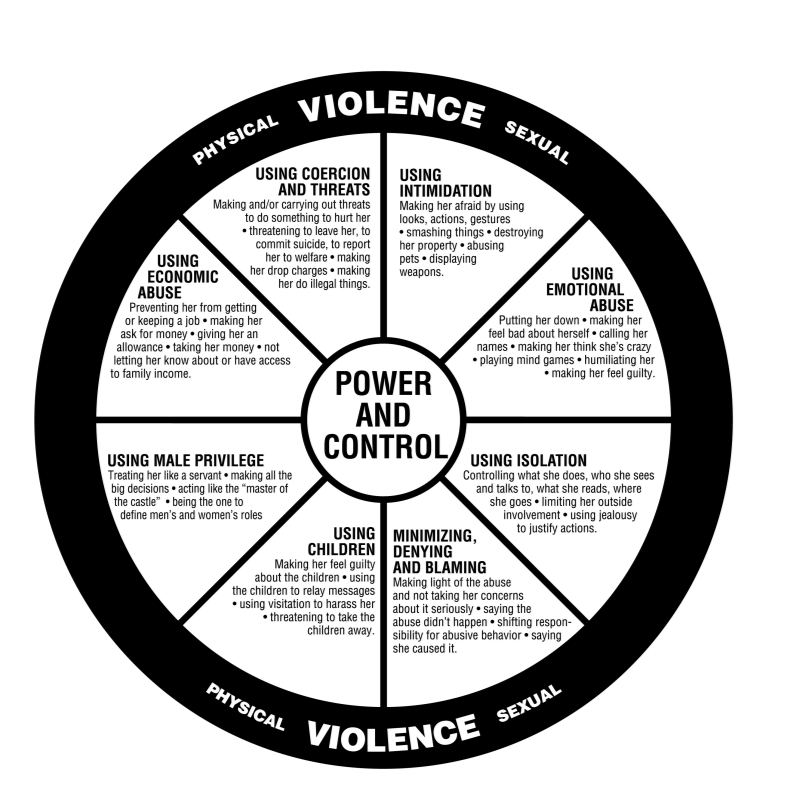
Battering is one form of domestic or intimate partner violence. It is characterized by the pattern of actions that an individual uses to intentionally control or dominate his intimate partner. That is why the words “power and control” are in the center of the wheel. A batterer systematically uses threats, intimidation, and coercion to instill fear in his partner. These behaviors are the spokes of the wheel. Physical and sexual violence holds it all together—this violence is the rim of the wheel. (Duluth Model)
The Duluth Model's Power and Control Wheel is a tool developed in the 1980s through focus groups with female survivors. Women compiled lists of the types of abuse most commonly used against them. The wheel helps survivors step back and see the full scope of violence they have experienced. It gives them language to name what happened. For many survivors, that validation changes everything.
Derry is careful to note that participants were initially resistant, often minimizing, denying, and blaming. However, the structured accountability led to significant changes. The consequences, enforced by the criminal justice system, probation officers, and community support, were essential to deterring abusive behavior.
Why Perpetrators Continue Violence: Understanding the Benefits of Abuse
One experience in particular stood out most in this program. Chuck Derry spent years sitting across from men who had been court-ordered into his program after harming their partners. He asked them to do something most had never done: list the benefits they got from their violence.
At first, they resisted. Then they filled a four-by-eight-foot blackboard.
The list included advantages such as maintaining control, gaining money, avoiding change, dictating reality, determining what values their kids would have, controlling where their partner went and who they talked to, and deciding when and how sex happened. The list went on for hours. This exercise, conducted in the 1980s and 90s as part of a structured accountability program in Minnesota, revealed something that survivors already knew but systems refused to acknowledge. Violence works for perpetrators until someone makes it stop.
These deep-seated reasons why men perpetuate abusive behavior, even if they themselves are not abusive. The difficulties in relinquishing these perceived benefits is what perpetuates “looking the other way” or not speaking up against it. Understanding these benefits is crucial for developing effective intervention strategies.
Military Sexual Trauma Prevention: Why Accountability Is the Missing Piece
Accountability is crucial in preventing MST. Consequences, enforced by the criminal justice system, probation officers, and community support, were essential to deterring abusive behavior in his program. He shares that men who were kicked out of the program for not taking responsibility often returned, admitting they could no longer get away with it.
The Pentagon nearly doubled its sexual assault prevention budget to more than $1 billion in 2023 and 2024. They established new offices to prosecute cases outside the traditional chain of command. They hired about 1,400 trained prevention specialists to serve at bases around the globe. However, while 8,195 sexual assaults were reported in 2024, independent research estimates the actual number may be 2-4 times higher. Dr. Jennifer Greenburg's research estimated approximately 73,695 cases of sexual assault in the military in 2023, nearly nine times the number of official reports.
The gap between what happens and what gets reported reveals everything about the lack of accountability. Derry's work identified the two factors most strongly associated with men who perpetrate violence: childhood experiences of abuse and witnessing violence, and attitudes related to gender equity. He also identified what keeps violence going: impunity. When perpetrators face no consequences, they have no reason to stop. The benefits outweigh the risks. The behavior continues because it works. Awareness campaigns and training modules alone cannot stop sexual assault. Accountability through consequences and other men speaking up and influencing other men stops it.
Gender Equality: What Men Must Sacrifice to End Violence Against Women
Derry reflects on the personal sacrifices required to achieve true equality. He questions whether men are willing to give up the benefits and privileges they receive in a sexist culture. This includes confronting male bonding over objectification, stopping the use of pornography, listening to women, and relinquishing leadership positions if necessary.
The list includes things men rarely talk about, such as male bonding over objectification, pornography use, dominating conversations, holding leadership positions they are not qualified for simply because they are men, controlling household decisions, and dictating when and how sex happens. The benefits of sexism are real, tangible, and daily.
Giving them up requires more than good intentions. It requires confronting how deeply those benefits are woven into identity, relationships, and career advancement. In military contexts, this means confronting how sexual violence functions as a tool of dominance and control, how it reinforces hierarchies, how it silences dissent, and how it maintains power structures that benefit some service members at the expense of others.
Derry challenges men to consider what kind of human being they want to be and whether they care about the lives of others. The ratio of learning from women versus his own experience matters, because it tells us who holds expertise, whose voices should lead prevention efforts, and why survivor-centered approaches work and top-down institutional responses fail.
How Military Sexual Trauma Survivors Can Demand Accountability
Chuck Derry's decades of work in gender violence intervention offers a clear roadmap for addressing Military Sexual Trauma. Violence works for perpetrators until someone makes it stop. Awareness campaigns, training modules, and billion-dollar budgets cannot replace genuine accountability. Systems must create and enforce real consequences for perpetrators while centering survivor voices and experiences.
For survivors of MST, your story holds expertise that no institutional training can replicate. Your insistence on accountability is not asking too much. You deserve justice, support, and systems that prioritize your safety over institutional reputation. The work of creating change requires all of us to examine our complicity in systems that protect perpetrators and to demand better from our military institutions.
Resources for Veterans Seeking Help
If you are a Military Sexual Trauma survivor, The Silenced Voices of MST offers several free resources and tools to support your journey:
VA Disability Toolkit: A free resource built to help you organize the VA claim process with tips and strategies from those who have successfully navigated the system. Document your trauma, track your claim, and organize every detail for a stronger case.
Contact Your Lawmaker Toolkit: Make your voice heard in Congress. This toolkit allows you to easily and safely contact members of Congress about MST-related legislation, military reform, or your personal experiences with templates and state-specific lookup.
The Advocates of MST Private Facebook Group: Join a safe, private community where survivors can connect, share experiences, and access peer support without fear of retaliation or judgment.
Crisis Support: If you are in crisis, please reach out:
Veterans Crisis Line: Call 988 and press 1, or text 838255
National Sexual Assault Hotline: 1-800-656-4673 (RAINN)
DoD Safe Helpline for Military Sexual Assault: 1-877-995-5247
Episode Chapters and Timestamps
00:00 Meet Chuck Derry, Founder of The Gender Violence Institute
03:48 Childhood Memories of Cultural Behavior Towards Girls and Women
05:49 Military Culture and Rachelle's SA at the VFW
10:15 The 24-Week Program That Successfully Changed Behavior
12:07 The Benefits of Abusive Behavior
16:01 The Missing Piece in Prevention of MST
17:54 Chuck's Reflections on Life if Equality Actually Happened
Frequently Asked Questions
-
The Duluth Model Power and Control Wheel is a tool developed in the 1980s through focus groups with female survivors of domestic violence. Women compiled lists of the types of abuse most commonly used against them. The wheel helps survivors understand the full scope of violence they have experienced by identifying patterns of physical violence, emotional abuse, intimidation, isolation, economic abuse, and other controlling behaviors. It gives survivors language to name what happened to them.
-
Perpetrators continue abusive behavior because it provides tangible benefits and they face no consequences. The benefits include maintaining control over others, gaining financial advantages, avoiding personal change, dictating reality in relationships, determining family values, controlling where partners go and who they talk to, and deciding when and how sex happens. When there is no accountability, the benefits outweigh any risks, so the behavior continues.
-
Cultural factors that contribute to gender violence include societal norms that devalue girls and women from childhood. Boys learn early that being a girl is considered inferior, which shapes attitudes and behaviors. Adult inaction when boys mistreat girls reinforces the message that boys matter more than girls. Statistics show that girls in the U.S. face a one in three chance of being beaten by a partner and a one in two chance of being sexually assaulted. These cultural patterns begin in childhood and persist throughout life.
-
Achieving gender equality would require men to give up significant benefits and privileges. This includes male bonding over objectification of women, pornography use, dominating conversations, holding leadership positions they are not qualified for simply because they are men, controlling household decisions, and dictating when and how sex happens. These benefits are woven into male identity, relationships, and career advancement. Giving them up requires more than good intentions. It requires confronting complicity in systems that perpetuate inequality.
-
Accountability is the crucial missing piece in preventing Military Sexual Trauma. Without real consequences for perpetrators, sexual assault continues because it serves the perpetrator's interests. Awareness campaigns and training programs alone cannot stop sexual assault. Systems must create meaningful consequences that are consistently enforced through the criminal justice system, command structures, and community support. When perpetrators face genuine accountability, they can no longer get away with their actions.
-
The gap between actual sexual assaults and reported cases in the military is significant. While 8,195 sexual assaults were reported in 2024, independent research estimates the actual number may be 2-4 times higher. Dr. Jennifer Greenburg's research estimated approximately 73,695 cases of sexual assault in the military in 2023, which is nearly nine times the number of official reports. This gap reveals the lack of accountability and trust in military reporting systems.
-
Survivors do not report for several reasons. Many want to forget about the assault and move on. They do not want more people to know what happened. They feel ashamed or embarrassed. Among servicewomen who did report, 38 percent experienced professional reprisal, 51 percent experienced ostracism, and 34 percent experienced maltreatment. The consequences of reporting fall on survivors rather than perpetrators, which discourages reporting.
-
Accountability programs can be effective when they require participants to acknowledge their violence, understand power and control dynamics, and face consistent consequences. The 24-week program that Chuck Derry helped develop required men to log instances of abuse and understand the Duluth Model. Initially, participants minimized, denied, and blamed. However, structured accountability enforced by the criminal justice system, probation officers, and community support led to significant behavioral changes. Men who were removed from the program for not taking responsibility often returned later, admitting they could no longer get away with their behavior.
-
The Gender Violence Institute was co-founded by Chuck Derry in 1994. The organization works to end gender violence through an approach that recognizes the connections between violence, power, and privilege. The Institute engages in community organizing, policy development, education, and training. Their work emphasizes that individual behavior change alone cannot end sexual assault. Systems and cultures must change, and consequences for perpetrators must be real and consistent.
-
Military culture contributes to sexual assault when stated values of honor and integrity coexist with systems that protect perpetrators. Deeply ingrained cultural norms can override stated values. Varying definitions of consent among jurors in military courts can alter outcomes. Systems that center male power often protect male violence. Sexual violence functions as a tool of dominance and control, reinforces hierarchies, silences dissent, and maintains power structures that benefit some service members at the expense of others.
About the Guest
Chuck Derry is the founder of The Gender Violence Institute. Since 1983, he has worked to end men's violence against women through accountability programs, community organizing, policy development, and education. His approach centers on understanding the cultural roots of gender violence and creating systems that hold perpetrators accountable while supporting survivors.
Help Support our Mission
This work saves lives. Every story shared, resource created, survivor connected to help. The Silenced Voices of MST exists because too many survivors have been silenced for too long. This work is necessary, but it cannot continue as a one person sacrifice. I am asking for your support to help transition this platform into a sustainable resource. If this mission matters to you, please consider making a donation or sharing this campaign with your network. Every episode produced, every toolkit distributed, every survivor story amplified requires resources. Production costs, hosting fees, website maintenance, and platform development all depend on the generosity of people who believe survivors deserve better.
Your donation directly funds:
Administrative Support: $12,000 to hire a part-time assistant. This is the only way to shift the twenty-person workload off of one individual and ensure the show’s longevity.
Operational Recovery: $8,500 to address the debt incurred by the show's operations since 2023. This is essential to stop the cycle of negative balances and financial instability from paying for the show with VA disability
Production & Security: $4,500 to cover the upcoming year of hosting, extra security features for guest safety, and necessary software subscriptions.
Thank you for standing with survivors.
About the Host
Rachelle Smith is an Air Force veteran, MST survivor, and the founder of The Silenced Voices of MST, an advocacy platform focused on Military Sexual Trauma. With a background in Communications and a distinguished career as a US Air Force Public Affairs Officer, Rachelle is committed to amplifying the voices of survivors and demanding accountability from institutions that have failed them.
After years of struggling in silence, Rachelle created The Silenced Voices of MST to help this long-ignored community document their truth, speak out, and fight for future service members. The platform offers the VA Disability Toolkit, the Contact Your Lawmaker Toolkit, guided trauma recovery journals, and leads The Advocates of MST, a private Facebook support group.
Through her podcast, Rachelle provides a safe space for MST survivors to share their stories, access resources, and find community. Her work centers on visibility, support, and accountability for Military Sexual Trauma survivors worldwide.
Connect with Rachelle: silencedvoicesmst.com | Email: info@silencedvoicesmst.com
-
Chuck Derry (00:00)
we first started working with batterers in 80s, we thought, oh, these guys just didn't have the life skills they need to address their emotions, or they lost control, And then we find out they'd use those life skills as a more sophisticated way to
And that's when we realized this is very conscious behavior. They know exactly what they're doing.
Chuck Derry with the Gender Violence Institute in Clearwater, Minnesota. I've been doing this work since 1983, 41 years. I was 27 when I started. And it was amazing. It transformed my I started working with feminist women to end men's violence against women and just blew me away.
And 95 % of what I share, I learn from women. as a guy, I'm always expected to be the % of what I share with you, learned from women. And the other 5 % is what I'll share about just being a white boy in Minnesota growing up and US and the sexist, racist stuff that.
was embedded into my bones.
Rachelle Smith (01:11)
Yeah, and unfortunately that's just a part of American culture and we got a long way to go in changing all of that. what were the things that came to pass in your life that led to starting this institute?
Chuck Derry (01:23)
Well, in my early 20s, I was doing roofing and carpentry. And my wife at the time got a job in St. Cloud at the women's shelter, battered women's shelter. And I knew carpentry wasn't quite what I wanted to do with my life. So I kind of put it up to the universe for what could happen next and show me a path and
we moved st cloud and a friend of some friends of mine started the St. Cloud Intervention Project which is based off intervention project and it was really getting criminal justice system to do something about men abusing women and part of that was guys would be arrested they have jail time over the head and then they have come twenty four week accountability groups and they were looking for somebody to facilitate these accountability groups
So I went in there and here's how high the bar was. This is 83. The guy before me, asked him, so what do you think about sexism? He said, sex, I like sex. Sex is good. So I knew what sexism was. That's how I got hired. Because I knew it's, that's how high the bar was. Because in the US, we're just starting to work with men who batter. and I thought, this would be interesting, but it totally transformed my
Rachelle Smith (02:22)
boy.
Chuck Derry (02:35)
started working in this feminist women's organization, I thought I was a pretty nice guy. didn't think I was very racist and stuff. And then I found out my big toe was sexist. It wasn't just this little attitude, it was bone deep. And so it's very amazing how much it challenged me about my male privilege. And then also challenged me about, I care about women's lives? What kind of human being do I wanna be? And then also working within the system, the male system.
To get them to actually arrest men who are beating and raping their wives and children. Because that wasn't happening. every lie I was told about girls and women, they're stupid, they're emotional, they're weak, was all revealed to me. doing this work. And it's just been amazing. I've worked with amazing women. And I've been a very, very lucky, man.
Rachelle Smith (03:19)
just, I can't imagine how sobering that must've been there's this entire, web or blanket or whatever you want to call it. That's thrown over men's eyes. to where they can't really see us as people, unfortunately.
Chuck Derry (03:37)
a, yeah, that's why it transformed my life. I was so lucky to be with women who would debate me.
about sexism, they'd argue with me, they'd even be willing to get angry with me rather than just blow me off.
I was just really lucky.
there's all kinds of stories I can tell about, okay, how this impacted how I with friends and towards girls and
what I grew up with.
Worst thing I'd be in first grade, was six years old. I realized I was going to a little Catholic school and then.
I realized the worst thing I could be is a girl.
throw a ball-like girl or a run-like Anything like a girl. That's how I knew I was the right kind of boy. I looked around my world in 60s. The men were in charge everywhere. so I'm six years old. Didn't take a rocket scientist to figure out if the worst thing I'd be as a girl, then boys are better than girls. ⁓ duh. And then how do we change our behavior with the girls when we thought we were better? And I'll give you one example. In second grade, I was in Catholic school.
and we had to wear uniforms. So the girls had to wear dresses down to their ankles and we had to wear ties. At recess, we'd run after the girls and we'd grab their dresses and we'd say, Tuesday, dress up day. And we'd throw their dresses up in the air so we could see their underwear. They had polka dots on their underwear or butterflies. Oh, we'd be rolling around on the ground laughing and they'd be going, get out of here, leave me alone. Which was part of the fun. the girls all started coming to school with culottes. What we called culottes in those days, they were shorts.
to school wearing shorts underneath their dresses because of what the boys are doing. And there were adults in that playground who had to have seen this and did nothing. As they just went, will be boys, boys are enjoying themselves, okay, they're more important than the girls, apparently. So, I mean,
The cultural stuff the stats I've seen is if you're born a girl child in US, you have a one in three chance of being beaten by the man you're in relationship with, the Center for Disease Control came out with a research last year that said if you're born a girl child in the United States, you have a one in two chance of being sexually assaulted.
the women we know, one of women in our family, one of women we work with. and it's men who are beating and raping these women. And that many men could not be beating and raping this many women without widespread cultural support.
How do we change these cultural norms to stop it before it starts?
Rachelle Smith (05:49)
it's just this reality that we have to face that is baked into our culture, like you said, and our military service, it's like 1 % of Americans serve. we're in this.
much smaller environment where these behaviors become readily apparent. But when you're in basic training and they're putting all the military values in you it's honor, it's integrity, it's look out for the person on your left and right, it's, protecting people. it just somehow does not translate once you
get to tech school or your duty station and some people they don't even get to the part where they get the values and basic like they're just trying to take their ASVAB and go to MEPS and the unthinkable happens to them. even just a few weekends ago. I was sexually assaulted again and
I didn't even realize it. I went to a VFW in, Tampa area, let's say. I walked in, wolf whistles immediately, that sorts of stuff. the commander of the place was like, well, you know how they are. I paid the sponsorship fee and he gave me a tour
the men that were catcalling when I walked in, were leaving. the VFW is a big bar, so everybody in there is drinking. he was showing me a mural outside and we were walking back around and these two men were like, are you coming back? yeah, sure, I'll be back. Like, didn't think anything of that. And one man just looks me up and down, undressing me with his eyeballs. he says, well, I'll be in the front
I didn't know what to say to that. So I just didn't say anything. I go inside, the commander's apologizing profusely. he's just saying, you set off a lot of people when you walked in here. I was like, I set off. Okay. so I sit with another young woman and
she's sharing stories about all the people in there. My boyfriend gets done with work most of them think he's my husband and I'm not gonna correct them at this point. maybe if someone shows ownership over me, they'll leave me alone, which is frustrating. another man comes over and he has this big blue Trump hat on.
He's like, what service are you in? And I like, Air Force. And he goes, sister, and gives me a big hug, which was expected. people are very familial when it comes to their particular service. that part wasn't sexual assault. It was the kiss on the neck that followed when he saw that my boyfriend was ordering. then it was the second kiss on the neck that happened again, maybe 15 minutes later when my boyfriend was turned.
speaking to someone else. in that moment, I'm like, okay, do I push this person to the ground and make a scene? Or do I just leave it alone because I'm in here to do outreach for my podcast. I went with the latter the commander saw the second one and he took my boyfriend and I on a
tour of the place again, just to get us away from that individual and he's apologizing the whole time. that happened on a Sunday and on Tuesday, cause it was Labor Day weekend, told my coworker about it and she's a Navy veteran. And she was like, Rachelle, you just got sexually assaulted again. And it was like,
holy shit, you're right. it did not even register to me that that had happened until someone else pointed it out to me because I think I've been so desensitized to adjust from being re-traumatized so many times.
I was able to process it But the funny thing was, was last week I ran into the young woman that I was sitting next to at the VFW She was actually sitting two seats behind me at a baseball game and she texted me and she introduced me to the group of folks she was with. she was saying let's say this guy's name was Dale.
She was like, yeah, we were doing our best to keep Dale away from her. that made me look at her funny because if you know someone behaves like this frequently enough, why are they still here? But that is our entire military culture. And then that is our entire, entire global culture. And that's infuriating.
Chuck Derry (10:09)
And when you're in a culture like, a sexist culture like this,
Rachelle Smith (10:09)
Mm-hmm.
Chuck Derry (10:13)
we can get away with a lot of things.
Rachelle Smith (10:15)
but I do want what this 24 week program was like for.
the men that had to participate.
Chuck Derry (10:22)
they were ordered to participate and they had to acknowledge and accept responsibility for their violence. And you're familiar with the power and control wheel from Duluth? the hub is power and control and then the rubber on the wheel is sexual and domestic violence. there's all kinds of
intimidation, emotional abuse, et cetera, et we would have the men have to log out all the different ways that they abuse Both physical, one week, and then next week would be how to use intimidation. The next week would be how to use emotional abuse, and they'd have to come back and we'd have discussions, and then we'd just go on that way. Now, the thing about it too is that the men were very resistant, right?
minimize, deny, and blame
we first started working with batterers in 80s, we thought, oh, these guys just didn't have the life skills they need to address their emotions, or they lost control, And then we find out we'd be teaching life skills, and they'd use those life skills as a more sophisticated way to control her. the women in Duluth, Minnesota came out with the power and control Victims talking about their reality.
And that's when we realized this is very conscious behavior. They know exactly what they're doing.
so it was interesting to facilitate that group.
the first time I asked the guys in group, I said, guys, so tell me, what are the benefits of your violence? And they all kind of looked at each other, which was really notable, right? Well, and one guy said, there are no benefits. I said, well, you must be something out of it. Otherwise, why would you do it? looked at each other again, and then one guy started talking about the benefits.
and then they all start talking. And then I filled a four foot by eight foot blackboard of all the benefits of their violence and we ran out of space. first time I did that, I looked at that board, I said, my God, Why would you give it up?
Rachelle Smith (12:07)
I do have the article that you had written about writing down
the benefits that were on the four foot walls. I wanted to read a few of she won't argue. She'll get out of your way so that you can go out. You can get money, keeps the relationship going because she's too scared to leave, power, don't have to change for her, total control and decision making.
She's scared and can't confront me. She's an object. Bragging rights. If she works, I get her money. Or I can get her to quit so she can take care of the house. She's a nursemaid. Supper on the table. Don't have to listen to her complaints for not letting her know stuff. She works for me. I don't have to help out. And it goes on and on and on.
with what you said, like, who would give that up? Who really would? it's incredible to see it all lined up like that. How did it feel writing one thing after on the board like that when these men were being open and honest for once?
Chuck Derry (12:59)
Yeah.
Oh it was amazing most amazing thing is we ran out of space on a four foot by eight foot blackboard that's the most amazing they were still going and we didn't have any more space to write down there were so many benefits it blew me away the first time I did it and still every time I'm looking at
I get to dictate reality. I answer to nobody, do what I want, when I want, with who I want. Anyway, the first time writing it down, was just like, my God. I was so happy that they were sharing it. I was so happy that they were being honest about it. So that was Because it really clarified. why men hang on to sexism, men who are not abusive.
they don't want to give up the sexism because they have to give up some the benefits could just be like telling a joke about a woman's body, like what I like to do to it, right? Or anti-woman stuff. And there's a lot of male bonding that goes on around sexual objectification
of women and anti-woman,
But if we had a man who was in week 16 of 24-week program, and he was still denying his violence and still blaming her and minimizing it, we would kick him out of the group. And we had agreements with the criminal justice system, with probation and the prosecutors, that if he was kicked out, he would do some jail time, because he'd have time hanging over his head.
then they send him back to the same group so he couldn't manipulate a new facilitator. Had to come back to the same group same facilitator so they'd leave they do ten days they come back and they'd be there for us week six week eight and they're taking full responsibility for their violence fully acknowledging and not blaming her and i'd ask 'em so tell me jim what what happened
What's going on? when you were here before, were just denying it blaming her all the time, and now you're just taking full responsibility. How come? He said, because I know I can't get away with it anymore.
after man after man. 10 years. I know I can't get away with it because he was being held accountable by the criminal justice system. And that's because the St. Cloud Intervention Project was holding them accountable as well. Because we would track and monitor every case. We wrote policies that they had to sign, right? So they're liable. So the prosecutors, sheriff, police chief, probation.
judges, everything. we were able to track and monitor. then I knew if kicked a guy out in week 16, he's coming back. Every time they said, because I know I can't get away with it anymore. And so that was a key point.
I thought, okay, I'm gonna ask them, okay guys, why would you give it up? And we filled a one foot by one foot space. I got arrested, orders for protection.
My adult children won't invite me to their weddings anymore and I have to come to groups like this. that was when I fully, fully understood the benefits of this violence and how important consequences are. has to be accountability and part of that accountability is consequences. again, like I said, the guys come back and say, I know I can't get away with it anymore.
Does that answer your question?
Rachelle Smith (16:19)
absolutely because my goal with this podcast is to end the problem sexual trauma. accountability is the solution. that just seems to keep getting sidestepped.
year after year. So to hear that coming from an expert, like, hello, military, if you're listening, because they're very big on performative things, we signed the white ribbon pledge and we had a stand down day and we're doing more briefings or first time airmen
joining the Air Force and getting to their first base. They're like, well, they had like a SARC briefing where they talked about emotions and boundaries and this and that. but where is the accountability piece? Where are the people going to prison? Where is the punishment? recently a two star general was charged with a number of things from, sexual harassment, flying while drunk.
⁓ all sorts of stuff. They got him guilty on everything, but actually sexually assaulting a lieutenant colonel. she was coerced because she was like, I can't, this, person's as far above me in the rank structure. So obviously that's not consent, but the military, even though it's in black and white in the, uniform code of military justice, the
people that are, I forget what they call the jurors in a court martial, but every single one of them has a different definition of what consent is. And that changes the outcome when someone has committed a crime.
Chuck Derry (17:46)
Yeah.
And so we have to hold them accountable and provide consequences. And we also have to do primary prevention.
a lot of times people think you gotta raise awareness on men to get them to change. I was 17 years Northwestern Minnesota in a town of 2500, Roseau, Minnesota, 10 miles south of Canada, and the women's libs was going on then This is 1973. And I thought to myself for the first time, I'm 17, I had long hair, what are the few...
dozen guys in town had long hair in those days. I thought to myself, Chuck, what would it mean to you personally if men and women were really equal? And within two minutes I had the answer. I'd have to give some stuff up. Then I thought, nah, I don't think so. And I was a nice guy. And now I had more aware to what a good deal it was in a sexist culture to be a man because we are so benefited.
Rachelle Smith (18:30)
Mm.
Chuck Derry (18:42)
And so that's part of it when working with abusers. Are you willing to give up the benefits? And working with men in general, that was a big challenge for me doing this work. Am I willing to give up all the benefits I have, all the privileges I have being a white guy, but being a man? Am I willing to give up those privileges? And the privileges I can't give up, am I willing to use those to undermine sexism?
Rachelle Smith (19:02)
moments of reflection and then truly understanding where your values lie are so important your development as a human being, whether you're going to be an all right kind of human being or someone that actually has empathy and understands there's a whole world outside of yourself.
Chuck Derry (19:19)
had to go,
am I willing to stop that bonding? Am I willing to confront my male friends and my brothers,
Chances are I'm gonna lose a friend or two if I confront them about telling sexist jokes. come on, we're just kidding around. Yeah, it's fun. We're taking our pleasure at women's pain. And am I willing to stop using porn? Am I willing to stop going to strip clubs? Am I willing to listen? Listen to women. Am I willing to take leadership from women? In a job place, if men and women are really equal, I'm not getting the next advancement. If I have to compete with all the women,
And then all the folks of color as well, I'm not getting into next advancement because now I just have to compete with the white guys. Am I willing even to give that up, right? Do I care about people's lives or not? Because that's what it comes down to.
hey Chuck, who do you want to be? What kind of human being do you want to be?
References
Derry, C. (1994). The Gender Violence Institute. https://www.genderviolenceinstitute.org
The Duluth Model. (n.d.). FAQs About the Wheels. Domestic Abuse Intervention Programs. https://www.theduluthmodel.org/wheels/faqs-about-the-wheels/
Greenburg, J. (2024). Sexual Assault in the U.S. Military. Watson Institute for International and Public Affairs, Brown University. https://watson.brown.edu/costsofwar/papers/2024/sexualassault
Pence, E., & Paymar, M. (1993). Education Groups for Men Who Batter: The Duluth Model. Springer Publishing Company.
U.S. Department of Defense. (2024). Annual Report on Sexual Assault in the Military: Fiscal Year 2024
Military Sexual Trauma and Letting Go of Repressed Pain: Ron Carter (Part 2) | The Silenced Voices of MST with Rachelle Smith
Military Sexual Trauma survivor Ron Carter appears on The Silenced Voices of MST to share the experiences that shaped his early service, the assault he endured, and the long-term effects that developed when the trauma went unrecognized. This interview begins a three-part series that follows his path from enlistment through MST, behavioral collapse, and his eventual understanding of PTSD outside of combat contexts. His story offers clear insight into how MST develops within military structures and how untreated trauma influences thinking, memory, relationships, and emotional regulation over decades.
U.S. Army veteran Ron Carter discusses Military Sexual Trauma, finding benefit in doing intensive therapy and somatic release to come to terms with what he survived while serving on The Silenced Voices of MST.
U.S. Army veteran Ron Carter continues his story on The Silenced Voices of MST. In Part 1, Ron shared his experience of assault and decades of undiagnosed PTSD. In Part 2, he shares a possible reason for the outcome of filing his disability claim with uncharacteristic ease that validated his trauma and raised more questions, reaching his breaking point at an annual VA appointment, and his experiences through therapy and alternative treatments. Ron shares many profound insights going from crisis to acceptance, the role of persistence in navigating, and what is possible when survivors finally find therapies that work.
Military Sexual Trauma survivor Ron Carter appears on The Silenced Voices of MST in Part 2 of his 3-part series to recount what it was like finally seeking help after trying to live his life without acknowledging or understanding the severity of his assault while serving in the Army. An unexplained breakdown and an understanding VA staff led to him remembering the trauma he’d repressed for 35 years, and as soon as he could, he began treatment for PTSD and other mental illnesses that had resulted. He shares the methods of therapy he used to begin healing, including a detailed account of how Psilocybin therapy offered him somatic release from the trauma that remained trapped in his body. He and Rachelle discuss how predators and perpetrators can be held accountable, as well as their hopes for future generations having safety without people who commit crimes and harm having many places to hide. This episode provides invaluable insights into the importance of having support, numerous methods of therapy to choose from, and acknowledges that the military needs to do something in order to protect the men and women called to serve the country.
Dealing with the VA Disability Claims Process
Ron initially avoided anything connected to his military service. Years of suppressing his trauma led to a disconnect from the experiences that shaped his post-military life. He describes burying the assault so deeply that he convinced himself it never happened, or at least that it didn't matter anymore. This avoidance extended to the VA system itself. Ron resisted engaging with the VA because the military had already failed him once, and he questioned why the VA would be any different.
Despite his resistance, Ron eventually filed for PTSD disability. The approval came quickly. The VA granted him a 70% rating, but Ron was surprised about how easy it was to get to 100% with the help of a lawyer. The unexpected ease of the approval process raised questions about his perpetrator. Had the platoon sergeant harmed more people the same way? Without answers, Ron recalls that at times, he still feels rage resurface about that day. But he is also unsure that he would want that information, because he wasn’t sure if he’d be able to keep himself from doing anything about it.
Expressing deep concern for the future service members in the Armed Forces, he points out that he is oddly glad that if an assault were to happen to him at any point in his life, he was grateful that it was while serving in the military. Now, there are multitudes of resources and help available when someone understands what happened to them. The veterans’ benefits helped him and his family, while he realizes that civilians don’t usually have the same access to care. He calls this a silver lining.
But he does want the next generations to not be a part of the current epidemic of military sexual trauma. He shares the numbers of people affected and suicides each year, and the infuriation of this continuing to happen consistently to the young people who are choosing to serve.
The Exhaustion that Led to Confronting the Past (Trigger Warning)
Trigger Warning: This section contains discussion of mental health crisis.
Even with the disability rating, he spent years holding everything in, feeling as though he was the only person this had ever happened to. Then came the breaking point at an annual appointment at the VA.
"I went to talk and I couldn't talk. I started crying uncontrollably." Ron explains. The trigger for the breakdown?
The Physicians Assistant asked, “Hey Ron, how are you?”
“I can’t live like this anymore. I’m tired of
fighting.”
All those years of suppressing his trauma, and suddenly he couldn't do it anymore. He describes sitting in that VA office, confronting suicidal thoughts he'd been pushing away for decades. He was exhausted from hypervigilance and not understanding what was happening inside his body and mind. When the PA called a Psychiatrist down, he wasn’t able to speak to her either. It took quite a while for him to calm down enough to say, “I can’t live like this anymore. I’m tired of fighting.”
Ron's sudden outburst was the culmination of years of isolation that nearly cost him his life during ongoing battles with suicidal ideation. The breakdown forced him to acknowledge that he could no longer survive by burying his pain. He needed help, and he needed it immediately. This crisis became the turning point that led him toward therapy, treatment, and eventually healing.
Remembering His Assault: Rediscovering Buried Memories
U.S. Army veteran Ron Carter discusses Military Sexual Trauma, finding benefit in doing intensive therapy and somatic release to come to terms with what he survived while serving on The Silenced Voices of MST.
The psychiatrist that Ron spoke to listened to what Ron had been struggling with for decades, and identified severe depression and PTSD . He responded that he couldn’t have PTSD, because he hadn’t been in combat. The therapist told him to think about it to see if he could remember and assured him that it could be caused by more than combat.
In the interview, he says that he had forgotten what had happened, but memories of the assault began to surface after a few days of ruminating. Shocked, he had to gather his courage and return to the psychiatrist, saying flatly what happened through another crying jag. The doctor didn’t judge, and immediately got Ron into treatment and resources to begin the work of healing.
He didn't have the language or framework to understand what he was experiencing. Not realizing he had PTSD for decades meant also understanding it was real and damaging.
This process is common among trauma survivors. The brain protects us by suppressing memories too painful to process, but they don’t disappear completely. They continue to live in our bodies, affecting our relationships, our mental health, and our ability to function. Therapy gave Ron permission to remember. More importantly, it gave him tools to process without being destroyed.
Embracing Therapy and Psilocybin Treatment
Ron tried multiple therapeutic approaches, including Cognitive Based Therapy and Written Talk Therapy and Written therapy helped, but it was a psilocybin treatment that created a breakthrough. He made serious progress identifying the experiences that harmed him, but still felt as though the trauma was trapped in his body for decades.
"I had a conversation with God," Ron explains. “It’s weird to talk about because I’ve not met a person yet who’s done it that can do it any justice with words."
Ron acknowledges that healing is a uniquely personal journey for everyone. What works for one person may not work for another, but the key is remaining open to different approaches and being willing to try new methods when traditional therapy plateaus.
Written therapy allowed Ron to express thoughts he couldn't speak aloud, and psilocybin allowed him to access emotions he couldn't reach otherwise. He describes the experience as finally being able to release pain he didn't even know he was carrying, by seeing that all humans are connected and loved. The biggest lesson he took away from the hero dose session: I’m always loved, and I will always be loved.
Ron's Advocacy Mission
"Why would we go through these things if we can’t turn it into something that’s positive?" he asks, then emphasizes, "I want to help people, young men and women."
Ron now focuses on raising awareness about MST and supporting other survivors. His mission is clear: prevent the next generation of service members from experiencing the same trauma. Being silent for decades was survival in a system that punishes vulnerability. Talking openly on social media about his experience so others don't have to suffer in isolation, which results in receiving messages from people encouraged by his vulnerability to seek help.
Frequently Asked Questions about Military Sexual Trauma and Male Survivors
-
About 1 in 50 male veterans report military sexual trauma (VA National Center for PTSD), but studies using anonymous survey methodology found rates as high as 12.4% (Trauma, Violence & Abuse, 2011). The gap between reported and actual incidents reveals massive underreporting. Because of the higher ratio of men to women in the military, the raw numbers of men and women who experience MST are comparable, challenging the misconception that MST primarily affects women.
-
About 90% of men in the military did not report a sexual assault they experienced in 2021 (DAV). Overall, it's estimated that 77% of service member sexual assaults go unreported. Male survivors often worry that others will perceive the assault as weakness, femininity, or homosexual orientation. These cultural barriers, combined with fear of retaliation and career damage, make it especially difficult for male survivors to come forward.
-
MST survivors are 7.25 times more likely to be diagnosed with PTSD than those who did not experience sexual trauma (Columbia Social Work Review). The severity of PTSD from MST is extreme. This is because MST involves betrayal by trusted colleagues within a system meant to provide safety, creating compounded trauma that requires specialized treatment.
-
From 2011 to 2021, the total number of MST claims filed by men increased by more than 119%. The number of claims granted by the VA grew from 27.8% in 2011 to 68.5% in 2021 (VA Claims Insider). This shows significant progress, though it also reveals how many survivors had to fight for recognition and validation of their trauma.
-
Roughly 17 veterans die by suicide each day (VA Mental Health), and military sexual trauma puts veterans at significantly higher risk. MST survivors face compounded trauma that requires specialized support. If you or someone you know is in crisis, call the Veterans Crisis Line at 988, then press 1.
-
Recent studies show that 60% of veterans with severe treatment-resistant depression who received psilocybin treatment met response criteria at three weeks. The VA announced funding for MDMA and psilocybin-assisted therapy studies in 2024, marking the first time since the 1960s that the VA has funded research on psychedelic compounds. Nine VA facilities are now participating in these studies.
-
No. You don't need a service-connected disability rating or other VA benefits to receive MST-related care. Every VA facility has an MST coordinator available to help survivors access treatment and support. Call your local VA or visit www.va.gov to connect with an MST coordinator.
Episode Trigger Warnings and Timestamps
00:00 VA Disability Claim and Possible Patterns of Abuse
Triggering content 2:57 - 4:38 (suicide + MST statistics)
06:28 Breaking Down at the VA and Confronting Buried Trauma
Triggering content 6:51 - 10:59 (Suicidal ideations, breakdown, remembering his repressed trauma)
11:08 Ron’s Beginning Different Modalities of Therapy
14:20 Ron’s Conversation with God
19:48 The Relationship Between Technology, Connection, and Accountability
23:30 Preview of Part 3 of Ron’s Story
Resources from this Episode
Resources for Survivors
If you or someone you know is struggling with military sexual trauma, resources are available. For additional support navigating VA claims, download our free VA Disability Toolkit.
VA MST Support: Every VA facility has an MST coordinator. You don't need a service-connected disability rating or other VA benefits to receive MST-related care. Call your local VA or visit www.va.gov to connect with an MST coordinator.
Veterans Crisis Line: Call 988, then press 1. Available 24/7 for veterans in crisis. You can also text 838255 or chat online at VeteransCrisisLine.net.
Military OneSource: Offers confidential counseling and support for active-duty service members and their families. Call 800-342-9647 or visit MilitaryOneSource.mil
The Advocates of MST: By joining The Advocates, you add to a powerful collective voice that demands attention and action. Connect with others who understand your experiences and are committed to supporting each other. Find support at https://www.facebook.com/groups/theadvocatesofmst
Watch or Listen to Ron's Full Story
You can hear Part 2 of my interview with Ron Carter on The Silenced Voices of MST podcast available on all major podcast platforms including Apple Podcasts, Spotify, and YouTube. We dive deeper into his experience with the VA, his therapeutic journey, and his current advocacy work. If you haven't already, listen to Part 1 of Ron's story where he shares his assault experience and the years of undiagnosed PTSD that followed.
Healing is the end goal of military sexual trauma. You’re not alone, and you can explore more survivor stories and resources on our blog.
About the Guest
Ron Carter is a former Army infantryman turned MST advocate. After surviving a premeditated and devastating assault while on active duty, he committed himself to supporting others who have been affected. Through speaking engagements and community work, Ron pushes for better resources and policy change and uses his platform to amplify survivor voices.
About the Host
Rachelle Smith is the host of The Silenced Voices of MST and a survivor of military sexual trauma. She served as a Public Affairs Officer in the Air Force after growing up in a military family. Her experience with MST and the years spent struggling with PTSD and depression gave her a unique understanding of what survivors face.
This podcast exists because she knew firsthand how isolating MST can be. Since launching The Silenced Voices of MST in 2023, she’s interviewed dozens of survivors, advocates, and experts. Her mission is to empower survivors by providing a space to amplify survivor stories and demand change.
Help Keep This Podcast Going
I've been funding this podcast entirely on my own since 2023, and it hasn’t been easy. If this work has helped you or someone you care about, please consider supporting it with a monthly donation. Even $10 a month makes a real difference in covering hosting, editing, and production costs.
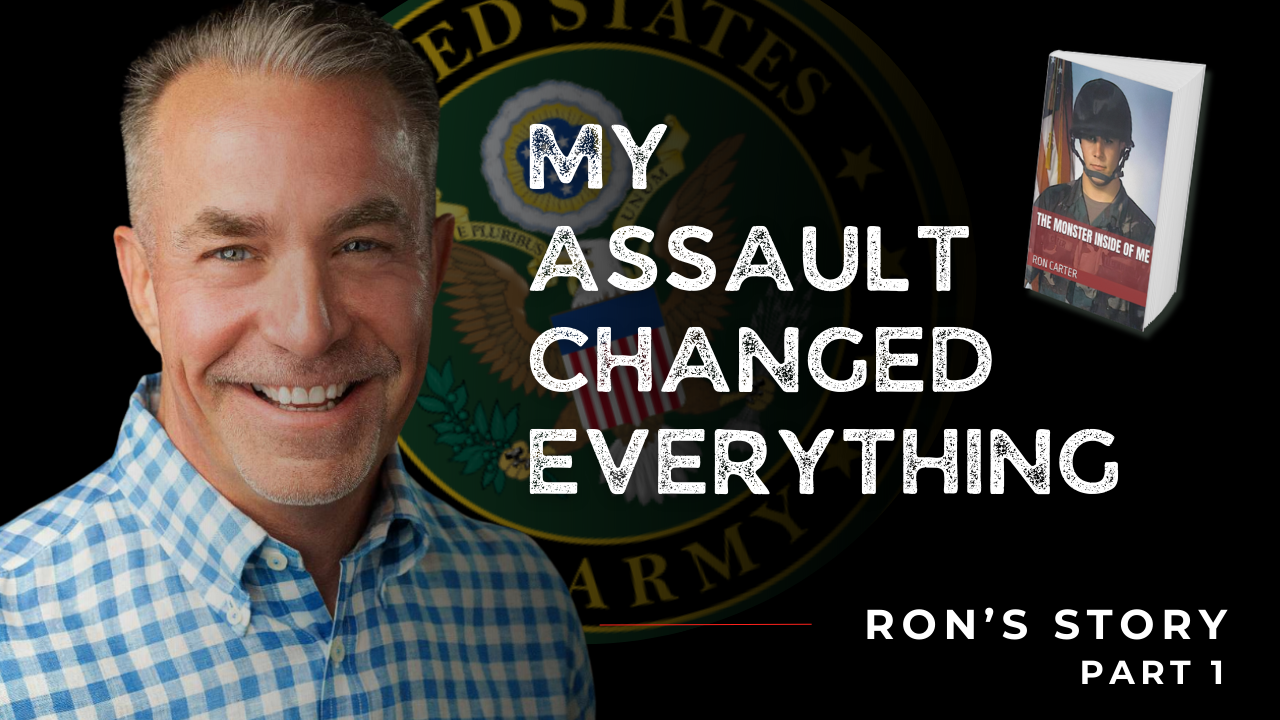
Military Sexual Trauma and The Monster Inside of Me: Ron Carter (Part 1) | The Silenced Voices of MST with Rachelle Smith
Military Sexual Trauma survivor Ron Carter appears on The Silenced Voices of MST to share the experiences that shaped his early service, the assault he endured, and the long-term effects that developed when the trauma went unrecognized. This interview begins a three-part series that follows his path from enlistment through MST, behavioral collapse, and his eventual understanding of PTSD outside of combat contexts. His story offers clear insight into how MST develops within military structures and how untreated trauma influences thinking, memory, relationships, and emotional regulation over decades.
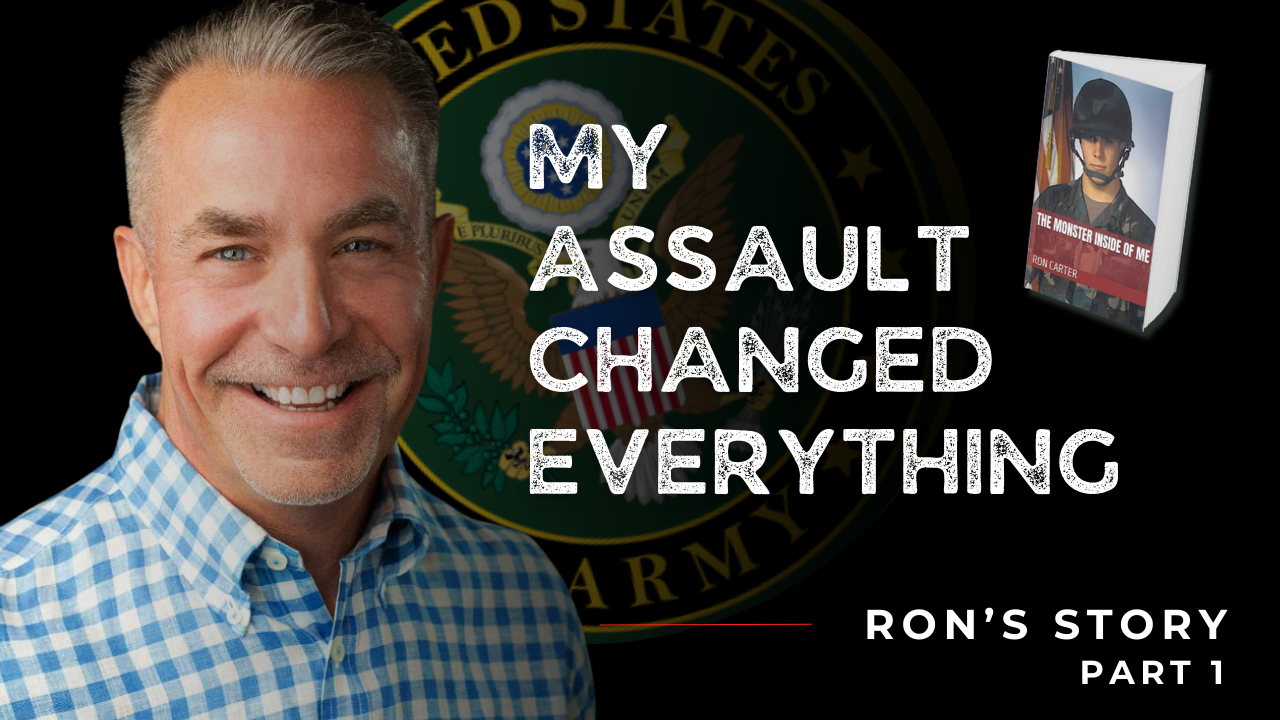
U.S. Army veteran Ron Carter discusses Military Sexual Trauma, suffering from repressed pain, and survival on The Silenced Voices of MST.
U.S. Army veteran Ron Carter brings his story of Military Sexual Trauma to The Silenced Voices of MST. As the author of The Monster Inside of Me, Ron details his experience of assault, the devastating toll of silence, and the heavy price of betrayal within the system.
Ron Carter appears on The Silenced Voices of MST to share the experiences that shaped his early service, the assault he endured, and the long-term effects that developed when the trauma went unrecognized. This interview begins a three-part series that follows his path from enlistment through MST, behavioral collapse, and his eventual understanding of PTSD outside of combat contexts. His account offers clear insight into how MST develops within military structures and how untreated trauma influences thinking, memory, relationships, and emotional regulation over decades.
His Path to The Army
Ron grew up in a small town in Oregon where financial constraints made college unrealistic. He chose the Army at seventeen and entered the delayed entry program with his best friend, believing service would provide structure, stability, and a clear direction for becoming a mature adult.
Basic training introduced him to disciplined routines, intense physical demands, cultural diversity, and a level of pressure he had not experienced before. Although he passed out on his first day due to the heat, he recovered and progressed with strong performance. By excelling in physical training, Ron gained respect with some drill sergeants, and completed airborne school after graduating. These accomplishments were steps toward a promising military career.
When Ron and his friend received their orders they expected to serve together but were separated on arrival in Germany. This unexpected change intensified Ron’s sense of isolation. The unfamiliar environment, distance from home, and sudden loss of his support system made the adjustment difficult.
What Led to His Assault (Trigger Warning)
“As parents, we’re trusting our children to the United States of America. That should really mean something.”
Being stationed in Germany introduced Ron to culture shock and his first real experience of distance from home at 19 years old. He enjoyed the physical demands of fieldwork but disliked the constant emphasis on garrison expectations. During this period, he noticed hostile behavior from a higher ranking soldier in a different platoon, although he did not understand the cause.
The situation escalated when the platoon sergeant invited Ron and another private to what was presented as a simple gathering at his home. Ron wanted to behave respectfully and show he was a good guy, so he agreed to be there. Almost immediately after consuming a beer, he experienced sudden physical impairment and lost consciousness. He regained awareness during an assault, lost consciousness again, and later found himself back in the barracks. An aspect of his assault that sticks with him today is that he had no memory of how he had returned and never saw the other men involved again.
Ron had no way to describe what was done to him that day which contributed significantly to his confusion, aggressive behavior, and distress.
Help us continue amplifying voices of Military Sexual Trauma survivors.
Immediate Impact After the Assault
The trauma produced abrupt behavioral and emotional changes. Ron began drinking heavily, smoking hash, and getting into fights resulting in receiving multiple Article 15s. Finding himself unable to regulate his reactions, experiencing intrusive thoughts, night terrors, and unpredictable anger, Ron relied on his survival instinct to make it through daily life. Hyper-vigilance became constant, yet he did not understand why he felt disconnected from his own behavior.

U.S. Army veteran Ron Carter speaks out about Military Sexual Trauma, living in silence, and the lifelong journey to healing.
He interpreted his reactions as personal failure because no one ever explained trauma, dissociation, or survival responses in the mid-80’s. Without any knowledge of mental health, his behavior and internal chaos reinforced the shame he carried and made it increasingly difficult to function in a high-pressure environment.
The Long-Term Effects on Thought, Behavior, and Identity
Ron shares that he lived with these symptoms for many years without understanding their source. The missing modern-day understanding of post-traumatic stress led to the assumption that the volatility, emotional distance, and reactivity he experienced reflected deep flaws in his character. Trying to suppress memories intensified their impact on his relationships, jobs, and at times his will to live.
Only later did he learn the language of trauma, emotional processing, and PTSD. He discovered that trauma can alter memory, disrupt emotional regulation, and create long-standing patterns of hypervigilance and mistrust. This allowed him to reinterpret his symptoms with clarity and accuracy.
PTSD is not only caused by combat experiences, which is something Ron learned and wants people to know. Understanding this reshaped his perception of himself, his past, and helped him identify the years of untreated trauma.
Ron’s Work Now
By sharing his story publicly, Ron’s goal is to increase awareness of MST so that parents and young people considering joining the military understand the reality of what serving can look like. His work includes advocacy, community engagement, and contributing to public education about trauma and its effects. An important aspect of his mission to help is getting survivors access to information that was unavailable during his service.
If this podcast has helped you understand what survivors are up against, leave a review. Reviews are one of the only ways these stories reach people who would otherwise never hear them.
Episode Trigger Warnings and Timestamps
00:00 Introduction to Ron Carter's Journey
02:08 Deciding to Join the Military
04:53 Basic Training Experience
07:09 Transitioning to Military Life in Germany
09:18 The Reality of Military Culture
11:06 Experiencing MST and Its Impact
Triggering content from 12:55 - 25:48 that includes discussion of being drugged, sexual assault, loss of conciousness and memory, physical assault, coerced sexual acts, and blackmail
13:31 The Aftermath of Trauma
15:45 Coping Mechanisms and Struggles
18:36 The Long Road to Healing
23:55 Understanding PTSD Beyond Combat
25:56 Part 2 of Ron’s Story Preview
Resources from this Episode
Support and Community:
Veterans Crisis line: Dial 988, the press 1
DoD Safe Helpline: https://www.sapr.mil/dod-safe-helpline
Join our Facebook community: https://www.facebook.com/groups/theadvocatesofmst
About the Guest
Ron Carter is a former Army infantryman turned MST advocate. After surviving a premeditated and devastating assault while on active duty, he committed himself to supporting others who have been affected. Through speaking engagements and community work, Ron pushes for better resources and policy change and uses his platform to amplify survivor voices.

BIG VOICE MST | Podcast News Update - March 14
Stay informed on MST-related news, survivor stories, and resources. This week's updates cover new legislation, global MST stories, and recovery from PTSD.

Howdy Madvocates,
A quick reminder that the final part of Brian’s episode is streaming now wherever you get your podcasts and YouTube. I highly recommend to watch or listen if you are struggling while trying to advocate for yourself in health care or trying to get your discharge changed, because this episode has the lessons that Brian has learned from fighting for justice for two decades and what his healthy coping strategies are, . If you have trouble with falling asleep because of anxiety or PTSD, this is the episode for you.
Now on to The BIG VOICE.
Let’s get into the latest Military Sexual Trauma-related news, new MST legislation that affects the MST community, and resources designed to support survivors and advocates like you. I urge practicing self-care while browsing some of these stories, there are trigger warnings for content that may be upsetting. There are also positive stories of recovery and MST survivor resources as well, I didn’t want this to be “doom and gloom’ as if change is not possible.
Change is possible, especially if we stay informed and stay vigilant.
As you know, this problem is not a rare occurrence—there’s a global MST crisis that demands accountability, justice, and care for survivors. The stories from around the world showcase this problem, but it’s a small snowflake on an otherwise huge iceberg of pain, shame, and anger this issue causes. And it’s never one person affected by an assault or harassment. Entire communities feel the ripple effects of this issue, even if they don’t realize it.
Whether you’re here to stay informed, take action, or find resources for yourself or a loved one, this is your space to connect, learn, and advocate for change. Need support? Come find our group on Facebook: The Advocates of MST. We’re here to listen, share, uplift, and create an environment of acceptance without gender restrictions.
If you or someone you know is struggling with MST-related PTSD, depression, or suicidal thoughts, please know that help is available. The Veterans Crisis Line is open 24/7—dial 988 and press 1 for confidential support.
New Jersey bill looks to give easier access to mental health drugs
WPIX-TV (U.S. MST related-legislation)
By Jim Vasil
TRENTON, N.J. (PIX11) — When Krystal Cordero came home from an operation enduring freedom, PTSD followed her along with Military Sexual Trauma, or MST.
“They truly don’t set you up for the violence that you see, the aftermath, the feeling of loneliness, the feeling when you transition out that you no longer have somebody to really talk to,” said Cordero, an Army veteran of Totowa. “I unfortunately had an officer who tried to take advantage of me. He did not succeed but nonetheless, I had to suffer the assault.”
For years after coming home, she endured what many veterans have experienced: having to jump through hoops to get the prescription meds to treat their condition — hoops like step therapy or needing prior authorization.
“It’s almost like you’re dangling a treat in front of them and you’re saying, ‘almost there,’ but not there yet,” said Cordero. “We’re tired of chasing things. We need to be heard.”
Next week in Trenton, lawmakers will discuss a bill that will make it easier for patients with serious mental illnesses like PTSD, schizophrenia, bipolar disorders, and others to get the medicine they need – by requiring prescription drug coverage without prior authorization, or step therapy, a method of having patients try a less expensive drug first.
Read the article here: https://pix11.com/news/local-news/new-jersey/new-jersey-bill-looks-to-give-easier-access-to-mental-health-drugs/
Impending Legislation Senate Veterans Affairs Committee
Veterans of Foreign Wars (U.S. MST -related legislation)
Statement by Pat Murray
Draft legislation, Servicemembers and Veterans Empowerment and Support Act
The VFW supports this legislation, particularly its overarching theme of enhanced training for claim processors and reviewers that emphasizes accuracy, completeness, and improved communications throughout the disability claims process. This aspect of the bill is especially compelling by seeking to increase the proficiency of claims processors in recognizing nuanced non-military sources of evidence, eliciting vital information without retraumatizing the survivor, and in correctly processing claims involving military sexual trauma (MST). The annual focused reviews should validate (or refute) the effectiveness of the training. Emphasizing their importance, these reviews will continue until claim processors for MST-related claims achieve a 95 percent accuracy rate for five consecutive years. Additionally, the VFW concurs with VA’s aggressive outreach campaign pertaining to various facets of MST reporting and claim adjudication. However, we doubt VA’s ability to achieve its laudable goal of providing MST claims information to disenrolled service academy students from the last 80 years unless Congress substantially resources VA for this purpose. Lastly, the VFW concurs with VA’s updated definition of MST that includes trauma involving online or other technological communications
See the draft legislation here: https://www.vfw.org/advocacy/national-legislative-service/congressional-testimony/2025/3/pending-legislation-svac
Defence Force sexual assault prevention team's future uncertain
Radio New Zealand (New Zealand MST News)
By Rachel Helyer Donaldson
The Defence Force insists it remains committed to preventing harmful sexual behaviour in its ranks, despite putting its entire Sexual Assault Prevention Response Advisor (SAPRA) team on notice.
It is understood that the team, who were brought in as part of an action plan to eliminate inappropriate sexual behaviour, were told last week that they could be made redundant, following a consultation period.
An NZDF spokesperson confirmed the Defence Force would be starting a consultation process with staff and unions on "proposals for change across its civilian workforce" from Thursday, 20 March.
Read the article here: https://www.rnz.co.nz/news/national/544938/defence-force-sexual-assault-prevention-team-s-future-uncertain
Trump, Hollywood, and How We Fail Latinas in the Military
LatinaMedia.co
By Denise Zubizarreta (U.S. MST News)

Pin it!
As a Navy veteran, I know firsthand what it’s like to serve in a system that doesn’t always see you, protect you, or uplift you. I’ve seen how Latinas in the military have to work twice as hard to get half the recognition. So when I saw that Trump fired Admiral Linda Fagan, the first woman to ever lead a branch of the U.S. military, I knew exactly what that meant.
This wasn’t just a political move. This was a message. And if we don’t take that message seriously, we’re in trouble.
The U.S. military has never been an easy place for women, especially Latinas. We’ve been here since World War II, shoved into support roles, denied leadership opportunities, and left out of the history books. The military loves to use our labor – but when it comes to promotions, recognition, or safety? We’re an afterthought.
We know the stats: Latinas are overrepresented in lower ranks and underrepresented in leadership. We’re more likely to face sexual harassment and discrimination (unfortunately, they removed the study on the DOD website delineating this!). We’re less likely to be promoted compared to our white male counterparts. And now? With federal DEI programs being gutted, the little progress we’ve made is about to disappear.
Read the article here: https://latinamedia.co/latinas-in-the-military/
One veteran’s path to healing from trauma
Department of Veterans Affairs - Audacy (U.S. MST News)
Army veteran Candace Decker describes herself as “being in a very dark place” before she connected with Pacific Islands VA.
She had experienced military sexual trauma while she was active duty and even after she left the Army, she continued to have night terrors and other issues.
At first, she didn’t think VA had programs that she would find helpful.
“I connected with the iVET Post Traumatic Stress Disorder Program first. They helped me to connect with other programs that could get me help that I needed,” she said.
When Decker first connected with the VA, she had terrible problems with her digestive tract from eating things that she didn’t realize were causing inflammation and from taking pills for pain. With the help of VA doctors, she was able to change her diet. She was also able to discover triggers for her headaches.
Read the article: https://www.audacy.com/connectingvets/get-help/mental-health/one-veterans-path-to-healing-from-trauma
PGA Tour player Billy Horschel visits with Panama City Beach veteran and service dog
PanamaCity News Herald (U.S. MST News)
By DeonTay Smith
On Wednesday, eight-time PGA Tour winner Billy Horschel surprised a Panama City Beach Air Force veteran, Joey Pate, and his K9s For Warriors service dog, Roscoe, at The Players Championship in Ponte Vedra Beach.
Horschel and the Horschel Family Foundation are helping K9s For Warriors raise awareness of veterans suffering from PTSD, traumatic brain injury and/or military sexual trauma.
According to a press release, the Horschel Family Foundation sponsored Roscoe’s service dog training in 2024, and the pair graduated from K9s For Warriors in November.
On average, 20 veterans a day take their own lives. K9s for Warriors is determined to end veteran suicide by providing trained service dogs to veterans.
Pate and Roscoe have been paired for nearly five months.
Read the article here: https://www.newsherald.com/story/news/local/2025/03/13/panama-city-beach-florida-veteran-helped-by-pga-tours-billy-horschel/82372724007/
💬 Do you think The BIG VOICE is a helpful resource? 🔎
Fill out this survey and let us know!
Sen. Moran Urges GAO to Investigate Ways to Support VA Employees Responsible for Processing Military Sexual Trauma Claims
U.S. Senate Committee on Veterans Affairs (U.S. MST-related legislation)
WASHINGTON – U.S. Senator Jerry Moran (R-Kan.) – chairman of the Senate Committee on Veterans’ Affairs – called on the Government Accountability Office (GAO) to investigate how the Department of Veterans Affairs can better train and support employees responsible for processing disability compensation claims for veterans who have experienced military sexual trauma (MST).
To improve the timeliness of processing MST claims, the Veterans Benefits Administration (VBA) initially created specialized teams of employees in each VBA regional office. However, in 2022, VA consolidated all MST claims processing to the regional office in San Juan, Puerto Rico, while dedicating “surge sites” at other regional offices, as needed, to meet increased workload demands for MST claims.
Recent committee oversight has identified concerns regarding insufficient training and a lack of support for the VBA employees in San Juan and the surge sites – many of whom are veterans themselves – responsible for processing MST claims.
Read the press release: https://www.veterans.senate.gov/2025/3/sen-moran-urges-gao-to-investigate-ways-to-support-va-employees-responsible-for-processing-military-sexual-trauma-claims
Keep Marching Forward: The ongoing battle for women veterans
The Big Smoke (Australia MST News)
By Llani “LJ” Kennealy
Last Saturday was International Women’s Day—a day which consistently reminds us that progress is not inevitable. It is fought for, step by step, voice by voice.
The theme for 2025, Keep Marching Forward, especially resonated deeply for women veterans, who continue to push for equity, respect, and systemic change in the wake of the Royal Commission into Defence and Veteran Suicide.
The commission has exposed long-standing cultural and structural barriers that have disproportionately affected women in service. Now, more than ever, we must ensure that this results in meaningful reform, not just rhetoric. The fight for women veterans’ rights is ongoing, and it is one for which we must continue to march forward in unison.
The findings of the Royal Commission have once again exposed deeply-rooted issues, including gender-based discrimination, alarming levels of sexual trauma, and lack of career progression. These systemic challenges (including holding to account perpetrators of unacceptable behaviour) have contributed to poor mental health outcomes for many women in Defence.
Read the article here: https://thebigsmoke.com.au/2025/03/14/keep-marching-forward-the-ongoing-battle-for-women-veterans/
More sexual abuse complaints filed against Coast Guard, service now faces $290M in claims
Stars & Stripes (U.S. MST News)
By Gary Warner
🔔 (trigger warning, graphic details of assaults in article)🔔
Seven more former U.S. Coast Guard cadets filed claims that they were victims of sexual abuse at the service’s academy, the latest round of complaints tied to the Fouled Anchor scandal.
The Coast Guard now faces $290 million in claims from the sexual assault scandal at its academy in New London, Conn. The administrative complaints were filed Thursday under the Federal Tort Claims Act, the first legal step in initiating a civil lawsuit against the federal government.
The new filings bring the total to 29 cadets and prospective cadets who have filed complaints, according to Christine Dunn, an attorney with the Washington, D.C., law firm Sanford Heisler Sharp McKnight, which is representing the cadets.
The legal complaints follow a year of scrutiny for the U.S. Coast Guard Academy that began with the revelation that the service concealed a report that found academy officials had routinely mishandled reports of sexual assault among cadets. The report, known as Operation Fouled Anchor, was the result of a six-year internal review of 102 reports of sexual assault and harassment cases at the academy between 1990 and 2006.
Read the article here: https://www.stripes.com/branches/coast_guard/2025-03-13/coast-guard-sexual-assault-fouled-anchor-17131851.html
Army women reveal abuse as former minister admits 'colossal failure'
SkyNews (U.K. MST News)
By Becky Johnson, social affairs correspondent, Rebecca Spencer, specialist producer
Warning: This article contains material some readers may find distressing
Jane* served in the British Army for almost 20 years. It was a career she loved and excelled in, rising through the ranks. But then, she says, it ended when a colleague r*ped her.
She breaks down as she recalls the night out, almost six years ago.
Jane reported the attack to the Royal Military Police but days later was called into a meeting with officers in her chain of command and accused of flirting with men and drinking too much. Later, she discovered messages they had exchanged calling her a whore.
The military police investigated, but the case never made it to court martial, where military trials are heard - she was told there was an unrealistic chance of conviction.
Her case formed part of a legal process to try to force the previous government to transfer rape investigations in the armed forces to civilian courts, but the change was voted down in parliament.
Now, a high-profile former defence minister, and veteran, who failed to back the move has admitted he got it wrong.
Read the article here: https://news.sky.com/story/army-women-reveal-abuse-as-former-minister-admits-colossal-failure-13325673
Fort Cavazos warrant officer charged with sexual assault of a child, domestic abuse
Killeen Daily Herald (U.S. MST News)
By Brent Johnson
🔔 (trigger warning, graphic details in article’s
description of charge sheet and victims’ injuries)🔔
A soldier assigned to Fort Cavazos was arraigned in a post courtroom last week on charges of physically abusing his wife and children, sexually assaulting a child, disobeying a lawful order by a superior officer and obstruction of justice.
Warrant Officer 1 Jonathan Mateo, an officer with 1st Cavalry Division, is accused of a string of offenses against family members dating back to mid-2018, according to a redacted charge sheet released by the Army Office of Special Trial Counsel. The alleged incidents took place both at Fort Cavazos and Fort Huachaca, a small Army post in southern Arizona.
Read the article here: https://kdhnews.com/military/fort-cavazos-warrant-officer-charged-with-sexual-assault-of-a-child-domestic-abuse/article_4d68253a-0071-11f0-ad76-8f5124c7dbd0.html
Rachelle’s Take: Personally, I’m elated to see the legislation out there to improve the quailty of life for veterans who have been through so much turmoil trying to navigate lief after MST. There is hope and beauty in knowing that many of us are out here, fighting and advocating for complete strangers, because we are bonded by service and the pain caused by it.
How can we advocate for these changes together?
Leave a comment below with your ideas!
Yes, these stories are difficult to read, but MST survivors know that it’s even more painful to live in then re-live for the rest of our lives. MST is a crisis that affects service members and veterans across the globe, and the best way to demand change is by refusing to stay silent and call for accountability. Too many have been forced to endure their pain in isolation and shame.
Survivors deserve justice, accountability, and relentless support—not just in the United States, but worldwide.
Also, before we go, I wanted to share that we have a new playlist on YouTube! It’s called “The MSTea” because I’ll be spilling the tea with breakdowns of previous high visibility MST scandals, analysis of current legislation and yes, even politics, because they affect us. If you’re not subscribed to our YouTube channel, click here. Why I’m excited about this: As a Public Affairs officer, I never got to be snarky or sarcastic and point out the obvious hypocrisy of many actions taken that were supposedly supposed to support our military or veteran community. Now, the gloves are off.

A Special Update on The Silenced Voices of MST
Madvocates (that’s our new name, y’all!), as many of you know, I've been on a path of deep reflection and soul-searching recently. This journey has led me to reconsider how our podcast and YouTube channel can best serve you, our dedicated listeners and viewers. Over the past few months, I've reached out to many of you to ask what you truly want from this platform. Your feedback has been invaluable, and it’s clear that we’re ready for some changes.
Madvocates (that’s our new name, y’all!), as many of you know, I've been on a path of deep reflection and soul-searching recently. This journey has led me to reconsider how our podcast and YouTube channel can best serve you, our dedicated listeners and viewers. Over the past few months, I've reached out to many of you to ask what you truly want from this platform. Your feedback has been invaluable, and it’s clear that we’re ready for some changes.
More Value, More Support
Pin it!
You’ve asked for more actionable resources, and I hear you. The episodes that have resonated the most with our community are those that offer tangible benefits—like discussions on float spas for PTSD relief or Pablo's story about using plant medicine for healing. Moving forward, we promise to focus on providing the resources that will genuinely improve your lives. Expect more episodes filled with coping strategies, alternative healing methods, and expert advice designed to empower you every step of the way.
Why the Big Voice is Taking a Break
The "Big Voice"—the news segment we've used to address military sexual trauma—will be taking a backseat for now. This decision wasn't made lightly. I realized that most of us who tune into the podcast or watch our YouTube channel are already well aware of the prevalence and severity of MST. It’s a reality we live with daily; it's not new to us, and constantly hearing about it in broad strokes doesn’t add meaningful value to our lives. Our community understands the depth of the issue. What we need now is not more reminders of how often these tragedies occur but rather resources, support, and practical tools to help us navigate the aftermath. That’s where our focus will shift.
So, how can you expect our content to change? Moving forward, we plan to produce more in-depth content rather than weekly summaries. This means fewer, but more substantial episodes and videos. We'll dive deep into specific stories, using Freedom of Information Act (FOIA) requests and other investigative tools to uncover how systemic failures occur and explore potential solutions. These deep dives will allow us to understand not just the “what” but the “why” and the “how”—how things went wrong, why they continue to go wrong, and what can be done to fix them. By focusing on these comprehensive investigations, we can offer a clearer path forward and actionable insights for our community.
Connecting Emotionally: The Power of Stories and Support
Our shift in focus also comes from a desire to connect with you on a deeper emotional level. I am committed to sharing stories that not only highlight the challenges we face but also the resilience and strength within our community. By spotlighting those who have been tirelessly fighting the good fight, we can inspire and support each other. I’ve connected with incredible individuals and organizations doing this work not for profit, but to protect others from what happened to them. It’s time these unsung heroes get the recognition they deserve.
Expanding Our Global Impact
Another exciting development is our expansion into the global landscape of MST. You may not know this, but military sexual trauma is not confined to any one country; it is a pervasive issue affecting militaries worldwide. I've had the privilege of connecting with people in different armed forces around the globe, and I told you the podcast was growing—I wasn't kidding! Together, we will create an international dialogue that highlights the universal nature of this problem, pushing for change wherever it is needed.
Practical Tools and Resources for Healing
In future episodes, expect practical, easy-to-implement advice that can help you navigate your healing journey. And if you become a member of our Patreon, you'll get access to them before anyone. Whether it's understanding how to get the most out of your C&P exam or finding new ways to cope with trauma, we're here to provide you with the tools you need. The podcast will focus on actionable content designed to make a real difference in your daily life. To continue receiving all these valuable insights and resources, make sure you're subscribed to our podcast and YouTube channel. Don't miss out on the latest episodes filled with expert advice, powerful stories, and practical tools to support your journey. Hit that subscribe button now and join us in this global movement for change.
Thank You for Your Patience and Support
I want to take a moment to thank each and every one of you—our listeners, viewers, readers—our Madvocates—for your patience as I navigate these changes. Your feedback and support have been a guiding light. I've realized that the work we're doing here is vital, and I’m committed to making this space as supportive, informative, and empowering as possible. I’ve been through quite a bit in the last year since starting this show, and I truly appreciate you going on this journey with me. It’s been an interesting one, to say the least, but I’m here for you, and I’m determined to continue growing and evolving this platform. This new direction feels like the best way forward, with a focus that is clear and unified.
What Do You Want to See Next?
As we move forward, I want to hear more from you. What kind of content would be most helpful? What topics do you want us to explore? Please share your thoughts in the comments below. Your input is crucial to ensuring that this podcast continues to serve its most important purpose: supporting and empowering survivors.
Share your thoughts and suggestions in the comments. What would you like to see from the podcast? How can we better support you as you heal? Your feedback is invaluable, and I’m committed to incorporating your ideas to make this podcast the best it can be.
Let’s keep moving forward, together.
<3 Rachelle

Introducing BIG VOICE - Weekly Roundup from June 10-15
BIG VOICE is a weekly podcast that delves into the most pressing news stories affecting our military and veteran communities. Released every Saturday, this podcast aims to provide transparency, accountability, and a platform for advocacy within the military. By uncovering stories that matter, BIG VOICE seeks to empower listeners with the information they need to demand justice and support for all service members.
What is BIG VOICE ?
In the military, the term "Big Voice" typically refers to a loudspeaker system used on military bases to broadcast important announcements, warnings, or instructions. These messages are critical for maintaining safety, security, and operational efficiency within the base, ensuring that all personnel are informed of any immediate actions they need to take.
However, in the context of our podcast, BIG VOICE symbolizes our commitment to amplifying the stories and issues that matter most to the military and veteran communities.
BIG VOICE is a weekly podcast that delves into the most pressing news stories affecting our military and veteran communities. Released every Saturday, this podcast aims to provide transparency, accountability, and a platform for advocacy within the military. By uncovering stories that matter, BIG VOICE seeks to empower listeners with the information they need to demand justice and support for all service members.
Welcome to this week's episode of BIG VOICE, where we delve into the most pressing news stories affecting our military and veteran communities. This week, we uncover a series of alarming events that demand our attention and action:
1. Resignation and Allegations of Cover-up in the Coast Guard (00:00)
A high-ranking Coast Guard official has resigned after being instructed to cover up misconduct. This shocking story highlights the urgent need for transparency and accountability within our military branches. [For more information]
2. Suspension of ROTC Leader Amid Sexual Misconduct Investigation (02:36)
An ROTC leader has been suspended following allegations of sexual misconduct. This case underscores the importance of vigilance and immediate action in addressing such serious accusations. [For more information]
3. CEO of Veterans Nonprofit Found Liable for Sexual Harassment (03:58)
The CEO of a prominent veterans nonprofit has been found liable for sexually harassing 12 women. This disturbing revelation calls for stricter oversight and zero tolerance for harassment in organizations serving our veterans. [For more information]
4. Charges Against Major General in the Air Force (05:47)
A Major General in the Air Force has been charged with multiple crimes, including rape. This case exemplifies the critical need for holding individuals accountable, regardless of their rank, to ensure a safe and respectful environment for all service members.
[For more information], [For more information], [For more information]
What Can We Takeaway From These News Stories?
- Transparency and accountability are crucial in all branches of the military.
- Support for survivors of military sexual trauma is essential.
- There is an ongoing need for vigilance and accountability in addressing sexual misconduct in the military.
- Power dynamics within the military can complicate issues like consent.
- Holding people accountable regardless of their position is important for creating safe and respectful environments.
- Advocacy and sharing stories can contribute to positive change.
Join the Conversation
Join the conversation and make your voice heard! Like, share, and subscribe to stay updated on the latest developments and support our mission for justice and accountability in the military.
We now have a private Facebook group named The Advocates of MST, please join! https://www.facebook.com/share/2K6kFarhiqBv8HkA/
Click the thumbnail below to watch, and remember: accountability and change are impossible without visibility. Your voice is a weapon against MST.


Emerging: Coast Guard Commandant Testifies On Massive Cover-up At Academy
Admiral Linda Fagan’s testimony last night revealed a shocking cover-up within the U.S. Coast Guard. The “Operation Fouled Anchor” investigation uncovered numerous incidents of sexual assault and harassment at the Coast Guard Academy, yet these findings were hidden from Congress and the public. This blatant disregard for justice demands immediate action. Join us in demanding transparency and accountability. Share this post, follow us on social media, and subscribe to our podcast to help amplify the voices of survivors and hold the military accountable.
Last night’s testimony of Admiral Linda Fagan before Congress has shed light on a scandal of monumental proportions. The U.S. Coast Guard’s “Operation Fouled Anchor” investigation, which uncovered rampant sexual assault and harassment at the Coast Guard Academy, was deliberately concealed from Congress and the public. This betrayal is a blatant disregard for justice and transparency, and it demands immediate action.
A History of Neglect and Concealment
The investigation revealed that between the late 1980s and 2006, dozens of substantiated incidents of rape, sexual assault, and sexual harassment occurred at the Coast Guard Academy. Despite these findings, the report was buried, and the victims were denied justice. This cover-up is not just an oversight; it’s a calculated attempt to protect the institution at the expense of the survivors .
Key Findings:
Dozens of substantiated incidents of rape, sexual assault, and sexual harassment.
Failure to disclose the investigation to Congress and the public.
Continued concealment by top officials, including former Commandant Karl Schultz.
The Cost of Silence
Admiral Linda Fagan’s testimony last night has brought this scandal into the public eye, but her admission of ignorance about the full extent of the investigation until recently is unacceptable. The Coast Guard’s actions—or lack thereof—demonstrate a systemic issue that must be addressed immediately.
Admiral Fagan’s Testimony Highlights:
Admitted failure to report the findings to Congress.
Unaware of the investigation’s full scope until it was exposed by the media.
Commitment to notifying Congress only after the scandal broke.
Congressional Response
Senator Richard Blumenthal and other members of the Senate Permanent Subcommittee on Investigations have been vocal about the need for full disclosure and accountability. Their call for an Inspector General investigation into why “Operation Fouled Anchor” was kept secret is a crucial step toward justice.
The Impact on Survivors
The Coast Guard’s betrayal has a profound impact on the survivors of these heinous acts. By concealing the investigation, the Coast Guard has further victimized these individuals, denying them the justice and support they deserve.
Survivor Testimonies:
Voices silenced by institutional neglect or fear of retaliation.
Continued trauma from the lack of accountability.
Demand for justice and transparency.
A Safe Space for Survivors
We understand that coming forward can be daunting, especially when trust has been so deeply violated. We welcome survivors to share their stories anonymously if they don’t feel safe. Your voice is powerful, and we are here to support you.
Episode 7 came to my mind as I watched this testimony. Our guest, a courageous Navy Commander, shared the story of her brutal assault and how she was treated afterward. This is not new information to our Senators, but this problem continues?
How You Can Make a Difference
We must keep the pressure on the Coast Guard to fully disclose all information related to “Operation Fouled Anchor” and hold those responsible accountable. Sharing these stories and amplifying the voices of survivors is crucial in the fight for justice.
Here’s how you can help:
•Share this post to raise awareness.
•Follow us on social media to stay informed and engaged.
•Subscribe to our podcast for in-depth discussions on this issue and to give these stories the attention they deserve.
Together, we can ensure that these voices are heard and that meaningful change is achieved. By holding the military accountable, we can protect and advocate for survivors of military sexual trauma.
Demand Justice Now
The U.S. Coast Guard’s concealment of sexual assault cases is a gross injustice that cannot be ignored. We must demand transparency and accountability from those in power. Join us in this critical mission to protect and advocate for survivors of military sexual trauma.
Links for Further Reading:
How do you feel knowing a cover up was going on for decades in the Coast Guard? Share your thoughts below
Military Sexual Trauma prevention requires accountability, not just awareness. Learn why consequences stop sexual assault and what 40 years of research proves works.