

Military Sexual Trauma: Why Accountability Is the Proven Solution
Military Sexual Trauma prevention requires accountability, not just awareness. Learn why consequences stop sexual assault and what 40 years of research proves works.

Military Sexual Trauma won't stop with awareness campaigns alone. In this episode of The Silenced Voices of MST, expert Chuck Derry, founder of The Gender Violence Institute, shares 40 years of research proving accountability is the only solution that works.
Chuck Derry, founder of The Gender Violence Institute, shares his extensive experience in addressing gender violence, offering insights into its cultural roots, the importance of accountability, and the personal reflections necessary for achieving true equality. This episode describes Derry's work and perspectives, providing a comprehensive overview of his approach to combating abuse and enacting cultural change.
Content Warning: This episode and article discuss gender violence, domestic violence, sexual assault, Military Sexual Trauma, abuse dynamics, and systemic failures in addressing violence. Please engage with this content when you feel safe and supported.
In episode 43 of The Silenced Voices of MST, Chuck Derry, founder of The Gender Violence Institute, shares his extensive experience in addressing gender violence, offering insights into its cultural roots, the importance of accountability, and the personal reflections necessary for fostering equality. He has worked to end men's violence against women since 1983 which resulted in co-founded the Gender Violence Institute in 1994. His decades of experience offer critical insights for those working to address Military Sexual Trauma, as the dynamics he documented in civilian domestic violence cases mirror what happens in military systems where sexual assault thrives.
Chuck Derry: 40 Years of Proven Gender Violence Prevention Research
Chuck Derry, with over 40 years of experience since 1983, discusses his transformative journey in gender violence intervention. Initially, he worked with feminist women to combat men's violence against women, an experience that profoundly shaped his understanding. Derry emphasizes that 95% of his knowledge comes from learning from women, while the remaining 5% is based on his experiences as a white male growing up in Minnesota, navigating sexist and racist societal norms. His approach centers on accountability, cultural change, and the willingness of individuals to examine their own complicity in systems that perpetuate violence.
How Gender Violence Begins: Cultural Roots of Violence Against Women
Initially, Derry reflects on his early experiences and realizations about gender dynamics. He recalls understanding at a young age that being a girl was considered the worst thing, influencing his behavior to align with perceived masculine ideals. He shares an anecdote from Catholic school where boys would expose girls' underwear. Adults saw it happen and did nothing. The message was clear that boys were more important than girls.
Derry points out that statistics show girls in the U.S. face a one in three chance of being beaten by a partner and a one in two chance of being sexually assaulted. These statistics are an unsettling reminder of the pervasive cultural issues that begin in childhood and continue throughout life. The normalization of disrespect and violence toward girls creates a foundation for the gender violence that persists in adulthood and globally across institutions, including the military.
Military Sexual Assault: How Military Culture Protects Perpetrators
The conversation shifts to the military, where values of honor and integrity coexist with significant problems of sexual assault. Rachelle shares a personal experience of sexual assault at a VFW, remembering how deeply ingrained cultural norms can override stated values. She notes that even when incidents are reported, varying definitions of consent among jurors in military courts can alter outcomes. Accountability must be consistently adhered to, rather than relying on subjective interpretations that often favor perpetrators.
The contradiction between military values and the reality of sexual assault rates is evidence of a structural problem. Systems that center male power often protect male violence. The burden falls on survivors to prove what happened, while perpetrators benefit from doubt, confusion, and institutional protection.
Proven Accountability Program: How the Duluth Model Changes Abusive Behavior
The 24-week program Chuck led was designed to address abusive behavior. Men ordered to participate must acknowledge their violence and understand the power and control dynamics involved. The program uses the Duluth Power and Control Wheel, requiring men to log instances of physical and emotional abuse, intimidation, and other controlling behaviors.
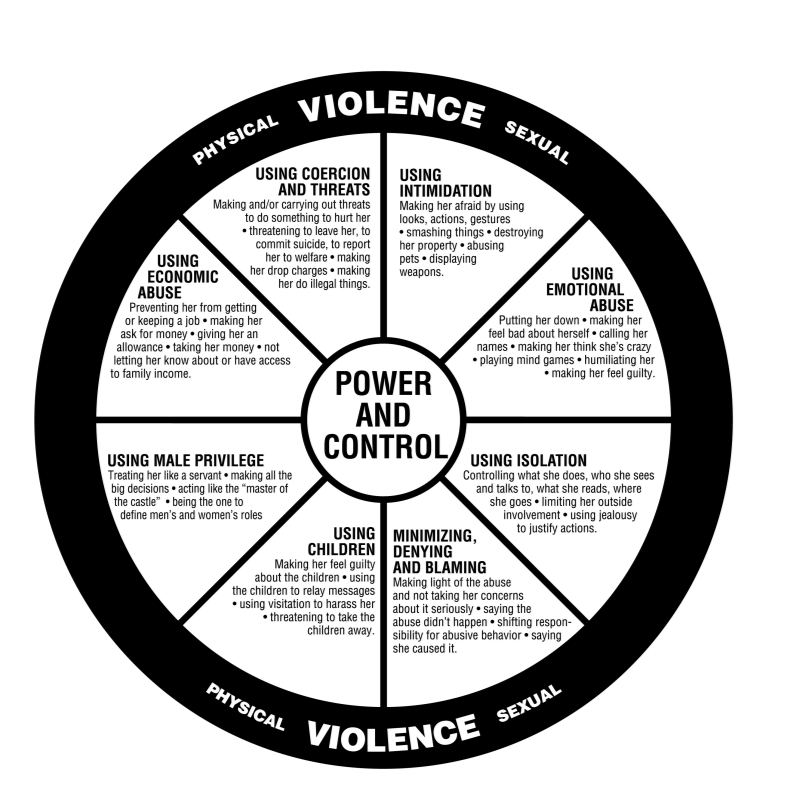
Battering is one form of domestic or intimate partner violence. It is characterized by the pattern of actions that an individual uses to intentionally control or dominate his intimate partner. That is why the words “power and control” are in the center of the wheel. A batterer systematically uses threats, intimidation, and coercion to instill fear in his partner. These behaviors are the spokes of the wheel. Physical and sexual violence holds it all together—this violence is the rim of the wheel. (Duluth Model)
The Duluth Model's Power and Control Wheel is a tool developed in the 1980s through focus groups with female survivors. Women compiled lists of the types of abuse most commonly used against them. The wheel helps survivors step back and see the full scope of violence they have experienced. It gives them language to name what happened. For many survivors, that validation changes everything.
Derry is careful to note that participants were initially resistant, often minimizing, denying, and blaming. However, the structured accountability led to significant changes. The consequences, enforced by the criminal justice system, probation officers, and community support, were essential to deterring abusive behavior.
Why Perpetrators Continue Violence: Understanding the Benefits of Abuse
One experience in particular stood out most in this program. Chuck Derry spent years sitting across from men who had been court-ordered into his program after harming their partners. He asked them to do something most had never done: list the benefits they got from their violence.
At first, they resisted. Then they filled a four-by-eight-foot blackboard.
The list included advantages such as maintaining control, gaining money, avoiding change, dictating reality, determining what values their kids would have, controlling where their partner went and who they talked to, and deciding when and how sex happened. The list went on for hours. This exercise, conducted in the 1980s and 90s as part of a structured accountability program in Minnesota, revealed something that survivors already knew but systems refused to acknowledge. Violence works for perpetrators until someone makes it stop.
These deep-seated reasons why men perpetuate abusive behavior, even if they themselves are not abusive. The difficulties in relinquishing these perceived benefits is what perpetuates “looking the other way” or not speaking up against it. Understanding these benefits is crucial for developing effective intervention strategies.
Military Sexual Trauma Prevention: Why Accountability Is the Missing Piece
Accountability is crucial in preventing MST. Consequences, enforced by the criminal justice system, probation officers, and community support, were essential to deterring abusive behavior in his program. He shares that men who were kicked out of the program for not taking responsibility often returned, admitting they could no longer get away with it.
The Pentagon nearly doubled its sexual assault prevention budget to more than $1 billion in 2023 and 2024. They established new offices to prosecute cases outside the traditional chain of command. They hired about 1,400 trained prevention specialists to serve at bases around the globe. However, while 8,195 sexual assaults were reported in 2024, independent research estimates the actual number may be 2-4 times higher. Dr. Jennifer Greenburg's research estimated approximately 73,695 cases of sexual assault in the military in 2023, nearly nine times the number of official reports.
The gap between what happens and what gets reported reveals everything about the lack of accountability. Derry's work identified the two factors most strongly associated with men who perpetrate violence: childhood experiences of abuse and witnessing violence, and attitudes related to gender equity. He also identified what keeps violence going: impunity. When perpetrators face no consequences, they have no reason to stop. The benefits outweigh the risks. The behavior continues because it works. Awareness campaigns and training modules alone cannot stop sexual assault. Accountability through consequences and other men speaking up and influencing other men stops it.
Gender Equality: What Men Must Sacrifice to End Violence Against Women
Derry reflects on the personal sacrifices required to achieve true equality. He questions whether men are willing to give up the benefits and privileges they receive in a sexist culture. This includes confronting male bonding over objectification, stopping the use of pornography, listening to women, and relinquishing leadership positions if necessary.
The list includes things men rarely talk about, such as male bonding over objectification, pornography use, dominating conversations, holding leadership positions they are not qualified for simply because they are men, controlling household decisions, and dictating when and how sex happens. The benefits of sexism are real, tangible, and daily.
Giving them up requires more than good intentions. It requires confronting how deeply those benefits are woven into identity, relationships, and career advancement. In military contexts, this means confronting how sexual violence functions as a tool of dominance and control, how it reinforces hierarchies, how it silences dissent, and how it maintains power structures that benefit some service members at the expense of others.
Derry challenges men to consider what kind of human being they want to be and whether they care about the lives of others. The ratio of learning from women versus his own experience matters, because it tells us who holds expertise, whose voices should lead prevention efforts, and why survivor-centered approaches work and top-down institutional responses fail.
How Military Sexual Trauma Survivors Can Demand Accountability
Chuck Derry's decades of work in gender violence intervention offers a clear roadmap for addressing Military Sexual Trauma. Violence works for perpetrators until someone makes it stop. Awareness campaigns, training modules, and billion-dollar budgets cannot replace genuine accountability. Systems must create and enforce real consequences for perpetrators while centering survivor voices and experiences.
For survivors of MST, your story holds expertise that no institutional training can replicate. Your insistence on accountability is not asking too much. You deserve justice, support, and systems that prioritize your safety over institutional reputation. The work of creating change requires all of us to examine our complicity in systems that protect perpetrators and to demand better from our military institutions.
Resources for Veterans Seeking Help
If you are a Military Sexual Trauma survivor, The Silenced Voices of MST offers several free resources and tools to support your journey:
VA Disability Toolkit: A free resource built to help you organize the VA claim process with tips and strategies from those who have successfully navigated the system. Document your trauma, track your claim, and organize every detail for a stronger case.
Contact Your Lawmaker Toolkit: Make your voice heard in Congress. This toolkit allows you to easily and safely contact members of Congress about MST-related legislation, military reform, or your personal experiences with templates and state-specific lookup.
The Advocates of MST Private Facebook Group: Join a safe, private community where survivors can connect, share experiences, and access peer support without fear of retaliation or judgment.
Crisis Support: If you are in crisis, please reach out:
Veterans Crisis Line: Call 988 and press 1, or text 838255
National Sexual Assault Hotline: 1-800-656-4673 (RAINN)
DoD Safe Helpline for Military Sexual Assault: 1-877-995-5247
Episode Chapters and Timestamps
00:00 Meet Chuck Derry, Founder of The Gender Violence Institute
03:48 Childhood Memories of Cultural Behavior Towards Girls and Women
05:49 Military Culture and Rachelle's SA at the VFW
10:15 The 24-Week Program That Successfully Changed Behavior
12:07 The Benefits of Abusive Behavior
16:01 The Missing Piece in Prevention of MST
17:54 Chuck's Reflections on Life if Equality Actually Happened
Frequently Asked Questions
-
The Duluth Model Power and Control Wheel is a tool developed in the 1980s through focus groups with female survivors of domestic violence. Women compiled lists of the types of abuse most commonly used against them. The wheel helps survivors understand the full scope of violence they have experienced by identifying patterns of physical violence, emotional abuse, intimidation, isolation, economic abuse, and other controlling behaviors. It gives survivors language to name what happened to them.
-
Perpetrators continue abusive behavior because it provides tangible benefits and they face no consequences. The benefits include maintaining control over others, gaining financial advantages, avoiding personal change, dictating reality in relationships, determining family values, controlling where partners go and who they talk to, and deciding when and how sex happens. When there is no accountability, the benefits outweigh any risks, so the behavior continues.
-
Cultural factors that contribute to gender violence include societal norms that devalue girls and women from childhood. Boys learn early that being a girl is considered inferior, which shapes attitudes and behaviors. Adult inaction when boys mistreat girls reinforces the message that boys matter more than girls. Statistics show that girls in the U.S. face a one in three chance of being beaten by a partner and a one in two chance of being sexually assaulted. These cultural patterns begin in childhood and persist throughout life.
-
Achieving gender equality would require men to give up significant benefits and privileges. This includes male bonding over objectification of women, pornography use, dominating conversations, holding leadership positions they are not qualified for simply because they are men, controlling household decisions, and dictating when and how sex happens. These benefits are woven into male identity, relationships, and career advancement. Giving them up requires more than good intentions. It requires confronting complicity in systems that perpetuate inequality.
-
Accountability is the crucial missing piece in preventing Military Sexual Trauma. Without real consequences for perpetrators, sexual assault continues because it serves the perpetrator's interests. Awareness campaigns and training programs alone cannot stop sexual assault. Systems must create meaningful consequences that are consistently enforced through the criminal justice system, command structures, and community support. When perpetrators face genuine accountability, they can no longer get away with their actions.
-
The gap between actual sexual assaults and reported cases in the military is significant. While 8,195 sexual assaults were reported in 2024, independent research estimates the actual number may be 2-4 times higher. Dr. Jennifer Greenburg's research estimated approximately 73,695 cases of sexual assault in the military in 2023, which is nearly nine times the number of official reports. This gap reveals the lack of accountability and trust in military reporting systems.
-
Survivors do not report for several reasons. Many want to forget about the assault and move on. They do not want more people to know what happened. They feel ashamed or embarrassed. Among servicewomen who did report, 38 percent experienced professional reprisal, 51 percent experienced ostracism, and 34 percent experienced maltreatment. The consequences of reporting fall on survivors rather than perpetrators, which discourages reporting.
-
Accountability programs can be effective when they require participants to acknowledge their violence, understand power and control dynamics, and face consistent consequences. The 24-week program that Chuck Derry helped develop required men to log instances of abuse and understand the Duluth Model. Initially, participants minimized, denied, and blamed. However, structured accountability enforced by the criminal justice system, probation officers, and community support led to significant behavioral changes. Men who were removed from the program for not taking responsibility often returned later, admitting they could no longer get away with their behavior.
-
The Gender Violence Institute was co-founded by Chuck Derry in 1994. The organization works to end gender violence through an approach that recognizes the connections between violence, power, and privilege. The Institute engages in community organizing, policy development, education, and training. Their work emphasizes that individual behavior change alone cannot end sexual assault. Systems and cultures must change, and consequences for perpetrators must be real and consistent.
-
Military culture contributes to sexual assault when stated values of honor and integrity coexist with systems that protect perpetrators. Deeply ingrained cultural norms can override stated values. Varying definitions of consent among jurors in military courts can alter outcomes. Systems that center male power often protect male violence. Sexual violence functions as a tool of dominance and control, reinforces hierarchies, silences dissent, and maintains power structures that benefit some service members at the expense of others.
About the Guest
Chuck Derry is the founder of The Gender Violence Institute. Since 1983, he has worked to end men's violence against women through accountability programs, community organizing, policy development, and education. His approach centers on understanding the cultural roots of gender violence and creating systems that hold perpetrators accountable while supporting survivors.
Help Support our Mission
This work saves lives. Every story shared, resource created, survivor connected to help. The Silenced Voices of MST exists because too many survivors have been silenced for too long. This work is necessary, but it cannot continue as a one person sacrifice. I am asking for your support to help transition this platform into a sustainable resource. If this mission matters to you, please consider making a donation or sharing this campaign with your network. Every episode produced, every toolkit distributed, every survivor story amplified requires resources. Production costs, hosting fees, website maintenance, and platform development all depend on the generosity of people who believe survivors deserve better.
Your donation directly funds:
Administrative Support: $12,000 to hire a part-time assistant. This is the only way to shift the twenty-person workload off of one individual and ensure the show’s longevity.
Operational Recovery: $8,500 to address the debt incurred by the show's operations since 2023. This is essential to stop the cycle of negative balances and financial instability from paying for the show with VA disability
Production & Security: $4,500 to cover the upcoming year of hosting, extra security features for guest safety, and necessary software subscriptions.
Thank you for standing with survivors.
About the Host
Rachelle Smith is an Air Force veteran, MST survivor, and the founder of The Silenced Voices of MST, an advocacy platform focused on Military Sexual Trauma. With a background in Communications and a distinguished career as a US Air Force Public Affairs Officer, Rachelle is committed to amplifying the voices of survivors and demanding accountability from institutions that have failed them.
After years of struggling in silence, Rachelle created The Silenced Voices of MST to help this long-ignored community document their truth, speak out, and fight for future service members. The platform offers the VA Disability Toolkit, the Contact Your Lawmaker Toolkit, guided trauma recovery journals, and leads The Advocates of MST, a private Facebook support group.
Through her podcast, Rachelle provides a safe space for MST survivors to share their stories, access resources, and find community. Her work centers on visibility, support, and accountability for Military Sexual Trauma survivors worldwide.
Connect with Rachelle: silencedvoicesmst.com | Email: info@silencedvoicesmst.com
-
Chuck Derry (00:00)
we first started working with batterers in 80s, we thought, oh, these guys just didn't have the life skills they need to address their emotions, or they lost control, And then we find out they'd use those life skills as a more sophisticated way to
And that's when we realized this is very conscious behavior. They know exactly what they're doing.
Chuck Derry with the Gender Violence Institute in Clearwater, Minnesota. I've been doing this work since 1983, 41 years. I was 27 when I started. And it was amazing. It transformed my I started working with feminist women to end men's violence against women and just blew me away.
And 95 % of what I share, I learn from women. as a guy, I'm always expected to be the % of what I share with you, learned from women. And the other 5 % is what I'll share about just being a white boy in Minnesota growing up and US and the sexist, racist stuff that.
was embedded into my bones.
Rachelle Smith (01:11)
Yeah, and unfortunately that's just a part of American culture and we got a long way to go in changing all of that. what were the things that came to pass in your life that led to starting this institute?
Chuck Derry (01:23)
Well, in my early 20s, I was doing roofing and carpentry. And my wife at the time got a job in St. Cloud at the women's shelter, battered women's shelter. And I knew carpentry wasn't quite what I wanted to do with my life. So I kind of put it up to the universe for what could happen next and show me a path and
we moved st cloud and a friend of some friends of mine started the St. Cloud Intervention Project which is based off intervention project and it was really getting criminal justice system to do something about men abusing women and part of that was guys would be arrested they have jail time over the head and then they have come twenty four week accountability groups and they were looking for somebody to facilitate these accountability groups
So I went in there and here's how high the bar was. This is 83. The guy before me, asked him, so what do you think about sexism? He said, sex, I like sex. Sex is good. So I knew what sexism was. That's how I got hired. Because I knew it's, that's how high the bar was. Because in the US, we're just starting to work with men who batter. and I thought, this would be interesting, but it totally transformed my
Rachelle Smith (02:22)
boy.
Chuck Derry (02:35)
started working in this feminist women's organization, I thought I was a pretty nice guy. didn't think I was very racist and stuff. And then I found out my big toe was sexist. It wasn't just this little attitude, it was bone deep. And so it's very amazing how much it challenged me about my male privilege. And then also challenged me about, I care about women's lives? What kind of human being do I wanna be? And then also working within the system, the male system.
To get them to actually arrest men who are beating and raping their wives and children. Because that wasn't happening. every lie I was told about girls and women, they're stupid, they're emotional, they're weak, was all revealed to me. doing this work. And it's just been amazing. I've worked with amazing women. And I've been a very, very lucky, man.
Rachelle Smith (03:19)
just, I can't imagine how sobering that must've been there's this entire, web or blanket or whatever you want to call it. That's thrown over men's eyes. to where they can't really see us as people, unfortunately.
Chuck Derry (03:37)
a, yeah, that's why it transformed my life. I was so lucky to be with women who would debate me.
about sexism, they'd argue with me, they'd even be willing to get angry with me rather than just blow me off.
I was just really lucky.
there's all kinds of stories I can tell about, okay, how this impacted how I with friends and towards girls and
what I grew up with.
Worst thing I'd be in first grade, was six years old. I realized I was going to a little Catholic school and then.
I realized the worst thing I could be is a girl.
throw a ball-like girl or a run-like Anything like a girl. That's how I knew I was the right kind of boy. I looked around my world in 60s. The men were in charge everywhere. so I'm six years old. Didn't take a rocket scientist to figure out if the worst thing I'd be as a girl, then boys are better than girls. ⁓ duh. And then how do we change our behavior with the girls when we thought we were better? And I'll give you one example. In second grade, I was in Catholic school.
and we had to wear uniforms. So the girls had to wear dresses down to their ankles and we had to wear ties. At recess, we'd run after the girls and we'd grab their dresses and we'd say, Tuesday, dress up day. And we'd throw their dresses up in the air so we could see their underwear. They had polka dots on their underwear or butterflies. Oh, we'd be rolling around on the ground laughing and they'd be going, get out of here, leave me alone. Which was part of the fun. the girls all started coming to school with culottes. What we called culottes in those days, they were shorts.
to school wearing shorts underneath their dresses because of what the boys are doing. And there were adults in that playground who had to have seen this and did nothing. As they just went, will be boys, boys are enjoying themselves, okay, they're more important than the girls, apparently. So, I mean,
The cultural stuff the stats I've seen is if you're born a girl child in US, you have a one in three chance of being beaten by the man you're in relationship with, the Center for Disease Control came out with a research last year that said if you're born a girl child in the United States, you have a one in two chance of being sexually assaulted.
the women we know, one of women in our family, one of women we work with. and it's men who are beating and raping these women. And that many men could not be beating and raping this many women without widespread cultural support.
How do we change these cultural norms to stop it before it starts?
Rachelle Smith (05:49)
it's just this reality that we have to face that is baked into our culture, like you said, and our military service, it's like 1 % of Americans serve. we're in this.
much smaller environment where these behaviors become readily apparent. But when you're in basic training and they're putting all the military values in you it's honor, it's integrity, it's look out for the person on your left and right, it's, protecting people. it just somehow does not translate once you
get to tech school or your duty station and some people they don't even get to the part where they get the values and basic like they're just trying to take their ASVAB and go to MEPS and the unthinkable happens to them. even just a few weekends ago. I was sexually assaulted again and
I didn't even realize it. I went to a VFW in, Tampa area, let's say. I walked in, wolf whistles immediately, that sorts of stuff. the commander of the place was like, well, you know how they are. I paid the sponsorship fee and he gave me a tour
the men that were catcalling when I walked in, were leaving. the VFW is a big bar, so everybody in there is drinking. he was showing me a mural outside and we were walking back around and these two men were like, are you coming back? yeah, sure, I'll be back. Like, didn't think anything of that. And one man just looks me up and down, undressing me with his eyeballs. he says, well, I'll be in the front
I didn't know what to say to that. So I just didn't say anything. I go inside, the commander's apologizing profusely. he's just saying, you set off a lot of people when you walked in here. I was like, I set off. Okay. so I sit with another young woman and
she's sharing stories about all the people in there. My boyfriend gets done with work most of them think he's my husband and I'm not gonna correct them at this point. maybe if someone shows ownership over me, they'll leave me alone, which is frustrating. another man comes over and he has this big blue Trump hat on.
He's like, what service are you in? And I like, Air Force. And he goes, sister, and gives me a big hug, which was expected. people are very familial when it comes to their particular service. that part wasn't sexual assault. It was the kiss on the neck that followed when he saw that my boyfriend was ordering. then it was the second kiss on the neck that happened again, maybe 15 minutes later when my boyfriend was turned.
speaking to someone else. in that moment, I'm like, okay, do I push this person to the ground and make a scene? Or do I just leave it alone because I'm in here to do outreach for my podcast. I went with the latter the commander saw the second one and he took my boyfriend and I on a
tour of the place again, just to get us away from that individual and he's apologizing the whole time. that happened on a Sunday and on Tuesday, cause it was Labor Day weekend, told my coworker about it and she's a Navy veteran. And she was like, Rachelle, you just got sexually assaulted again. And it was like,
holy shit, you're right. it did not even register to me that that had happened until someone else pointed it out to me because I think I've been so desensitized to adjust from being re-traumatized so many times.
I was able to process it But the funny thing was, was last week I ran into the young woman that I was sitting next to at the VFW She was actually sitting two seats behind me at a baseball game and she texted me and she introduced me to the group of folks she was with. she was saying let's say this guy's name was Dale.
She was like, yeah, we were doing our best to keep Dale away from her. that made me look at her funny because if you know someone behaves like this frequently enough, why are they still here? But that is our entire military culture. And then that is our entire, entire global culture. And that's infuriating.
Chuck Derry (10:09)
And when you're in a culture like, a sexist culture like this,
Rachelle Smith (10:09)
Mm-hmm.
Chuck Derry (10:13)
we can get away with a lot of things.
Rachelle Smith (10:15)
but I do want what this 24 week program was like for.
the men that had to participate.
Chuck Derry (10:22)
they were ordered to participate and they had to acknowledge and accept responsibility for their violence. And you're familiar with the power and control wheel from Duluth? the hub is power and control and then the rubber on the wheel is sexual and domestic violence. there's all kinds of
intimidation, emotional abuse, et cetera, et we would have the men have to log out all the different ways that they abuse Both physical, one week, and then next week would be how to use intimidation. The next week would be how to use emotional abuse, and they'd have to come back and we'd have discussions, and then we'd just go on that way. Now, the thing about it too is that the men were very resistant, right?
minimize, deny, and blame
we first started working with batterers in 80s, we thought, oh, these guys just didn't have the life skills they need to address their emotions, or they lost control, And then we find out we'd be teaching life skills, and they'd use those life skills as a more sophisticated way to control her. the women in Duluth, Minnesota came out with the power and control Victims talking about their reality.
And that's when we realized this is very conscious behavior. They know exactly what they're doing.
so it was interesting to facilitate that group.
the first time I asked the guys in group, I said, guys, so tell me, what are the benefits of your violence? And they all kind of looked at each other, which was really notable, right? Well, and one guy said, there are no benefits. I said, well, you must be something out of it. Otherwise, why would you do it? looked at each other again, and then one guy started talking about the benefits.
and then they all start talking. And then I filled a four foot by eight foot blackboard of all the benefits of their violence and we ran out of space. first time I did that, I looked at that board, I said, my God, Why would you give it up?
Rachelle Smith (12:07)
I do have the article that you had written about writing down
the benefits that were on the four foot walls. I wanted to read a few of she won't argue. She'll get out of your way so that you can go out. You can get money, keeps the relationship going because she's too scared to leave, power, don't have to change for her, total control and decision making.
She's scared and can't confront me. She's an object. Bragging rights. If she works, I get her money. Or I can get her to quit so she can take care of the house. She's a nursemaid. Supper on the table. Don't have to listen to her complaints for not letting her know stuff. She works for me. I don't have to help out. And it goes on and on and on.
with what you said, like, who would give that up? Who really would? it's incredible to see it all lined up like that. How did it feel writing one thing after on the board like that when these men were being open and honest for once?
Chuck Derry (12:59)
Yeah.
Oh it was amazing most amazing thing is we ran out of space on a four foot by eight foot blackboard that's the most amazing they were still going and we didn't have any more space to write down there were so many benefits it blew me away the first time I did it and still every time I'm looking at
I get to dictate reality. I answer to nobody, do what I want, when I want, with who I want. Anyway, the first time writing it down, was just like, my God. I was so happy that they were sharing it. I was so happy that they were being honest about it. So that was Because it really clarified. why men hang on to sexism, men who are not abusive.
they don't want to give up the sexism because they have to give up some the benefits could just be like telling a joke about a woman's body, like what I like to do to it, right? Or anti-woman stuff. And there's a lot of male bonding that goes on around sexual objectification
of women and anti-woman,
But if we had a man who was in week 16 of 24-week program, and he was still denying his violence and still blaming her and minimizing it, we would kick him out of the group. And we had agreements with the criminal justice system, with probation and the prosecutors, that if he was kicked out, he would do some jail time, because he'd have time hanging over his head.
then they send him back to the same group so he couldn't manipulate a new facilitator. Had to come back to the same group same facilitator so they'd leave they do ten days they come back and they'd be there for us week six week eight and they're taking full responsibility for their violence fully acknowledging and not blaming her and i'd ask 'em so tell me jim what what happened
What's going on? when you were here before, were just denying it blaming her all the time, and now you're just taking full responsibility. How come? He said, because I know I can't get away with it anymore.
after man after man. 10 years. I know I can't get away with it because he was being held accountable by the criminal justice system. And that's because the St. Cloud Intervention Project was holding them accountable as well. Because we would track and monitor every case. We wrote policies that they had to sign, right? So they're liable. So the prosecutors, sheriff, police chief, probation.
judges, everything. we were able to track and monitor. then I knew if kicked a guy out in week 16, he's coming back. Every time they said, because I know I can't get away with it anymore. And so that was a key point.
I thought, okay, I'm gonna ask them, okay guys, why would you give it up? And we filled a one foot by one foot space. I got arrested, orders for protection.
My adult children won't invite me to their weddings anymore and I have to come to groups like this. that was when I fully, fully understood the benefits of this violence and how important consequences are. has to be accountability and part of that accountability is consequences. again, like I said, the guys come back and say, I know I can't get away with it anymore.
Does that answer your question?
Rachelle Smith (16:19)
absolutely because my goal with this podcast is to end the problem sexual trauma. accountability is the solution. that just seems to keep getting sidestepped.
year after year. So to hear that coming from an expert, like, hello, military, if you're listening, because they're very big on performative things, we signed the white ribbon pledge and we had a stand down day and we're doing more briefings or first time airmen
joining the Air Force and getting to their first base. They're like, well, they had like a SARC briefing where they talked about emotions and boundaries and this and that. but where is the accountability piece? Where are the people going to prison? Where is the punishment? recently a two star general was charged with a number of things from, sexual harassment, flying while drunk.
⁓ all sorts of stuff. They got him guilty on everything, but actually sexually assaulting a lieutenant colonel. she was coerced because she was like, I can't, this, person's as far above me in the rank structure. So obviously that's not consent, but the military, even though it's in black and white in the, uniform code of military justice, the
people that are, I forget what they call the jurors in a court martial, but every single one of them has a different definition of what consent is. And that changes the outcome when someone has committed a crime.
Chuck Derry (17:46)
Yeah.
And so we have to hold them accountable and provide consequences. And we also have to do primary prevention.
a lot of times people think you gotta raise awareness on men to get them to change. I was 17 years Northwestern Minnesota in a town of 2500, Roseau, Minnesota, 10 miles south of Canada, and the women's libs was going on then This is 1973. And I thought to myself for the first time, I'm 17, I had long hair, what are the few...
dozen guys in town had long hair in those days. I thought to myself, Chuck, what would it mean to you personally if men and women were really equal? And within two minutes I had the answer. I'd have to give some stuff up. Then I thought, nah, I don't think so. And I was a nice guy. And now I had more aware to what a good deal it was in a sexist culture to be a man because we are so benefited.
Rachelle Smith (18:30)
Mm.
Chuck Derry (18:42)
And so that's part of it when working with abusers. Are you willing to give up the benefits? And working with men in general, that was a big challenge for me doing this work. Am I willing to give up all the benefits I have, all the privileges I have being a white guy, but being a man? Am I willing to give up those privileges? And the privileges I can't give up, am I willing to use those to undermine sexism?
Rachelle Smith (19:02)
moments of reflection and then truly understanding where your values lie are so important your development as a human being, whether you're going to be an all right kind of human being or someone that actually has empathy and understands there's a whole world outside of yourself.
Chuck Derry (19:19)
had to go,
am I willing to stop that bonding? Am I willing to confront my male friends and my brothers,
Chances are I'm gonna lose a friend or two if I confront them about telling sexist jokes. come on, we're just kidding around. Yeah, it's fun. We're taking our pleasure at women's pain. And am I willing to stop using porn? Am I willing to stop going to strip clubs? Am I willing to listen? Listen to women. Am I willing to take leadership from women? In a job place, if men and women are really equal, I'm not getting the next advancement. If I have to compete with all the women,
And then all the folks of color as well, I'm not getting into next advancement because now I just have to compete with the white guys. Am I willing even to give that up, right? Do I care about people's lives or not? Because that's what it comes down to.
hey Chuck, who do you want to be? What kind of human being do you want to be?
References
Derry, C. (1994). The Gender Violence Institute. https://www.genderviolenceinstitute.org
The Duluth Model. (n.d.). FAQs About the Wheels. Domestic Abuse Intervention Programs. https://www.theduluthmodel.org/wheels/faqs-about-the-wheels/
Greenburg, J. (2024). Sexual Assault in the U.S. Military. Watson Institute for International and Public Affairs, Brown University. https://watson.brown.edu/costsofwar/papers/2024/sexualassault
Pence, E., & Paymar, M. (1993). Education Groups for Men Who Batter: The Duluth Model. Springer Publishing Company.
U.S. Department of Defense. (2024). Annual Report on Sexual Assault in the Military: Fiscal Year 2024

The Best Advice I Can Give For Surviving MST (MSTy’s Story | Part 3)
MSTy, an anonymous Marine Corps veteran, shares the second stage of struggles with mental health, learning about MST, and developing a tool to help survivors come forward and establish patterns of predatory behavior. This episode demonstrates the power of only one person saying, “No more!” and rallying more to stand with them against military sexual trauma and the military’s diligence in sweeping cases under the rug. Read the full story and access helpful resources.
MSTy shares her story of Military Sexual Trauma in the U.S. Air Force, reflecting on years of survival without support, the physical and emotional costs of unresolved trauma, and the role of books, pets, and community in her healing.

MSTy discusses Military Sexual Trauma, the health impacts of living in survival mode, and long-term healing on The Silenced Voices of MST with Rachelle Smith.
Books, Pets, and Daily Coping Tools
MSTy describes the long silence she endured before finding support. In those years, she turned to books as her lifeline, reading self-help, spiritual texts, and classics like Man’s Search for Meaning to find guidance. She explains how pugs became another coping tool, providing comfort, routine, and companionship. These simple daily practices gave her stability when nothing else was available.
She also reflects on how positive affirmations, gratitude, and even social media memes carried real weight. Short reminders like “you are enough” or “what happened to you is not who you are” gave her perspective in moments when she felt overwhelmed. She emphasizes how easy it is to dismiss small acts of encouragement, but for survivors they can become anchors in the darkest times.
Beyond coping, MSTy talks about building community. Through her MST Crime Map, she gave survivors a way to mark their experiences anonymously and establish patterns of predatory behavior across military history. She also created pages like MST News and Info and Misty Days on Facebook and Instagram to curate resources, share daily reflections, and remind survivors they are not alone.

Pin it!
After finding out the long-term cost of unaddressed trauma, MSTy offers caution to survivors. She discusses chronic muscle tightness, inflammation, and memory issues that worsened over time. She regrets how dissociation and survival mode prevented her from being fully present with her children when they were young. Looking back, she warns that waiting decades to begin healing comes at a heavy price.
“Make time for it today.” - — MSTy
The People Who Stayed
Still, MSTy highlights the people who stayed. A best friend in the military, a civilian coworker, and her husband all saw her worth even when she doubted it. Her husband’s reassurance, “I ain’t scared,” became a defining reminder that she could be loved without fear or judgment.
Click here to explore more survivor stories
MSTy’s story shows how coping strategies, community, and small acts of daily healing can sustain survivors.
If you are unsure if you are ready to seek help, remember MSTy’s message of urgency for prioritizing emotional wellness before the physical and emotional toll becomes irreversible.
Episode Trigger Warnings and Timestamps
00:14–00:31: On-screen details of MST markers
01:26–01:33: Panic attacks, dissociation
11:25–14:22: Physical toll of trauma, regret, difficulty being emotionally present
Resources From This Episode:
This episode contains a few references to news articles and books that are listed below:
MSTy’s MST Crime Map: https://mstmap.com/
MST News & Info: https://www.facebook.com/MST.Information
Man’s Search for Meaning by Viktor Frankl
The Power of Positive Thinking by Dr. Norman Vincent Peale
The Untethered Soul: The Journey Beyond Yourself by Michael Alan Singer
Support the Mission
The Silenced Voices of MST needs your help. Donate today to help us continue to share these stories and demand accountability.
Join our mailing list to learn about upcoming episodes, new resources, and daily support.
Join the Conversation & Amplify Survivors
Leave a Review
If this episode was meaningful to you, please leave a rating and review on Apple Podcasts or Spotify. Reviews help more people discover stories of Military Sexual Trauma and join the movement for change.
Support and Community:
Veterans Crisis line: Dial 988, the press 1
DoD Safe Helpline: https://www.sapr.mil/dod-safe-helpline
Join our Facebook community: https://www.facebook.com/groups/theadvocatesofmst
Internal Links

If Victims Were Afraid Then, Predators Should Worry Now (MSTy’s Story | Part 2)
MSTy, an anonymous Marine Corps veteran, shares the second stage of struggles with mental health, learning about MST, and developing a tool to help survivors come forward and establish patterns of predatory behavior. This episode demonstrates the power of only one person saying, “No more!” and rallying more to stand with them against military sexual trauma and the military’s diligence in sweeping cases under the rug. Read the full story and access helpful resources.
How MSTy designed a new tool that helps survivors track abuse, expose patterns, and take back their power — one marker at a time.

Survivors can take their power back with this map — and that includes you.
Accountability Through Reported Patterns of Predatory Behavior
MSTy didn’t set out to become the creator of an innovative and accurate way to hold the perpetrators of Military Sexual Trauma accountable. Like many survivors, she was mostly trying to get through the aftermath of her encounters with avoidance and unhealthy coping until she found education and therapy. Survivors can especially understand wanting to only seek peace after having their lives disturbed so violently and abruptly, often without support for many years until that became unbearable as well.
In learning about complex PTSD and dissociation as a coping skill, she understood that silence and pretending her traumatic events hadn’t happened wouldn’t make the events magically disappear. It didn’t make it easier, because her trauma appeared in her life in other ways when she least expected or wanted it to.
In Part 2, MSTy shares what happened after her assaults — the disorientation, the dissociation, and the dark spiral that followed. But this time, she’s guiding listeners along her path to healing and discovering a brilliant method to help more survivors speak up. She’s sharing her way, possibly your way, of fighting back against this toxic cultural issue in our military.
MSTy introduces a powerful data driven crime map, born from her own story: a digital map that plots MST incidents across the world — Every marker represents a survivor. Every marker is a story that someone felt they had to keep quiet. Until now.
Finally Understanding She Wasn’t Alone
After MSTy’s terrifying and confusing assaults and harassment, she began documenting what happened — first in her diary, then in her mind, and eventually in a way that others could connect with too.
She speaks about living in a fog of dissociation, turning to alcohol, and losing trust in everything and everyone around her — including herself. But slowly, over time, something shifted. She courageously chose to go back to serving, in the Air Force after September 11th. This new direction with better peers, more opportunities to be the servicemember she knew she could be, and to be able to guide younger Airmen was a source of peace and redemption. A second chance. And upon retiring from both military and civilian work, she turned her focus to healing from MST. The more she learned about MST, the more she realized how common this was — and how often it was expertly covered up, completely ignored, or viciously downplayed.
That’s when the idea for the MST Map found its way.
Using Patterns to Isolate Predators

Pin it!
The MST Map isn’t just about stories — it’s about patterns. As MSTy began collecting survivor submissions, she saw its potential. Imagine if we could isolate the similarities: the same bases, the same patterns. Different people. Different years. But the same violence.
Consider this. As an example, let’s say a certain recruiter was stationed in an area for 4 years and there are numerous cases of MST reported on the map in that specific time period, and the person was described the same way by all victims… by process of elimination, this map makes it possible to finally validate a victim’s pain.
She and Rachelle discuss how documenting these stories can visually give survivors a sense of power and justice. Most markers are anonymous, while others contain comments of what happened in more detail. But all of them say the same thing: This is real. And it’s everywhere.
The more markers, the better the opportunity to zero in on the people that caused so much pain but managed to slip by, protected by their leadership often to the serious detriment to the lives destroyed in their wake.
Demonstrating the Magnitude of MST
MSTy opens up about how watching the shock toward and spread of Vanessa Guillén’s story pushed her into action. She talks about the exhaustion of fighting the VA disability claim system while still wrestling your own shame. The pain of being invalidated online. The rage of watching predators get promoted or thriving while survivors are barely staying alive each day.
And the hope that something like the map might finally turn anecdote into evidence. Patterns into pain. Well-kept secrets into cleansing truth.
“This map isn’t just data. It’s how we get change, accountability.” - MSTy
Every marker is a defining moment that someone chose to speak up.
By the end of the episode, MSTy reflects on what it means to keep going — to build something for others even when the process hurts. She and Rachelle talk about accountability, prevention, and the fact that every survivor who shares their story makes it a little harder for systems to pretend they don’t know.
This isn’t just a tool. This is a reason for perpetrators to finally begin to feel the same fear that every survivor has felt daily since their lives were changed forever.
Links From This Episode:
This episode contains a few references to news articles and books that are listed below:
Join our mailing list to learn about upcoming episodes, new resources, and daily support.
Episode Trigger Warning Index
This episode contains references to the following topics. Please use this guide to skip if needed:
12:54 - Mention of Vanessa Guillén
13:06 - Mentions of dissociation/mental health struggle
13:22 - Compensation and Pay Exam
13:45 - Mentions of Complex PTSD/mental health struggle
15:10 - Explanation of MST Map Website
15:31 - All types of SA named
15:50 - Mention of MST victims of recruiters
16:22 - Marine Corps recruiter predator news article
16:41 - Army ROTC LT COL predator news article discussed
17:16 - 17: 45 - Unreported cases of MST
17:49 - 18:29 - Markers displayed on the map of incidents
20:02 - 22:08 Trolls invalidating MST on social media
22:24 - 22:36 - Feelings of shame, isolation, and paranoia
23:11 - 24:47 - Describes how MST occurs around the world and in different situations illustrated by map markers can identify perpetrators over time
Takeaways from This Conversation
Creating a map for MST allows survivors to share their stories anonymously and still establish patterns of predatory behavior.
Personal healing often involves confronting past traumas.
Predators often look for naive, trusting individuals with weak boundaries.
Dissociation can be a coping mechanism for trauma survivors.
Data mapping can help identify patterns of abuse and accountability.
Survivors often feel isolated for years due to shame and stigma.
Accountability is crucial for creating change in the military.
Reflection Journal Prompt
What would accountability look like if survivors led the conversation?
Spend a few minutes after listening to reflect or journal. What did you feel during this episode? What are you still thinking about? What systems need to change — and what part could you play in that change?
Join the Conversation & Amplify Survivors
Want to talk through your experience? Or support someone else in theirs?
Join our private Facebook group: The Advocates of MST
Don’t forget. This conversation matters. And MSTy showed immense courage by telling her story. Please help us make sure her voice travels further: Leaving a written review on Apple Podcasts or wherever you get your podcasts helps elevate the visibility of the show for more survivors suffering in isolation and pain. A simple review can change another person’s life forever.
Leave a review on Apple Podcasts
Need Support?
Although this podcast is a great resource, it does not and should not replace care from a medical professional. If you’re in crisis or need someone to talk to:
Call the Veterans Crisis Line — 988, then press 1
Or go to the nearest emergency room.
You are not alone. We believe you. You matter.
The final part in MSTy’s three part series goes live Tuesday April 15, 2025.

Surviving Assault Secrets: The Stunning Repercussions For Men That Speak Up (Part 3)
Brian, a Marine Corps veteran, shares the next part of his journey from Marine to civilian in this episode. Explore the lasting impacts of military sexual trauma, PTSD, and the urgent need for support for male survivors. Read the full story and access helpful resources.
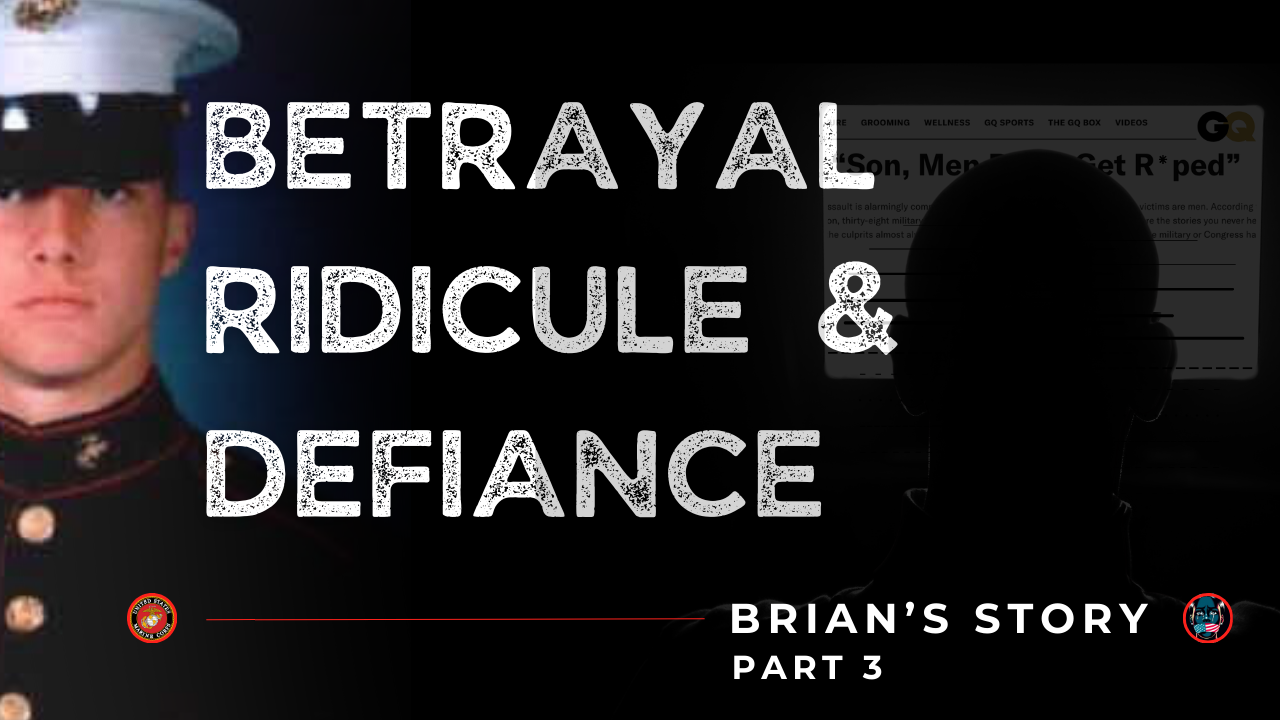
USMC veteran, Brian, shares his story in the latest episode of The Silenced Voices of MST
In the final part of this series, Brian, a Marine Corps veteran, gives us the meat and potatoes of managing PTSD, sleep, and intrusive thoughts. He credits much of his growth to guided meditations and continuously searching out new and different types of coping strategies that help him regain his power.

Brian's New Outlook on Life and Coping
Continuing his story from Part 2, Brian describes importance of meditation, finding the right therapist, and using storytelling as a tool for recovery. He also discusses the toxic culture within the military and why systemic change is necessary to protect future service members:
Trying to receive help

Pin it!
Brian explains how sleep meditation and hypnosis techniques helped him process his trauma and find a sense of calm amid the chaos. Apps like Headspace are beneficial to those who have difficulty with insomnia due to anxiety, PTSD, and intrusive thoughts that can make it next to impossible to fall or stay asleep.
Like many survivors, Brian faced roadblocks within the military and VA system when seeking acknowledgment and assistance. He discusses how victim-blaming and also having mental health providers give up on him several times made it even harder for him to make progress. But he does stress that if you need help, keep trying. You will find someone that you mesh with, it takes time with different personalities to work together and build trust and rapport in therapy.
Toxic Military Culture & Systemic Failures
Brian and Rachelle discuss how harassment, abuse, and leadership failures create a culture where MST continues to happen unchecked. Although many members of the military are ready to ignore or outright deny the experiences of lives touched by MST, it doesn’t change reality. MST is a problem, and will continue to be until we address it as a systemic issue that is deeply ingrained in military culture. Brian shares why he decided to go public with his story, despite the stigma and backlash survivors often face. He explains how telling his truth helped him reclaim his power and encourage others to do the same.
Brian urges fellow survivors to seek help, share their stories, and find community in advocacy.
Click here to explore more survivors stories.
"Holding onto trauma is like a disease—it eats away at you.”
Key Takeaways:
Meditation can be a powerful healing tool for MST survivors.
Speaking out about trauma can be liberating and empowering.
The military must enact systemic changes to support MST survivors.
Finding the right therapist is crucial—don’t stop searching until you find one that fits.
Every survivor’s story matters, and sharing it can help others heal.
Don’t forget to subscribe to our YouTube channel!
Join our mailing list to learn about upcoming episodes, new resources, and daily support.
Resources:
Visit Brian’s Website: 8Bmedia.com
Read More: GQ Article on Male Rape in the Military
Need help processing or want to share your story? Join our supportive community on Facebook: The Advocates of MST
National Sexual Assault Hotline: 1-800-656-HOPE (4673)
Michael Sealey’s Guided Meditations: YouTube Channel
Cal Melkez’s Sleep Meditations: YouTube Channel
If you are in crisis or need immediate support, call the Veterans Crisis Line: 988, then 1
If this episode resonates with you, please share it, comment your thoughts, and leave a review to help amplify survivor voices. Together, we can change the conversation around MST and push for meaningful reform.
🎧 Full Episode Available on Patreon: https://www.patreon.com/silencedvoicesmst
Part 1 of MSTy’s story will release on March 18, 2025.

Surviving Assault Secrets: The Stunning Repercussions For Men That Speak Up (Part 2)
Brian, a Marine Corps veteran, shares the next part of his journey from Marine to civilian in this episode. Explore the lasting impacts of military sexual trauma, PTSD, and the urgent need for support for male survivors. Read the full story and access helpful resources.

Brian shares his story in the latest episode of The Silenced Voices of MST
In Part 2 of this 3-part series, Brian, a Marine Corps veteran, shares what it was like to navigate life after separating from the Marine Corps. He goes to college, tries to cope through partying, drinking, and promiscuity and doesn’t tell a soul that he’s a veteran. After landing a job with Jose Cuervo, he has a mental break that leads to him finding a magazine article that changes his life prior to leaving for China to rediscover himself. He explores finding his love of storytelling and expresses frustration with the lack of progress made by science in support of finding a treatment method for people with debilitating PTSD. Brian opens up about the struggles he faced after leaving the military, including the relentless grip of PTSD, the battle to be heard, and how he found strength in writing and advocacy.
Brian's Journey: From Dishonorable Discharge to Medically Retired
Picking up from where he left off in Part 1, Brian talks about the immediate aftermath, how his discharge affected his ability to get vital mental health care, and the lack of support he encountered after word spread among his peers. It was nearly impossible for him to seek justice, leaving him to process his trauma on his own. He earned the nickname “Blackout King” in college and hid the fact that he was a veteran from everyone and speaks about finding unhealthy coping mechanisms, including:
Substance use – Numbing the pain through alcohol and other substances.
Self-destructive behaviors – Using promiscuity as a means of dealing with what happened
Trying to receive help

Pin it!
One of the most difficult battles Brian faced was not just recovering from trauma and unhealthy coping, but fighting for his experience to be acknowledged. He details the legal and bureaucratic hurdles that male MST survivors face when they seek recognition and support.
He shares his frustrations with the military’s reluctance to acknowledge male survivors and finally seeing that he was not alone in an article from GQ, titled “Son, Men Don’t Get Raped”. The article mirrored how MST, being improperlty discharged, and stigma impacts not only mental health care access but also disability claims and post-service support. This segment highlights the systemic failures that leave survivors without the help they desperately need.
Why Men’s Voices Matter
One of the major struggles for male MST survivors is finding therapy that actually works. Brian discusses the lack of specialized care for male survivors, the stigma of seeking help, and how many veterans are dismissed or misdiagnosed.
He shares how he eventually found therapists who understood his experience, and how trauma-focused therapy, meditation, and support groups played a role in his healing journey. Brian also calls out the lack of research and resources dedicated to male survivors of MST. He discusses:
The gaps in mental health services for veterans.
The need for better education about the true extent and definition of PTSD
The lack of research on military sexual trauma and PTSD that actually heals those who suffer
He stresses that change will happen if more survivors feel empowered to speak.
Click here to explore more survivors stories.
Brian notes that male survivors are often overlooked and underrepresented in conversations about sexual violence. He talks about the challenges of breaking through societal stigma and why it’s crucial for men to share their experiences.
"I found my path in storytelling..” – Brian
Key Takeaways:
Brian illustrates the struggles many veterans face after leaving the military when they've been harmed and are not discharged under honorable conditions
The importance of finding a voice for male survivors of sexual assault is crucial.
Coping mechanisms can vary widely, and what works for one may not work for another.
Storytelling can be a powerful tool for healing and advocacy.
Brian's experience with the legal system highlights the challenges faced by veterans seeking justice.
The need for societal recognition of male sexual assault survivors is urgent.
Cultural rituals and ceremonies can play a significant role in healing for veterans.
Mental health treatment is often a long and challenging process for veterans.
Brian's transition to storytelling reflects a broader need for veterans to share their experiences.
The fight for recognition and support for veterans with PTSD due to MST continues.
Join our mailing list to learn about upcoming episodes, new resources, and daily support.
Resources:
Visit Brian’s Website: 8Bmedia.com
Read More: GQ Article on Male Rape in the Military
Need help processing or want to share your story? Join our supportive community on Facebook: The Advocates of MST
If you are in crisis or need immediate support, call the Veterans Crisis Line: 988, then 1

Surviving Assault Secrets: The Stunning Repercussions For Men That Speak Up
Brian, a Marine Corps veteran, shares his journey from soldier to sexual assault survivor in this powerful episode. Explore the lasting impacts of military sexual trauma, PTSD, and the urgent need for support for male survivors. Read the full story and access helpful resources.

Brian shares his story in the latest episode of The Silenced Voices of MST
When we think of masculinity and military strength, the first image that pops into most people’s minds is a guy in the Marine Corps. Their motto says it all: The few. The proud. The Marines. It’s iconic, and so many young men and women respond to that message by enlisting or commissioning into the toughest service in the nation. But what happens more often than not is our blindness to the battles that men and women suffer in uniform among their peers. The amount of harassment and bullying is overlooked, and something like Military Sexual Trauma is hidden deeply away behind stoic facades and messages of honor and camaraderie.
In Part 1 of this deeply moving three-part series, Brian, a Marine Corps veteran, shares his journey from proud infantryman to survivor of sexual trauma and PTSD. His story gives us a look at the hidden experiences of male survivors in the military and the long-term repercussions of not only being victimized, but also speaking out and trying to receive help.
Brian's Journey: From Musician to Marine
Brian’s path to joining the Marines was similar to many that I’ve heard. It was a way to pay for school and his future musical aspirations, and military service was a family tradition. And although Brian had never felt pushed or encouraged to join by his family, a feeling of restlessness and boredom led him to a recruiter’s office at the age on 19, even after a friend warned him about joining. After a rough start and becoming fully immersed in USMC culture, he found himself and had a grueling, yet transformative experience while away at boot camp. Camaraderie, discipline, and feeling like he finally found his purpose shaped Brian, to the point that he excitedly called his parents one night saying, “This is what I want to do with my life.” But one serious injury and a night soon after changed his life forever.
What was supposed to be a night of NBA finals and letting off steam with a friend in San Diego, turned into a horrifying nightmare experience for both. Following their assaults, nothing was the same. Brian found himself isolated, bullied, and battling his mental health with little to no support. That led to trying to cope, by any means necessary… even career-ending ones.
Facing Harassment and Isolation

Pin it!
After reporting the assault, Brian found himself in a worse situation than he could have ever imagined. Instead of providing relief, his words opened the door to constant harassment and ridicule from fellow Marines, men who were supposed to be his brothers in arms. Almost instantly, he was ostracized in a place that once felt like it had become home. This response, no matter how common, is tragic. The stigma that persists in “traditionally male environments” like the Infantry, toward male victims remains a driving force as to why more men do not come forward for help after incidents like these. Many suffer in silence, because the alternative is even worse.
Another run-in with law enforcement led to Brian facing a Medical Evaluation Board and Physical Evaluation Board process. Despite his trauma, he remained unsupported, even while navigating the difficult processes. This led to career-ending coping methods, and an Other than Honorable discharge from service, which further impacted his life, long after he hung up the uniform.
Why Men’s Voices Matter
Brian’s story is not just about his personal trauma but a broader conversation about the barriers male survivors face when speaking out. By sharing his story, Brian hopes to encourage other men to seek help and impress upon listeners the importance of creating safe spaces for survivors.
Click here to explore more survivors stories.
Key Takeaways:
Brian, a writer, producer, and Marine Corps veteran, shares his journey through trauma, isolation, and recovery.
His experience underscores the stigma surrounding male survivors of sexual assault, particularly within the military.
Brian faced harassment and isolation after reporting his assault, reflecting the cultural challenges in addressing sexual trauma among men.
His struggle with PTSD and substance use emphasizes the urgent need for better mental health resources for veterans.
Watch Part 1 on YouTube
In Part 1, Brian shares his profound journey from being a Marine Corps infantryman to a survivor of sexual trauma and PTSD. He discusses his initial motivations for joining the military, the transformative experiences during boot camp, and the life-altering incident that led to his struggles with mental health, unhealthy coping skills, and disillusionment with the Marine Corps. Brian frankly recounts the challenges he faced, including isolation, harassment, and the difficulties in seeking help after his discharge.
Join our mailing list to learn about upcoming episodes, new resources, and daily support.
Resources:
Visit Brian’s Website: 8Bmedia.com
Read More: GQ Article on Male Rape in the Military
Need help processing or want to share your story? Join our supportive community on Facebook: The Advocates of MST
If you are in crisis or need immediate support, call the Veterans Crisis Line: 988, then 1
Part 2 of Brian’s story will release on March 4, 2025.