
One voice demands change.
Thousands of voices create it.
Challenge the myth that protects predators.
#whywouldilie Nov 10, 2025
#whywouldilie
A campaign by The Silenced Voices of MST
There is a reason victims second guess themselves about speaking up after a predator does the unthinkable. Every time one of us tells the truth, someone in power treats our words like a tactic, while those in our community treats us like traitors and ostracize us.
Why?
Military sexual trauma survivors live inside a system that doubts them before it protects them.
The Department of Defense’s own report shows that the false reporting rate for sexual assault was one percent in 2024 and has averaged three percent for the last ten years. That means ninety-seven to ninety-nine percent of reports are credible. Yet disbelief remains the default reaction across commands, legal offices, and even medical settings.
This campaign exists to make the truth louder than that doubt.
Are all of these
people lying?
Have you ever been accused of lying about what happened to you? If you have ever been told to stay quiet because the system will not believe you, your truth matters here. Post your story on any platform. Tag it #WhyWouldILie.
Share your story.
Who is really lying?
Beginning November 12, 2025, The National Association of Criminal Defense Lawyers is holding an annual seminar for criminal defense lawyers. This year, Michael Waddington, an expert in sexual assault defense will present the topic "Why Would They Lie?" which is a guide to exposing false reporting in sexual assault cases.
The message implied by that title echoes what survivors of military sexual trauma hear every day: that our accounts are suspect by nature.
When institutions build conferences around skepticism instead of prevention, the result is more victims, fewer convictions, and ongoing impunity. The Silenced Voices of MST launched #WhyWouldILie to confront this narrative publicly with verifiable data and lived experience.
Let’s ask the question that institutions never asks or answers:
If the government’s own data confirms that false reports are rare, why is disbelief still policy?

Hear from survivors
-
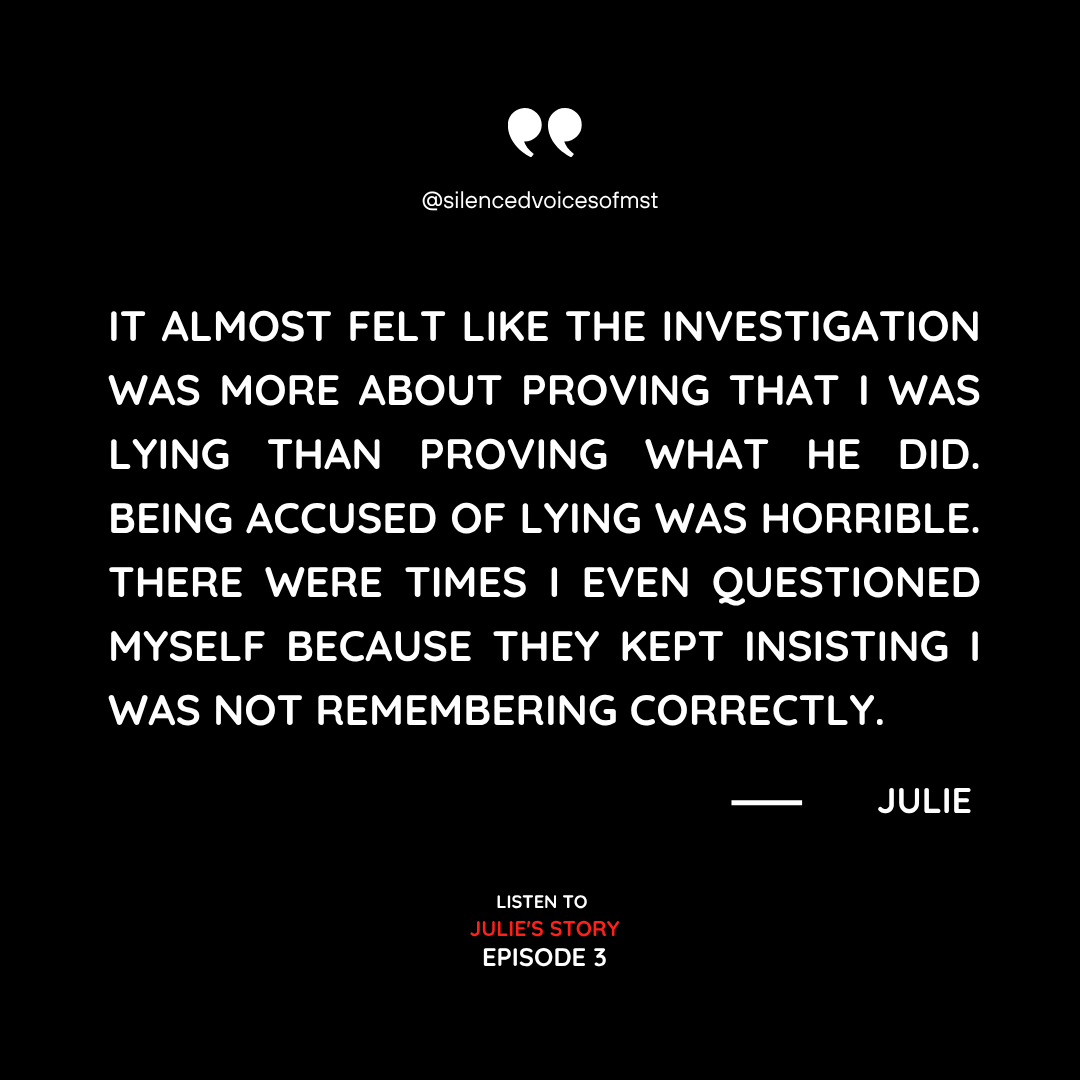
Julie
Episode 3
Julie shares her experience with being accused of lying after being sexually assaulted by a senior noncommissioned officer who had a history of inappropriate behavior.
-

Brian
Episode 29
Brian shares his experience of returning to base after being assaulted and admitting what occurred after being pressed by a senior NCO that noticed his shocked demeanor.
-
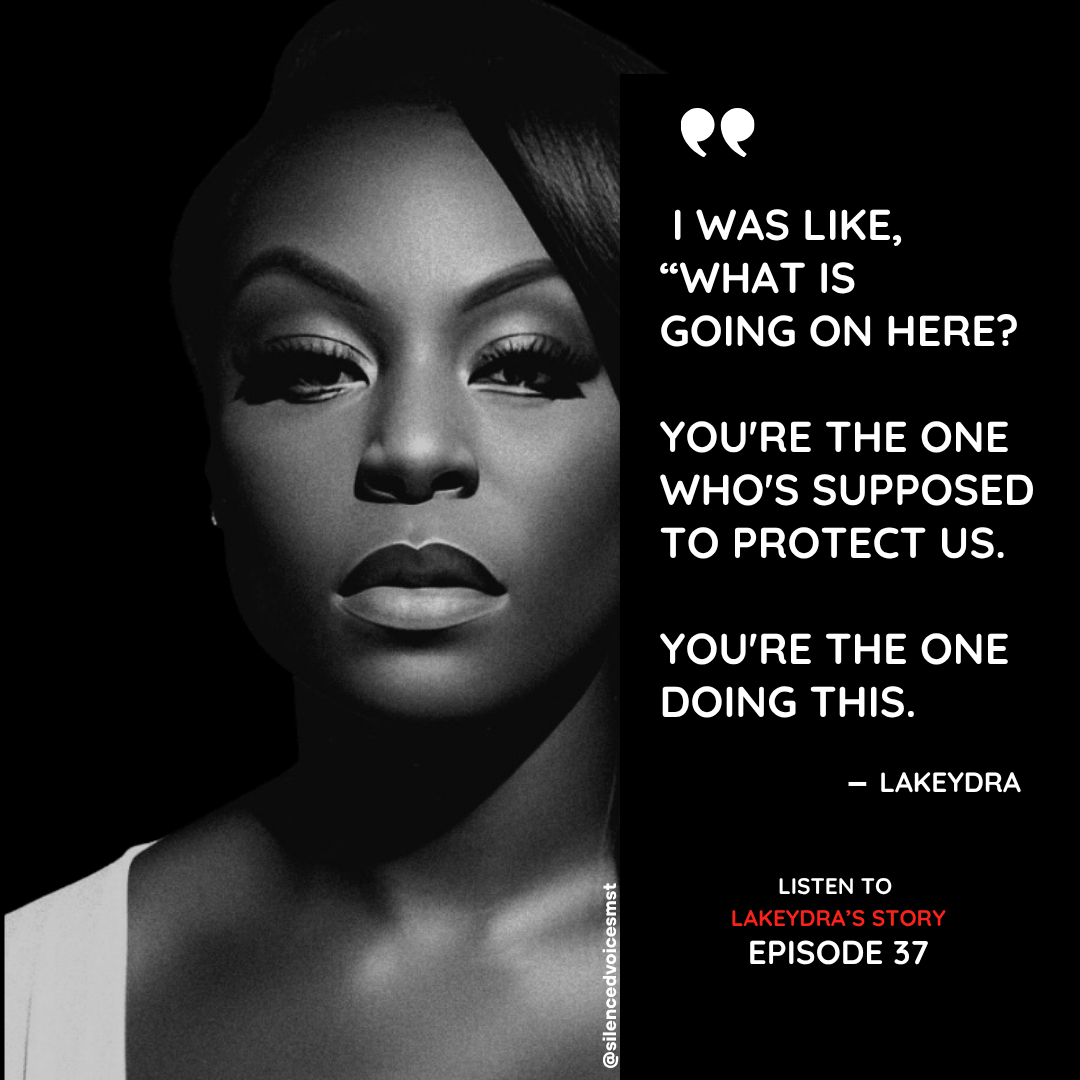
Lakeydra
Episode 37
Lakeydra shares her experience of finding out that a part of her leadership was directly involved with human trafficking in South Korea.
See who’s speaking out
-
Survivors and advocates are posting their stories here. Click here to scroll through the hashtag to see people speaking up across different branches, eras, and experiences.
-
Our campaign’s main feed. This is where service members, veterans, and civilians share their posts in real time.
-
Click here for images, quotes, and survivor reflections on Instagram. The visual side of #WhyWouldILie shows what disbelief looks like when it happens to real people.
-
Posts from veterans, advocates, and professionals who are challenging the idea that survivors lie. It’s where the conversation intersects between experts, leaders, policy and accountability.
-
The most raw, fast, and direct stories can be found on TikTok. Short videos, survivor clips, and educational posts that explain the data behind the campaign.
Downloads
Share the truth #whywouldilie
Fact Sheets
Concise summaries of verified data about military sexual trauma, false-reporting rates, and survivor resources. Ideal for journalists, educators, and advocates who need credible figures fast.
Campaign Videos
Clips from The Silenced Voices of MST podcast and campaign reels combining survivor testimony, verified data, and advocacy calls to action.
Infographics
Visual summaries showing how disbelief harms survivors and protects predators. These graphics cite official Department of Defense and VA data and are designed for sharing across social media.
Media Assets
Official #WhyWouldILie visuals, campaign graphics, and logos for approved press and social use. These assets maintain consistent branding and messaging across platforms.

Quote Graphics
Shareable survivor quotes and campaign messages written to counter disbelief and reinforce solidarity. Ready for posting on Instagram, Threads, Facebook, and LinkedIn.
Press Kit
Comprehensive overview of the #WhyWouldILie campaign, including background, verified data, quotes, and contact information for press inquiries.